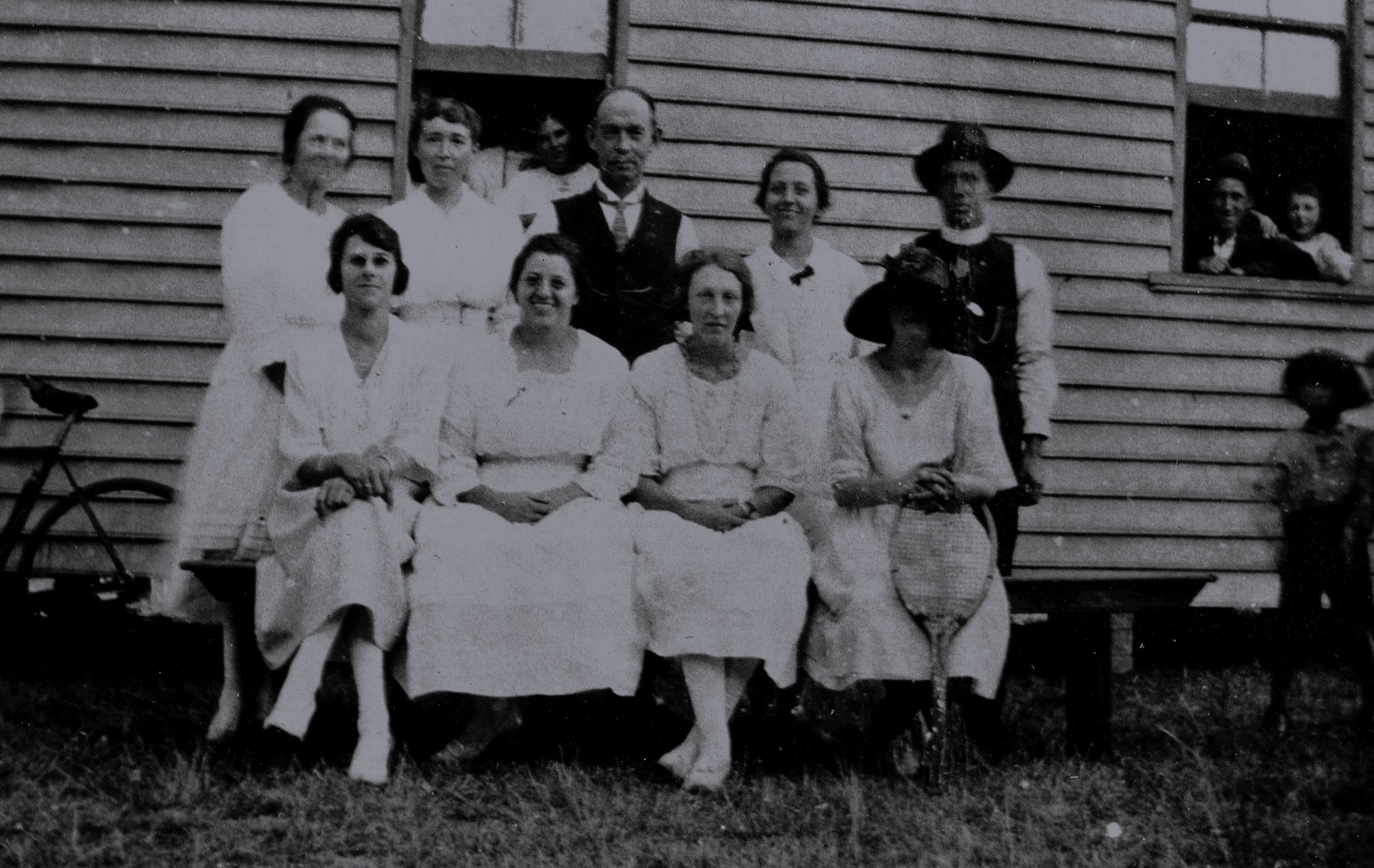
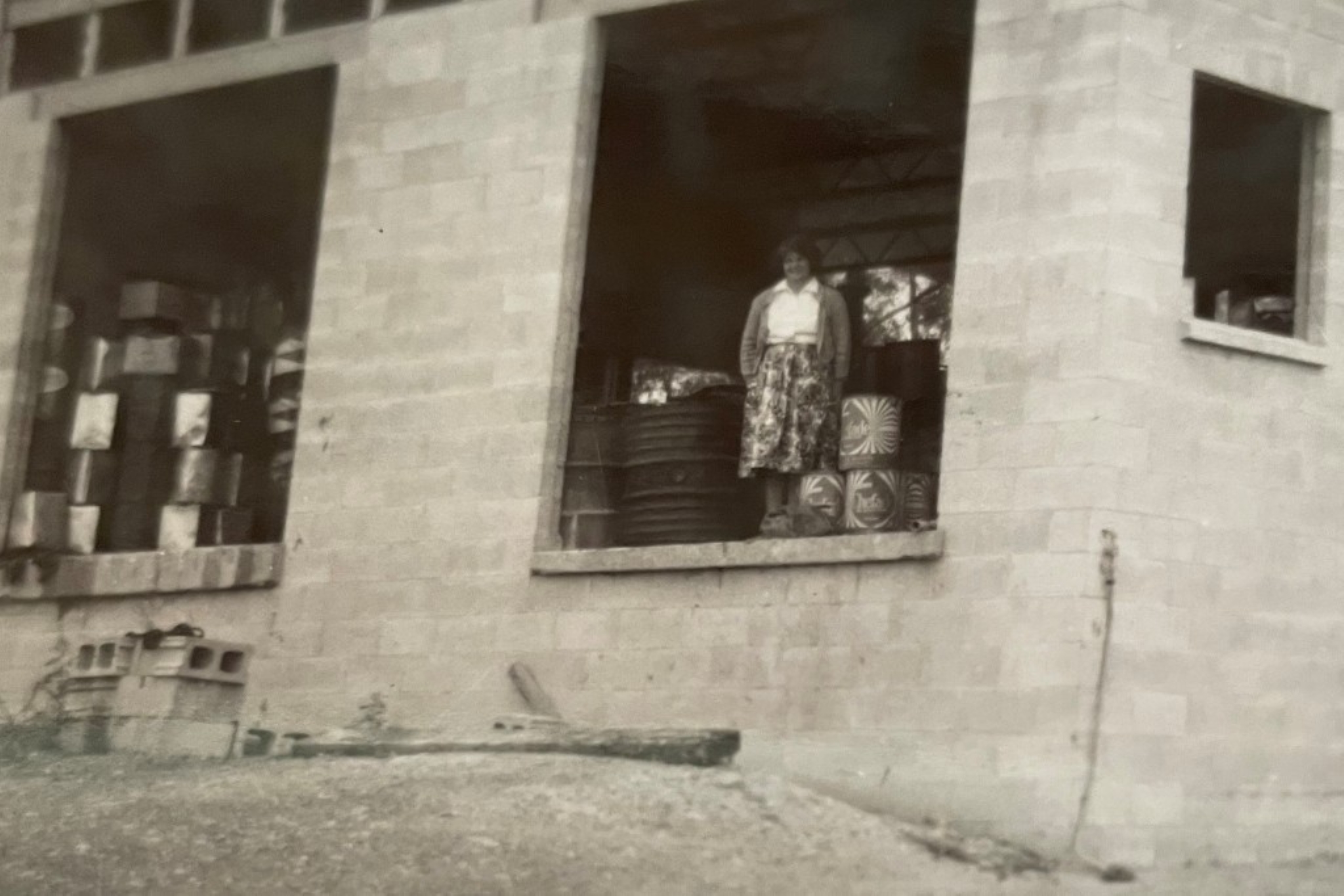
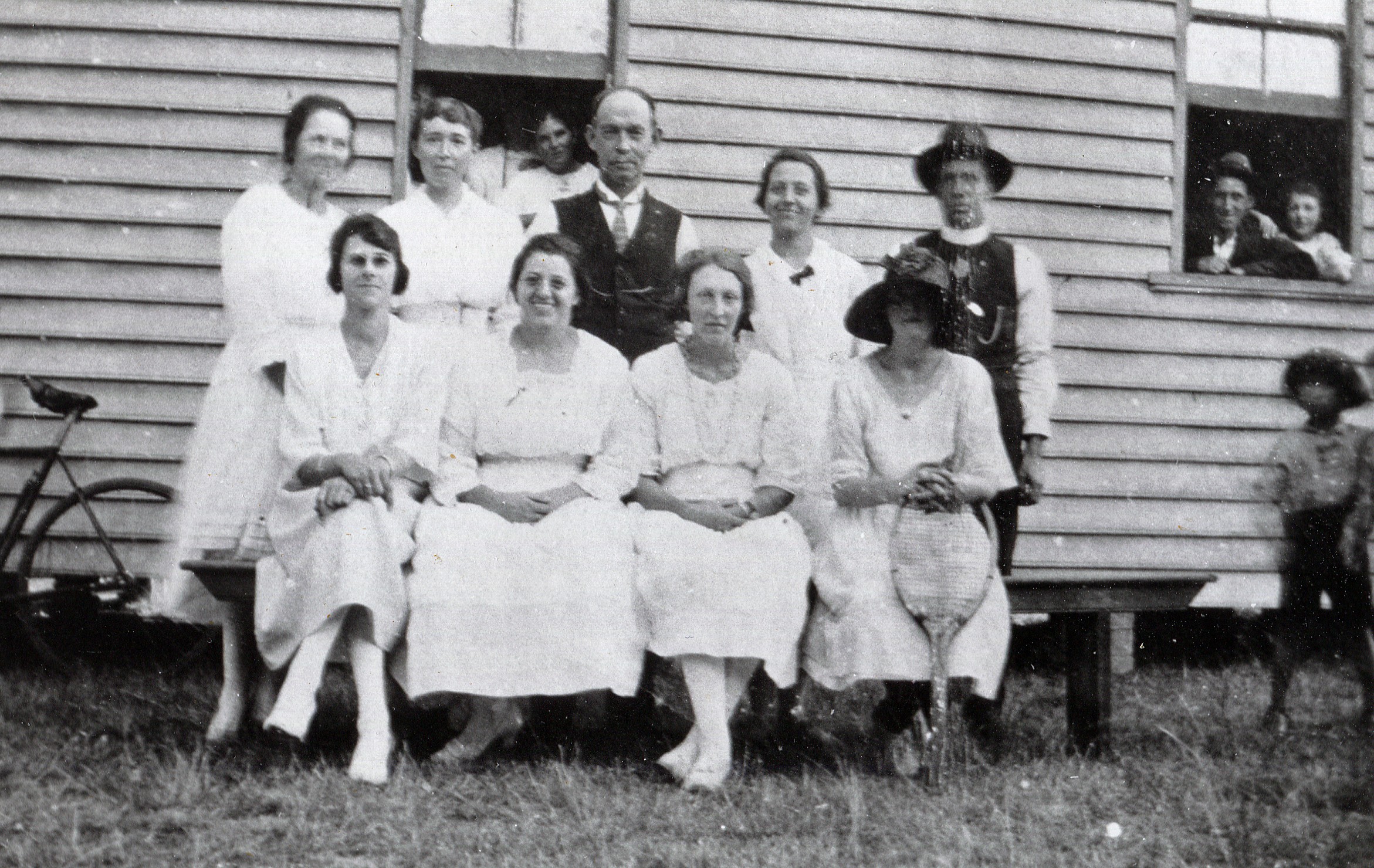
Back Row: Lil Davis, Evelyn Rumery, Ted Vaughan, Jessie Davis, Rev. Setchell. Front Row: Elma Kirwan, Dorothy Davis, Marjorie Rumery, unknown. The adult in the window to the right: Syd Pye. Photo: RDHS collection.
A snapshot from 100 years ago. The Sunday School teachers at St Pauls Church of England. The occasion was a Sunday School picnic. In those days the picnics were held at the Church grounds. The image was taken at the side of the Sunday School Hall.
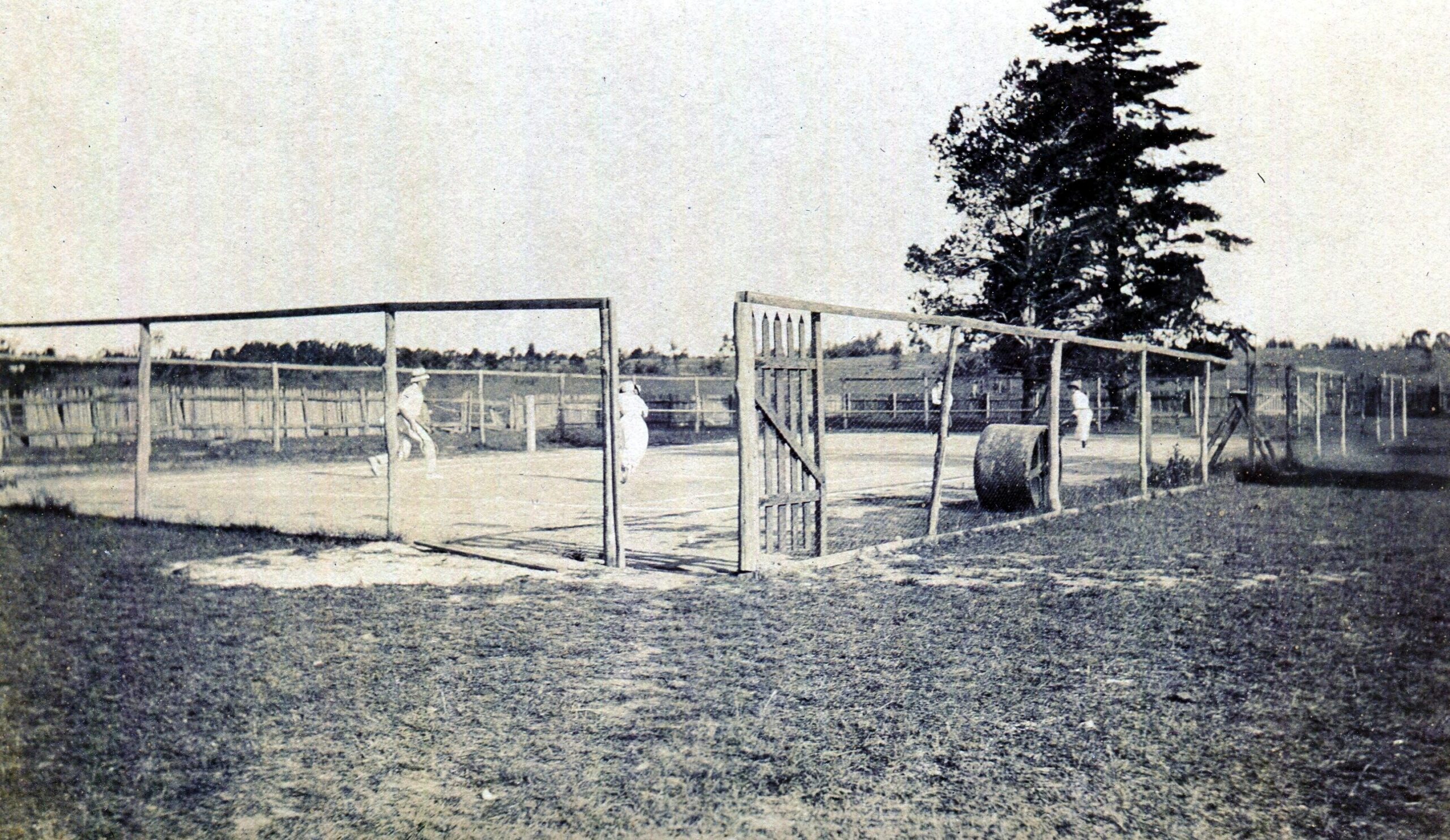
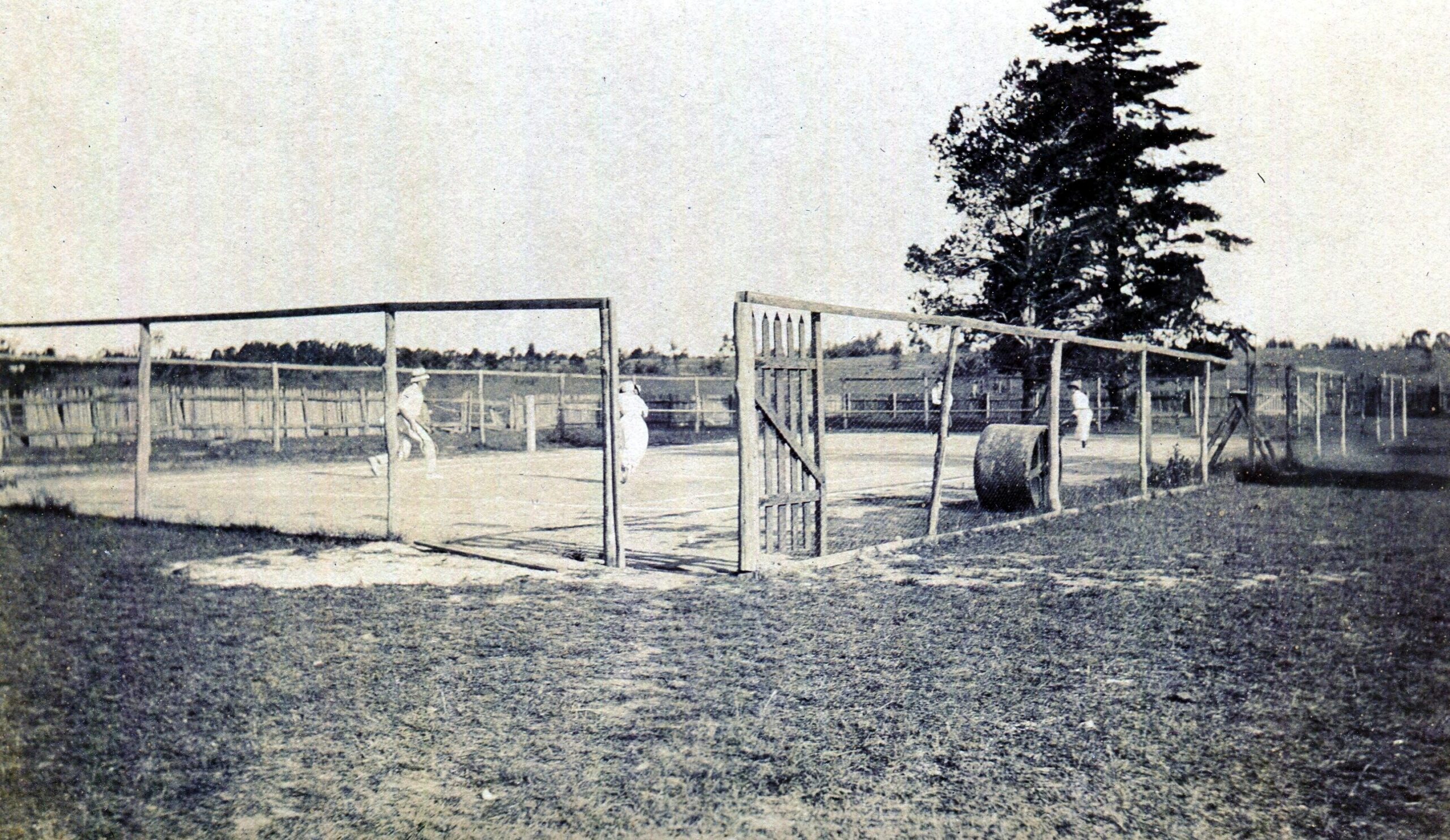
Note the lady in the front row with an old fashioned wooden tennis racquet. Tennis was a popular past time and St Pauls had a tennis court and hosted many matches over the years.
Players on St Pauls Church of England. Photo: Rumery Family collection.
Around the year of 1897, a young man of seventeen left his hometown of Riverstone, 25 miles northwest of Sydney, farewelling family, and friends to make his fortune in the Queensland Outback. That young man was Henry Wellington TEALE, Harry to all. Since becoming aware of my great-granduncle Harry Teale’s story, I have been eager to find out more about how he ended up 1400 km or 900 miles away in the outback town of Adavale, near Quilpie.
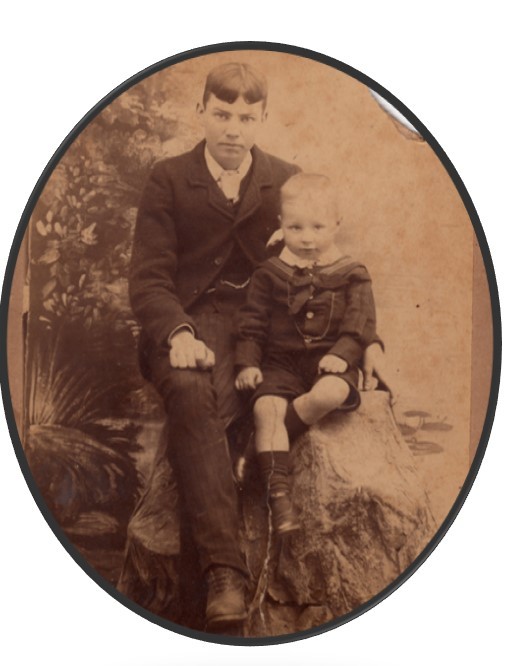
Harry was born at Windsor NSW on the 8 November 1877, the fifth child and youngest son of John Henry TEALE (1843-1904) and Martha JACKSON (1847-1927), his older brother George Henry (1870-1942) was my great-grandfather, pictured with Harry above, circa 1883.
John Henry’s grand-parents were John TEALE (1789-1851) who arrived on the Indefatigable in 1815 and Diana CABLE/KABLE (1788-1854), the daughter of First Fleeters Henry KABLE (1762-1846) and Susannah HOLMES (1763-1825). Martha’s parents were Irish, Joseph JACKSON and Mary LONSDALE. They arrived in Australia as assisted immigrants on board the Herald in 1841. Martha was born in 1847 at Lane Cove.
The men of the TEALE family had a long association with the Riverstone Meatworks for close to 100 years, starting with John Henry and his son George my gr-grandfather in about 1890, ending with my cousin Philip, being the last to leave in the 1980’s. Perhaps not wanting to work at the meatworks with his father and brother, Harry decided to hit the open road looking for adventure. It is unknown whether he made this journey with others or set off own his own.
How different the landscape, vegetation, and wildlife the young adventurer would have encountered as he travelled north-west, towards the expanse of the red centre with its Emus, Red Kangaroo’s, Wedge Tailed Eagles, so different from the brown landscape of the small town he grew up in with its neat streets of workers cottages, where everyone knew each other.
Harry worked in the Adavale area as a labourer for about four years until his young life came to a tragic end after contracting typhoid fever in the April of 1901, losing the battle at the age of 23 years and 4 months so far away from his loved ones, on Saturday 4 May at the Imperial Hotel. He had been ill for 17 days and was last seen by the local GP Dr Malcolm Webb the day before.
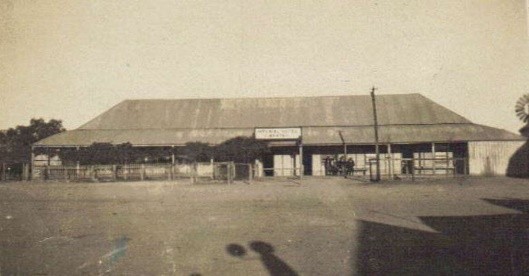
Imperial Hotel at Adavale, Queensland, ca. 1928. The photographer, H. J. Richardson was posted to Adavale as a schoolteacher around 1928. (Description supplied with photograph.) State Library of Qld.
The few scant details I have been able to find regarding this young man have been from his death certificate and his obituary, as any family members who may have had information are long passed. The informant on his death certificate was John Presnell, the licensee of the Imperial Hotel. Sadly the hotel was destroyed by fire on the morning of Friday 1st May 1930.
Harry was laid to rest the following day, in the Adavale Cemetery, I would like to think that there would have been a wooden cross erected by his mates marking his final resting place but if so, it has long disappeared into the red earth.
I was fortunate in July 2022 to visit this now isolated town which today has a population of around 15, so different from the town that Harry made his home all those years ago. In its heyday Adavale’s population was close to 1000, when the Cobb & Co Coach stopped by on its way from Charleville to Windorah and the town boasted 5 hotels, post office, police station and general store.
Adavale was originally intended as a railway terminus but in 1917 the Western rail line was diverted south to Quilpie which then became the major town for the area, soon after Adavale’s population begun to slowly decline.
My gr-grandfather George Henry TEALE would honour his little brother by naming his first-born son, my granddad, Henry Wellington TEALE, also known as Harry.
When walking around the Adavale Cemetery I happened across a headstone with the name TREANOR, this name was familiar to me. My Uncle Sonny born Harry Victor George TEALE (minus the Wellington), married Rita Ellen TREANOR at Forbes in 1944, 43 years after his gr-uncles death.
James Peter TREANOR 1896-1939 and his little sister Philomena 1894-1898, both buried in the cemetery were my Aunty Rita’s second cousins. Coincidence?? Also buried are Robert Dundas DALGLISH and his wife Elizabeth Richardson NEWTON, James’s in-laws.
Perhaps there was a connection between with the TEALE and TREANOR families prior to 1944, was this the reason young Harry Teale came to Adavale all those years ago??
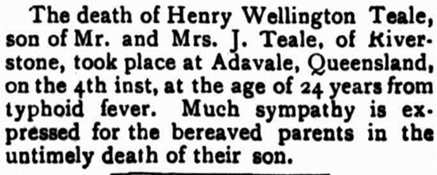
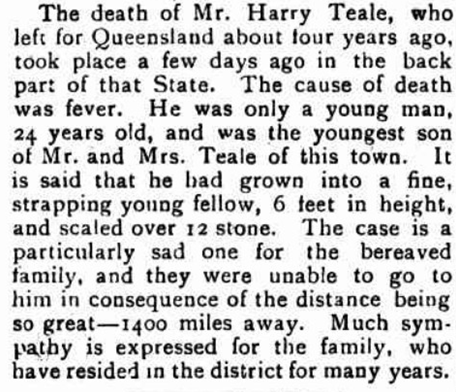
Windsor and Richmond Gazette, Saturday 11 May 1901, pages 12Windsor and Richmond Gazette, Saturday 11 May 1901, page 14.
Sources and References https://www.trove.nla.gov.au/ https://www.outbackqueensland.com.au/town/adavale/ https://www.wikipedia.org/ http: / /www.exploroz.com/places/35772/qld+adavale/ State Library of Qld
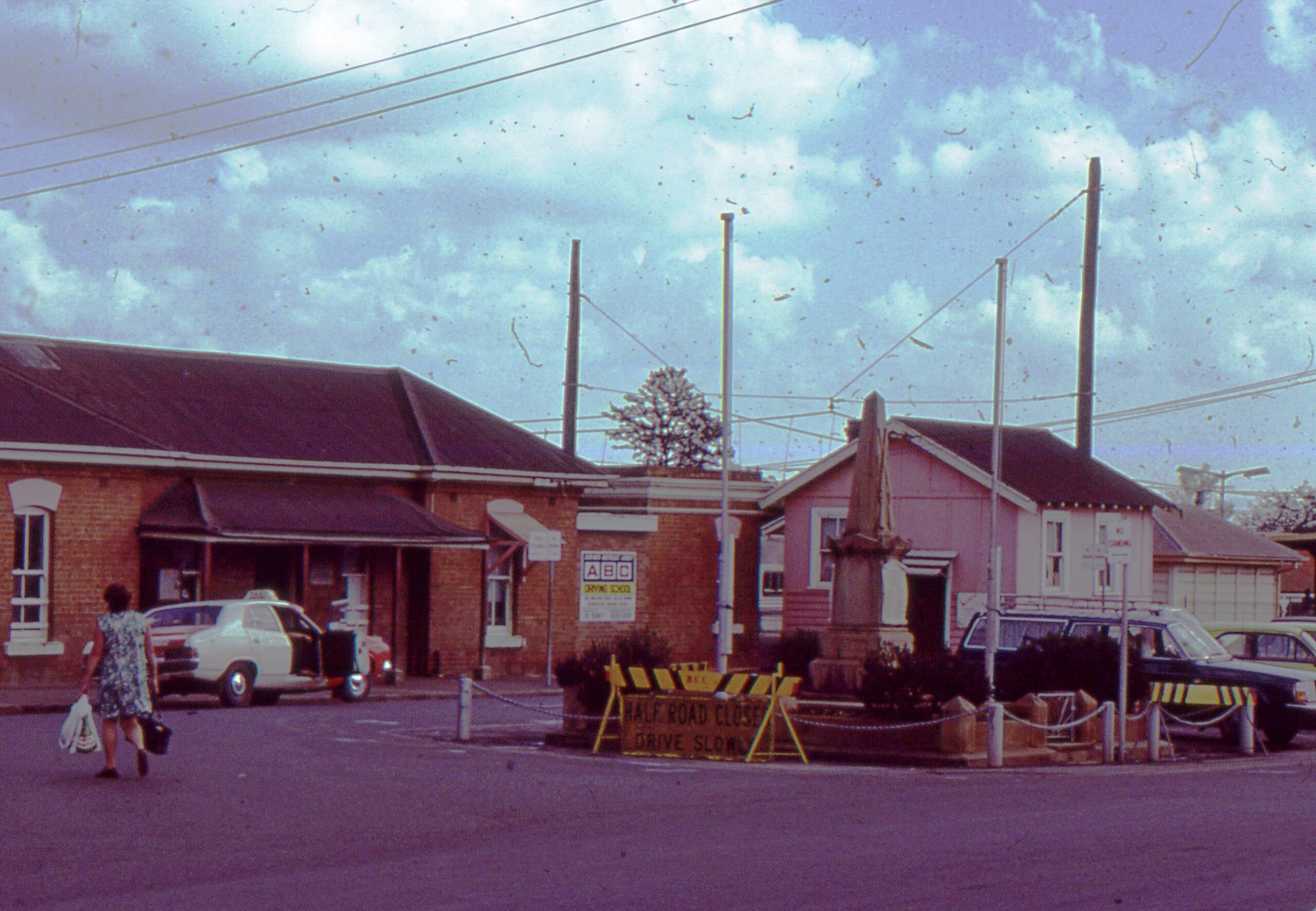
People born before the 1990s might recall a small building located next to the Riverstone Railway Station in what is now the car park. Some would remember it being the Pensioners Library and others the venue for the original CWA Baby Health Centre.
It turns out that this building had a more extensive history which goes back to the 1920s and connects with a local branch of the St Johns Ambulance.
During the First World War, the St Johns Ambulance Society provided certificates for successful candidates in Miss McCabe’s Home Nursing Class. The students were instructed by Dr Johnston from Riverstone and Dr Davies from Windsor. The classes were likely to have been held at a venue like the Oddfellows Hall. Nine ladies passed the examination, Miss Jessie Davis, Miss Jennie Pye, Miss Tene Wittig, Miss May Cruikshank, Miss Davie Lane, Mrs. Griffin. [1]
It was another six years before a branch of the St Johns Ambulance Association was formed in the town. Mr A. G. Cornwell, of “The Cottage,” Riverstone organised a meeting at the Oddfellows Hall, to form a branch and to explain the objects and need for first aid. [2]
A local branch was established in October 1922, [3] and operated by Mr A. G. Cornwell. The First Aid class lectures were provided by the local physician, Dr Johnstone. [4]
In 1923, a euchre party and dance fundraiser was to be held at the Oddfellows Hall to raise funds to buy a stretcher for the St. Johns Ambulance Association. [5] Up until this point, if a stretcher was required it had to be borrowed from the railway station.
The football club handed over their kit to the Association on the condition it would be looked after. Mr Cornwell had arranged for a man and first aid kit to attend 12 football matches, treating cases on the field as well as off. [6]
The St John’s First Aid kit grew and they decided that they needed an “ambulance cupboard” to store the splints and spare material. The cupboard was made by Mr C. Whitehead and installed in a recess next to Mr Skinners shop in the town. [7]
Mr Cornwell summed up the first year as: 10 men trained and taken certificates, ambulance box fixed in town stocked with ample material and splints, besides two small first aid outfits purchased, instructional charts and stretcher, treated 30 cases of accidents, given two first-aid displays, one at Riverstone and one at Quaker’s Hill.[8]
The First Aid branch continued in Riverstone and they identified the need for a building which could operate as a first aid station. In March 1924, an application was lodged with the Railway Commissioners for an allotment of land next to the railway station on which to build a First Aid station. [9]
Four months later approval had been given and plans for the building had been submitted for approval. The next step was of course to raise funds from locals to cover the cost.
The 1924 Annual General Meeting reported that first aid assistance had been provided at no less than 50 local accidents. The retiring president (Mr. C. Whitehead), hon. secretary (Mr. Arthur Keegan) and treasurer (Mr. J. W. Weaver) were unanimously re-elected. Messrs Albert Keegan and Unwin were elected as committeemen. The construction of the first aid building had not commenced, but they were positive about it happening. The objective for the next year was “to provide a first-class certified member in every department at the local meat works”. [10]
With plans finally approved for the building, the matter of funds was a priority. A gala week of events known as “Ambulance Week” was devised and held in December 1924. [11][12]
Heavy rain and continuing wet weather in the first half of 1925 impacted on construction which was carried out on weekends by volunteer labour. [13] There was no electricity in the town, so all the tools used were hand tools. Hilton Vidler was a regular at the working bees, unfortunately he sustained a hand injury while using a hand saw. [14]
The 1925 AGM report summary revealed: The yearly report manifested: — Cases treated: Fractures 3, Cuts, burns, etc. 59, Poisons 1, Cases away from district 1, Sunstroke 1. Total 65. …Ten candidates, sat for the December (1924) Examinations, and their gratifying success reflected to high credit of the hon. instructor, Mr. E. Shrub.
The students mentioned had been awarded the following honors: — 1st Certificates. — Messrs H. Head, A. Kerim, S. Allen, G. Wiggins and S. Alcorn. Vouchers. — Messrs A. L. Keegan and S. Unwin. Medallions. — Messrs J. Weaver, A. R. Keegan and C. Whitehead. Penant. — Mr. E. Shrub(hon. instructor). Mr. H. Head Was unanimously re-elected to the office of President, and Mr. Arthur Keegan (hon. secretary), and J. W. Weaver (hon. treasurer), midst enthusiasm were also returned unopposed.[15]
There is no report on exactly when the building known as the “First Aid Station” was opened, but in a Gazette article in 2 July 1926, they referred that it “recently became a matter of fact”.
In 1926, the office bearers were recorded as President, Constable C. W. Clugston, treasurer, Mr J. Weaver and secretary, Mr H. J. Head. [16] The statistics for the year were: Gun wounds 1, compound fractures 2, simple fractures 4, cuts, wounds, burns and other injuries 365, total cases treated 372. [17]
At the AGM in 1926, the cost of the building was said to be upwards of £150 and erected solely by volunteer labor. It was also revealed that in the absence of an ambulance, the following people put their cars at the disposal of the Association to transport emergency cases: Messrs Rosenthall, Hart, Trenery (Riverstone) and Mr J. Wiggins (Schofields). [18]
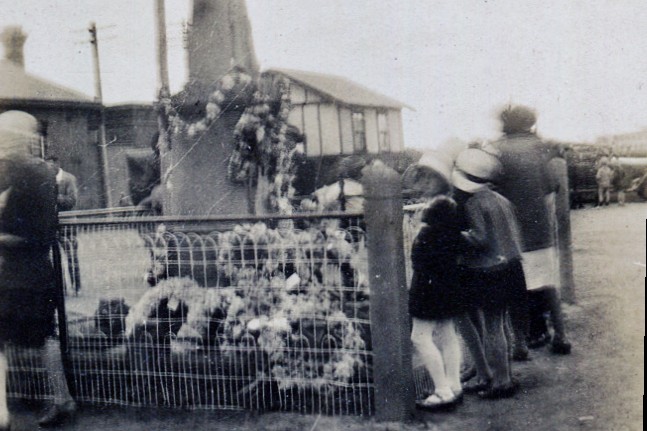
c1920s or 30s photo of Cenotaph with room in background. Photo: Jim Whitehead.
By 1930, the local branch had declined. In early 1930, the Gazette reported that Sister Parry of the St. John’s Ambulance, Sydney gave a lecture at the “local ambulance room”, with efforts being made to revive the local branch. [19]
A successful social was held in February to form a local division. Although there was initial enthusiasm, by the time the AGM came around in June, there was not a great attendance. The officers of the branch at this point were: Messrs G. Wiggins, President; A. Britton, Hon. Treasurer; and J. Weaver, Hon. Secretary. [20]
In 1934 the members of the St John’s ambulance, Riverstone agreed to allow the local C.W.A. to utilise their premises near the railway station for a Baby Health Centre. The Gazette reported that Sister Gertrude Wilson, who is in charge at Windsor, may be consulted by mothers at the Riverstone Centre every Wednesday. [21] The room was first utilised by the baby health centre in August 1934. [22] (Two years later, the well established local branch of the CWA was supporting the local St Johns Association through sponsorship. [23])
The Baby Health Centre in the room was a success. The 1934 Riverstone CWA Annual for the 1934 year, published in the Gazette of 12 April 1935, reported the following statistics: total number of attendances was 186; mothers of new born babies visited by the sister totalled 8, and subsequent visits 16. In connection with the work carried out at the Centre, new cases enrolled totalled; 20, babies weighed 177, and test meals given 24.
The annual rent for the baby health centre was £1/1/-. [24] The ongoing costs associated with the centre were covered by the Riverstone CWA. A donation box was said to have been provided at every Baby Health Centre in NSW, but donations were voluntary. [25]
It is unclear whether the room was used for first aid during this time. In 1937 a new up to date first aid room was built at the Riverstone Meatworks which was to be permanently staffed by a qualified St John Ambulance Officer. [26]
In 1938, Mrs Steer, the initial President of the Riverstone CWA reported that in the last four years that around 5,000 visits had been made to the Riverstone Baby Health Centre. The room would have been a busy place. [27]
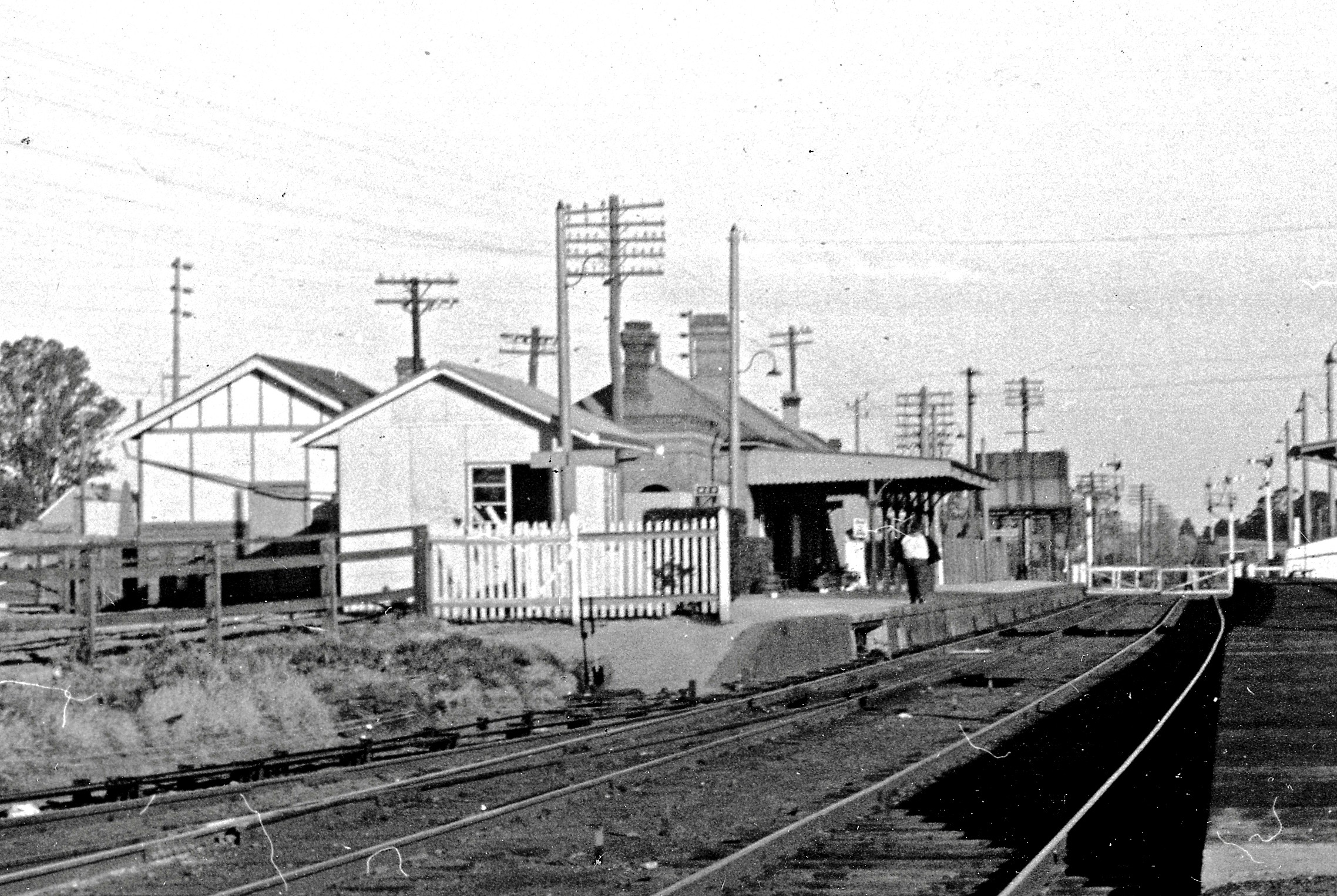
26 August 1939. Riverstone Railway Station. The building on the far left is the Ambulance Room viewed from the rear. Photo: Cropped from image ARHS 005586, Singleton CC Collection.
To supplement the funds of the CWA, in 1939, the first ever Street Stall was held outside of the Baby Health Centre. [28] The stall was a success raising £4/5/-. [29]
Although the Baby Health Centre was conducted in the room near the Station, the local CWA was so large that it held its regular meetings in the Masonic Hall.
The outbreak of the Second World War saw the focus of the CWA change to include the War effort. In 1940, they purchased wool and conducted a weekly knitting day at the Baby Health Centre for garments for the CWA War Chest. [30] Another market day was established to take place outside of the Baby Health Centre in July 1940. [31]
The following year, Mrs West was to attend the Baby Health Centre every Monday to supervise the making of camouflage nets for the Army. [32] A month later Mrs West was there every day except Wednesday to instruct anyone wishing to learn how to make the camoflauge nets. One net had been completed and several more were underway. [33]
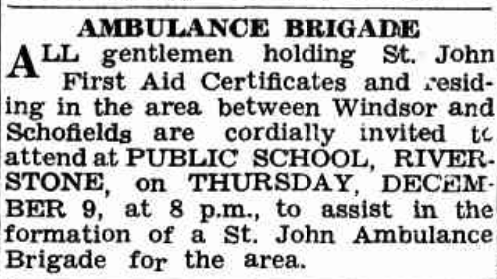
As the War progressed and concerns about the security of Australia from invasion grew, steps were taken to establish a local branch of the St John Ambulance Brigade. The meetings were held in the Riverstone Public School (now Casuarina School) on the corner of Garfield Road East and Piccadilly Street. [34]
The Gazette provided the details of the local Ambulance Brigade as at November 1944: Divisional Surgeon: Dr. M. A. Ginsberg-Lapin, Riverstone. Divisional Superintendent: Mr. A. Keegan, 1 Castlereagh-street, Riverstone. Ambulance Officer: Mr. P. Marlin, 16 Oxford-street, Riverstone. Divisional Secretary: Mr. J. Mason, Crown-road, Riverstone. Divisional Treasurer: Mr. P. T. Purvines, Wellington-street Riverstone. Divisional Storekeeper: Mr. W. H. Merriman, 21 Castlereagh-street, Riverstone. Other members: Messrs. K. V. Brown, Windsor-road, Vineyard; A. S. Cartwright, Piccadilly-street, Riverstone; J. Dale, 528 George-street, Windsor: B. Keegan, 21 Elizabeth street, Riverstone; J. L. Lawlor, 164 George-street, Windsor; A. T. Murphy, 200 George-street, Windsor; E. W. O’Brien 236 George-street, Windsor; F. Quinlan, Windsor-road, Riverstone.[36]
After the War, Dr Ginsberg-Lapin left the town and her practice was taken over by, Dr. James Fraser Boag, who also took over her role as Divisional Surgeon of the local St Johns. [37]
Ernie Byrnes joined the St Johns Ambulance in 1945 and wrote an article in the Historical Society 2007 Journal. Ernie wrote that the St Johns Ambulance operated in Riverstone until 1952, having operated for nine years. During that time they Attended 3,202 casualties on Public Duty; attended 5,207 instructional meetings, drills and inspections; attended Divisional meetings either weekly or fortnightly to practice and to arrange attendances at public duties. (Ernie did not mention where they held their meetings.)
In an article on the Historical Society 1997 Journal, Judith Lewis wrote: In 1943 the block of land on the comer of Market and Pitt Streets was purchased for eighty pounds and the present Baby Health Centre and C.W.A. Meeting Rooms was duly erected, with the Foundation Stone being laid on 28th June 1952.
At this time the services of the Baby Health Centre were so large that the sister attended on two days a week. [38] (This increase in demand was no doubt linked to the servicemen and women returning to civilian life after the War.)
The new CWA Baby Health Centre opened on 31 January 1953. [39] The building housed a meeting room as well as rooms to be used as the Baby Heath Centre. The opening of the new rooms brought to an end 19 years of the CWA using the small room near the Station.
On 15 May 1952, a branch of the Old Age and Invalid Pensioner’s Association of Australia, N.S.W. Division had formed at Riverstone. [40] In a snippet in the Gazette of 9 July 1952, its was stated that meetings would be held in the R.S.L. Hall on alternate Thursdays at 2 p.m.
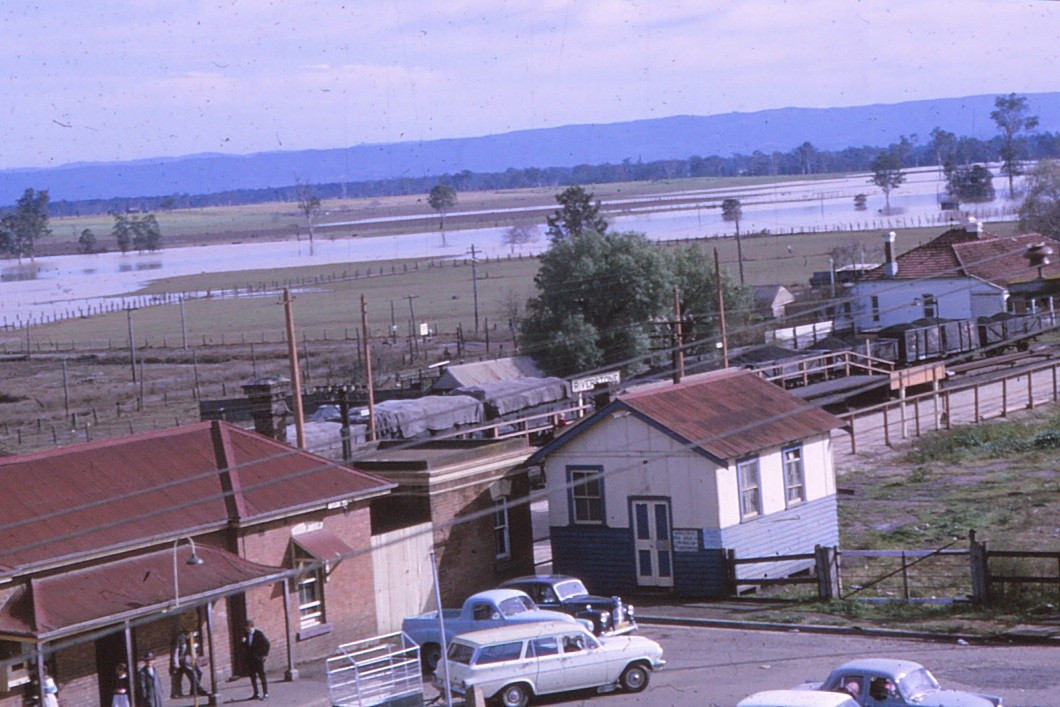
1964. The hall in a blue and white livery. Photo: Ken Britton.
By 1964 the group had decided that they needed a hall of their own. At this time they were holding their meetings in “the Pensioners Room at Riverstone Railway Station”. The Gazette reported: Blacktown Council has placed a block of ground in Park Street, Riverstone, at the branch’s disposal, and it is thought that an army hut would be ideal for the type of hall needed…. New members will be welcome to the next meeting on January 23 at 1.30 p.m. in the Pensioners Room at Riverstone Railway Station. Office-bearers elected at the recent annual meeting are as follows: President: Mr C. A. Harpur; Vice-presidents, Messrs B. Keighran and H. Joyce. Secretary: Mrs B. O’Loughlan. Treasurer: Mrs Brown.[41]
Although they had to hold their 1964 Christmas Party in the Footballers Hall, and continued to meet in the Pensioners Hall near the Railway, by December 1965, they were able to hold their Christmas party in their new hall. It was the first function held in the hall. [42]
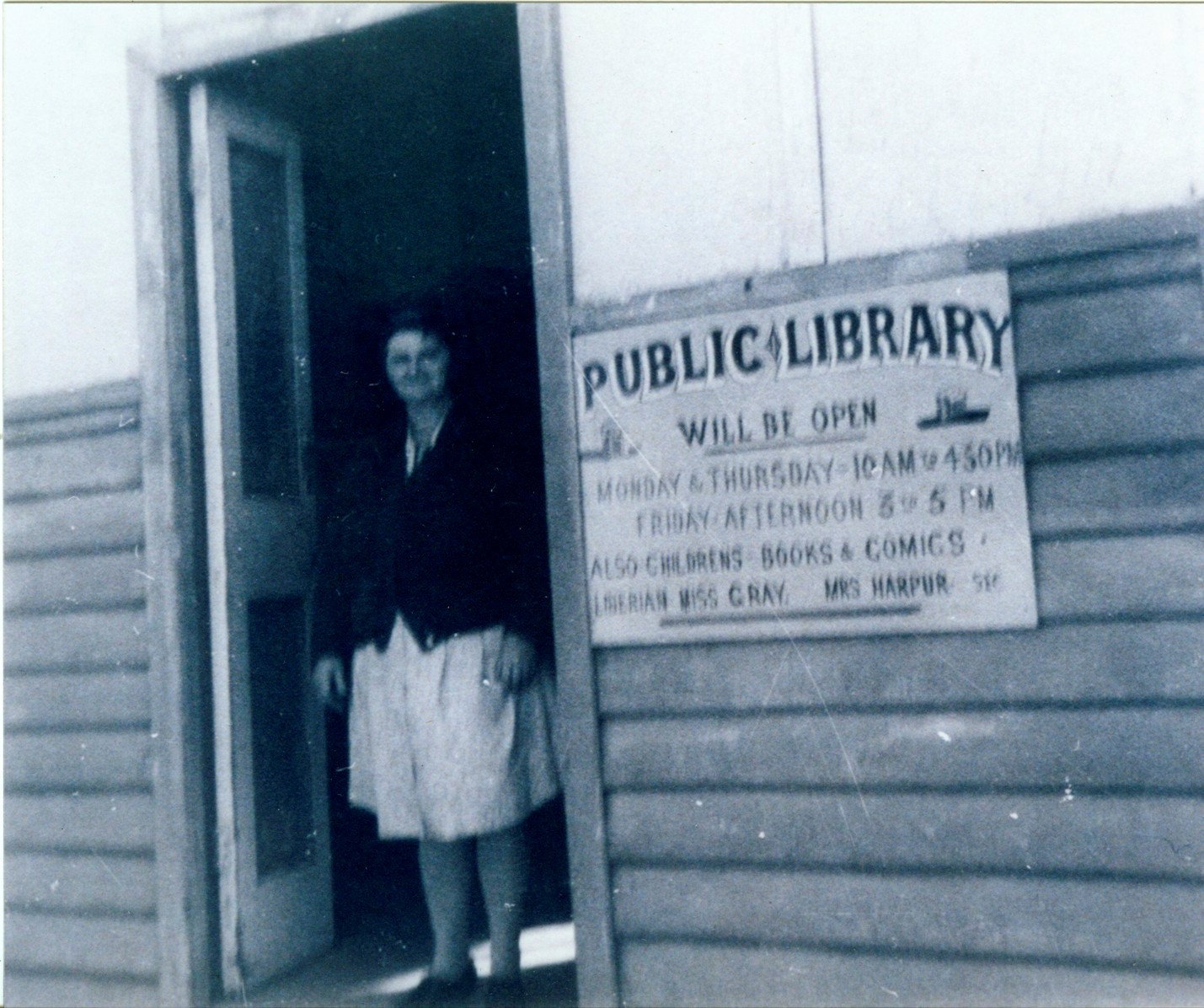
At some point the building near the station was converted to a small library. The sign on the building in the photo of page 51 shows that the Librarian was Miss Gray and the Secretary Mrs Harpur.
During the 1960s the room was used by the local branch of the Alcoholics Anonymous. In the 1970s the local motorcycle clubs met there. Reg Brace recalls that if anyone started picking up the books they would be sent out. The Club made a donation for the use of the room.
The doorway to the building. The years is unknown and the images comes from a copy negative from the Historical Society collection.
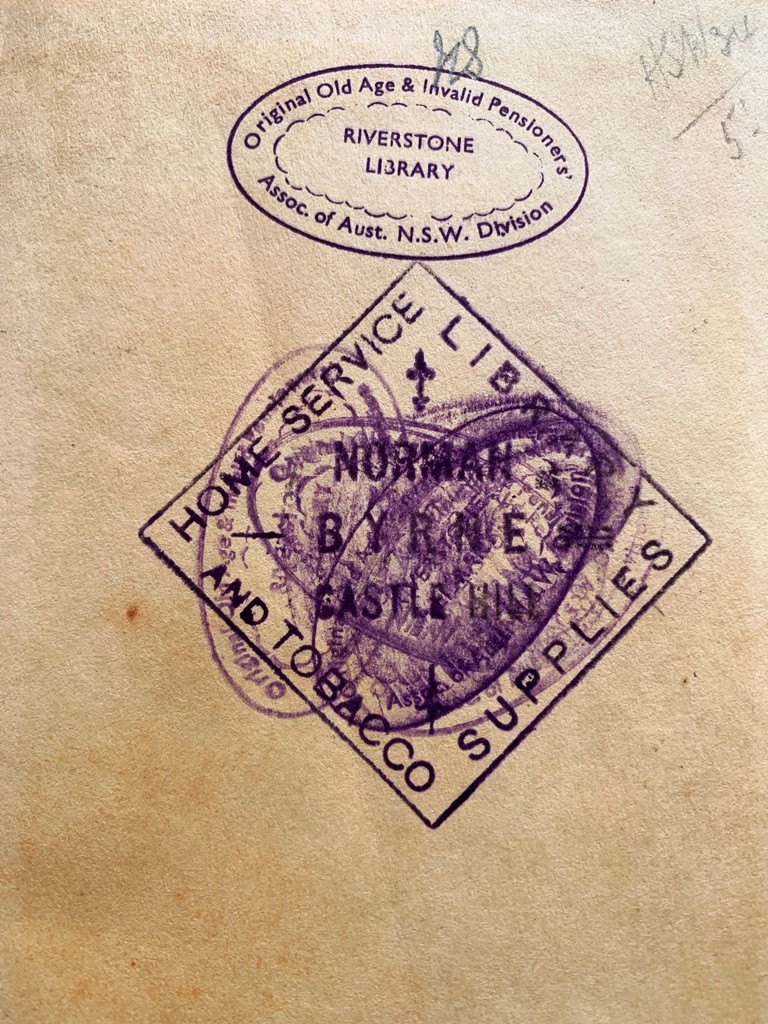
Photo of stamp inside book from the Original Old Age & Invalid Pensioners’ Library at Riverstone. The book is now in the Museum.
Julie Anderson remembers going into the little library quite often with a friend and they used to talk to the librarian. She says there were books, some bits and pieces and some chairs. The books included “Penny Dreadfuls”, Westerns and Mills And Boons. [43] When the library was being closed, I purchased a book at the sale, which had previously been part of the a mobile library service at Castle Hill and had either been donated or sold to the Pensioners Library.
The building received a new roof in March 1982. As it was on railway land, it was regarded as being railway property. Each time the station was painted, the room was painted too.
In my handwritten notes, I had recorded that the building was demolished in February 1998 to make way for a refurbishment and expansion of the railway car park. Although I had never used the building, it was still sad to see it go. At the time, I had no idea of the history associated with that one small building.
April 1980 showing a small awning above the door. Photo: Rosemary Phillis.
In our last journal, the stories from the Hood Family Auto Wrecking business in the 1960s and 70s were a popular item. Allan shares another story from his memories..
Tap Tap
Back in the early 60-70s, my father was about to close up for the day at the Auto Undertakers Wreckers. He closed the front gate and was about to let out our watch dogs. He heard a tapping sound and walked towards it. He discovered Jim, one of our customers, was still working on getting some parts off one of the vehicles. Jim was very grateful that dad hadn’t let the watch dogs off.
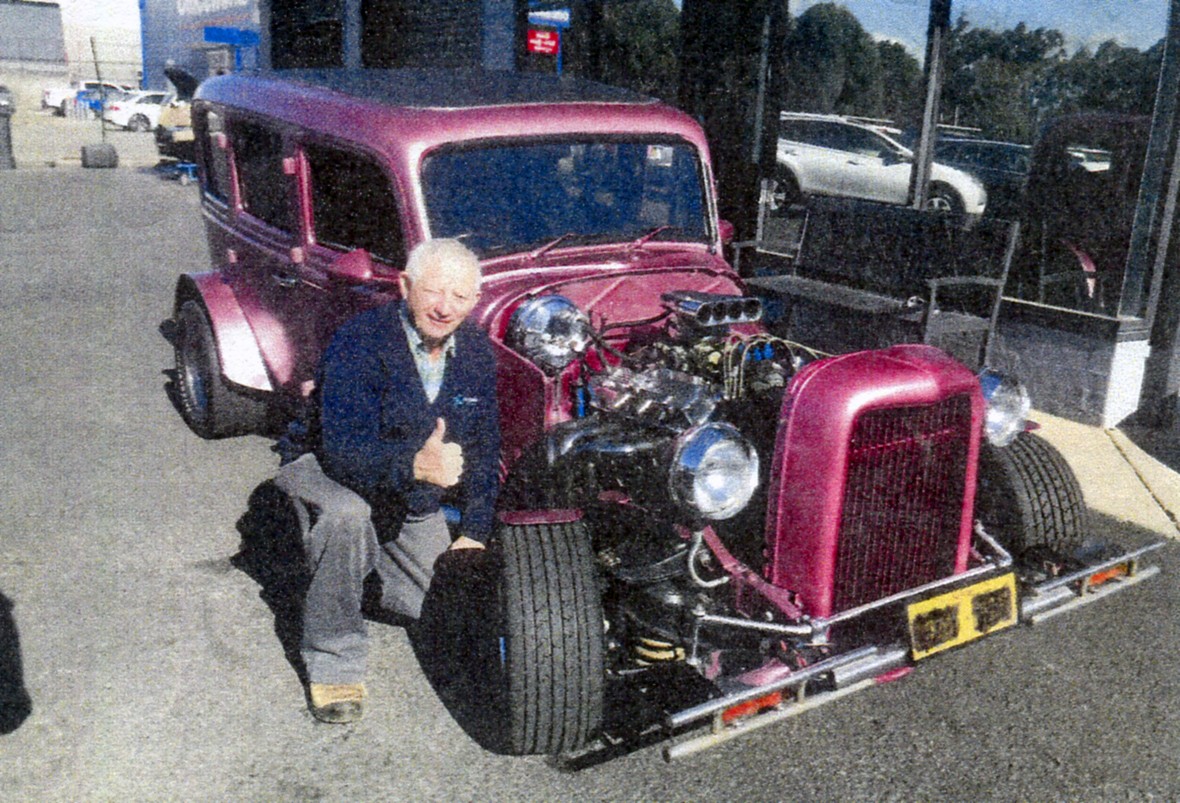
We had a wide variety of vehicles at the wreckers. Jim was building a ’34 Ford Hot Rod. Years later he finished the hot rod, with many of the parts supplied from our wrecking yard. The list of parts included:-
V.W. Beetle Collapsible Steering Column.
Twin 12.V. V.W. Wiper motors.
Mark I Ford Zephyr Radiator.
H. D. Holden Headlight Rims
Austin 1800 Rack and Pinion Steering.
H. T. Holden Dash and Speedo.
H. T. Holden Power Brake Booster, plus lots more.
The finished product says it all. A lot of time and patience. I finally got to take a ride in it, unbelievable to say the least!
Allan Hood with the Hot Rod. Photo: Jim Worldon.
The Rack’n Pinion Holiday
Back in the late ’80s-90s our family of four embarked on a weeks holiday up to Forbes. We had booked a two bedroom cabin at a the Lachlan View caravan park through the NRMA. On arrival on Friday night, we were told that unfortunately the cabin had already been booked out to big group of travellers. They asked if we would take a six birth caravan instead and we said that would do.
Through the night I heard a lot of strange noises. I rolled over thinking that I must have been dreaming, after all, why would their be a lot of noise in a caravan park through the night?
In the morning I got up and went outside to stretch my legs. To my surprise, the whole caravan park was surrounded by Model T Fords.
I couldn’t help myself, I strolled over to look at one of the cars and looked under the bonnet. To my surprise I noticed that it had modern era Ford Escort rack and pinion steering installed.
The car’s owner walked up and I asked him, “what is that Escort rack and pinion doing in there?” (I thought they had to have original parts.) He replied “the rules are as long as it is a genuine Ford part we are allowed to use it.” “Fair enough” I said. He then asked how I knew so much about cars and I told him that our family had an auto wrecking business and that I had removed many rack and pinions from Ford Escorts over the years.
We enjoyed our holiday in Forbes which is a lovely town, we learnt all about Ben Hall the bushranger, the sort of thing you get to do when you visit places. Friends of ours from Riverstone recently moved to Forbes to live, looking for a country life style.
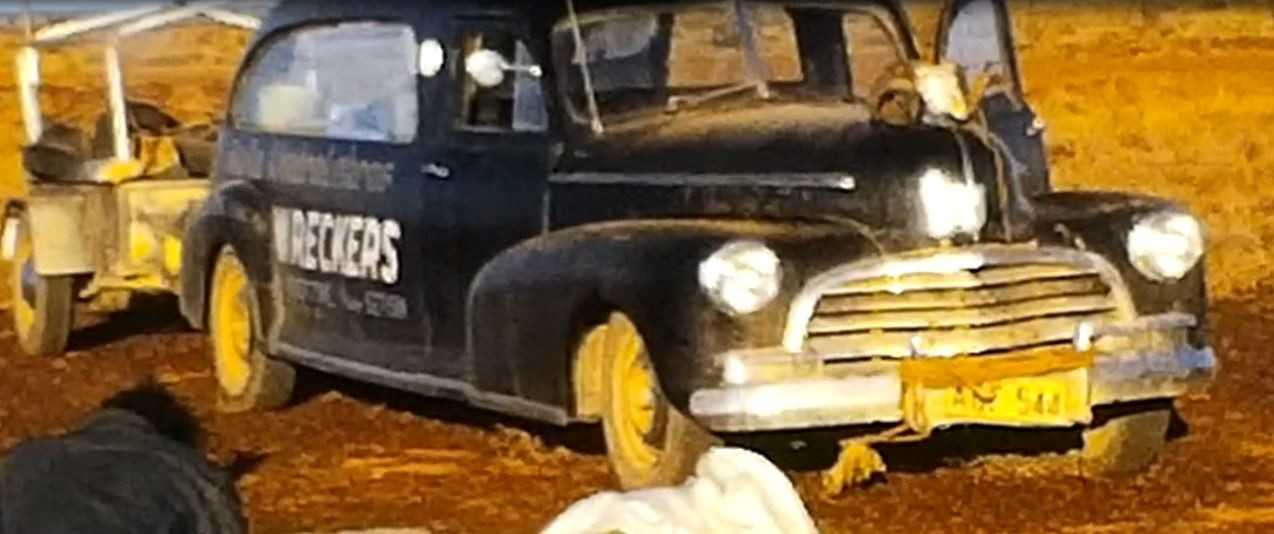
The Hood Family auto wreckers hearse in a holiday decades earlier. Photo: Extracted from the Hood family movie footage.
Blacktown City Council Media release – Published on 20 September 2022
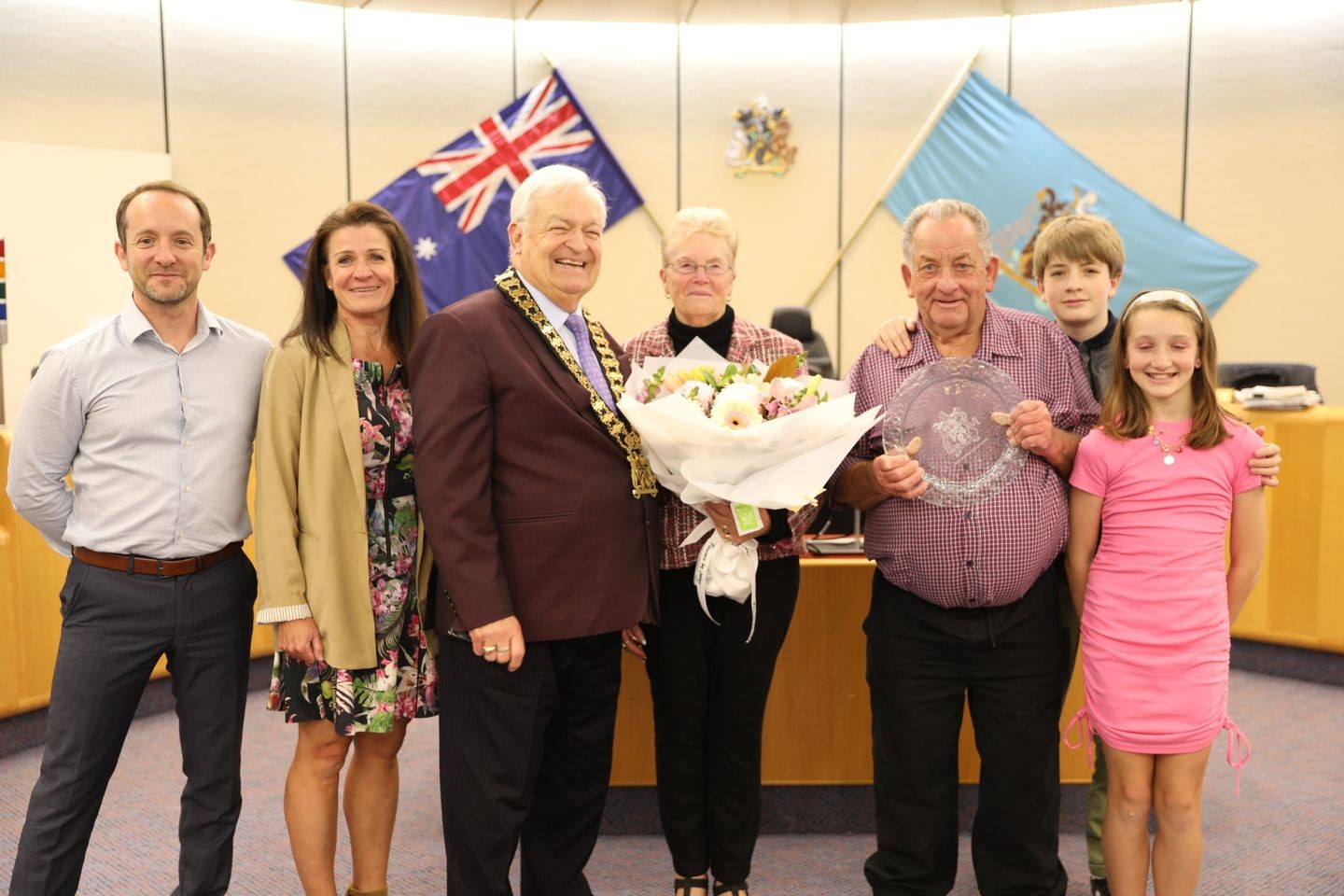
Mayor Tony Bleasdale, with Althea and Vernon Cross and family. Photo: Mayor of Blacktown City FB page.
RIVERSTONE ATHLETICS STALWART HONOURED
Blacktown City Mayor Tony Bleasdale OAM has celebrated a dedicated volunteer and stalwart of Riverstone Little Athletics, Vernon Cross, by naming a field in his honour.
The athletics field at Riverstone Park was officially named Vernon Cross Field, in recognition of Vernon’s 40 years of service to the club.
Mayor Bleasdale said: “Vernon’s dedication can be traced back to the club’s founding season in 1982, when Vernon’s daughter first joined the club in the Under 8’s.
It wasn’t long before Vernon put up his hand to create and maintain a record board for the club.
Around the same time, he was elected Championship Officer for zone, regional and state carnivals – a role he held until 2020.
In 1987, he was elected Club President and has held this role ever since. Two year later, the club awarded Vernon life membership, and the accolades have kept coming.
In 2007, he was awarded Volunteer of the Year by Athletics NSW, and later, he received the Russel Magennis Award for Riverstone Schofields Sports Person of the Year.
Just last year, The Voice of Sport NSW awarded Vernon a Distinguished Long Service Award, making him the first member in the state to receive such an award.
But Vernon was never in it for the awards. He’s the definition of a true volunteer, driven by giving back to his community and making his local club the very best it can be.
People like Vernon are the backbone of our community – the volunteers who get on with the job without asking for praise or reward.
They are the smiling face that greets everyone on club night, the mentor for up-and-comers, and the inspiration to all.”
During Vernon’s 40 years with the club, he has been committed to making sure the club had the very best facilities.
Vernon was integral in getting a new club house and equipment storage area, as well as upgraded long jump pits, discus and shot-put rings.
Vernon’s hard work also extends to Riverstone Schofields Memorial Club’s local sports council and Riverstone Park park committee.
“Vernon’s service is unique and it’s only fitting that this field be named in his honour,” Mayor Bleasdale said.
“Generations of runners, jumpers, throwers, hurdlers, and shot putters owe Vernon their thanks.”
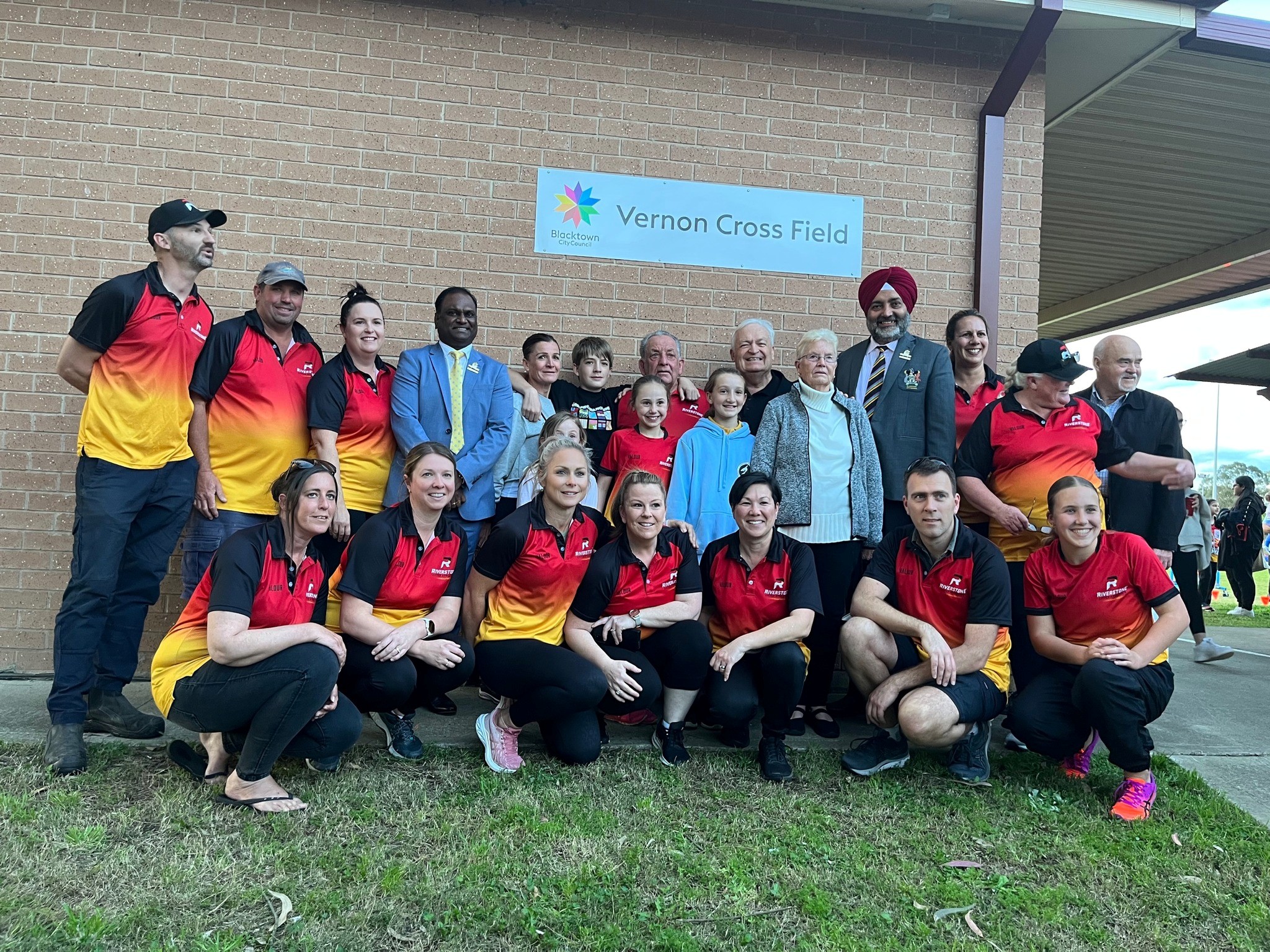
The naming of Vernon Cross Field was celebrated at an official unveiling last week, on the launch night of the little athletics season.
Taken after the official naming of the field. Vernon is in the back row 7th from the left. Photo: Blacktown City Council Facebook page, 19 September 2022.
In 2022, AUSCOL the present owners of the former Bluhdorn Tallow Factory asked if the Historical Society could provide any information about the history of the factory as in 2021 it had been fifty years since they purchased the business. We were able to locate Janice Bluhdorn, who provided the following story in a phone conversation on 17 June 2022.
My parents were Bernard and Hazel Bluhdorn. The name Bluhdorn is a German one, but my father and grandfather were both born in Australia.
Dad served in the Army during the Second World War and was a prisoner of war in Japan for 3 and a half years.
Before the war, men enlisting were told that their jobs would be held for them while they were away and they would be able to go back to them when they returned, but this was not always the case.
Dad met mum at a dance at Dulwich Hill. She was a good dancer and a popular partner.
They ended up running a piggery at Appin, with around 1000 pigs. Unfortunately a visitor from the markets introduced swine flu to the herd which had a devastating effect.
Dad went to the markets on a regular basis. One day a fellow named Greg McHugh told him about a place at Riverstone that was for sale, as the owner wanted to get out of the business.
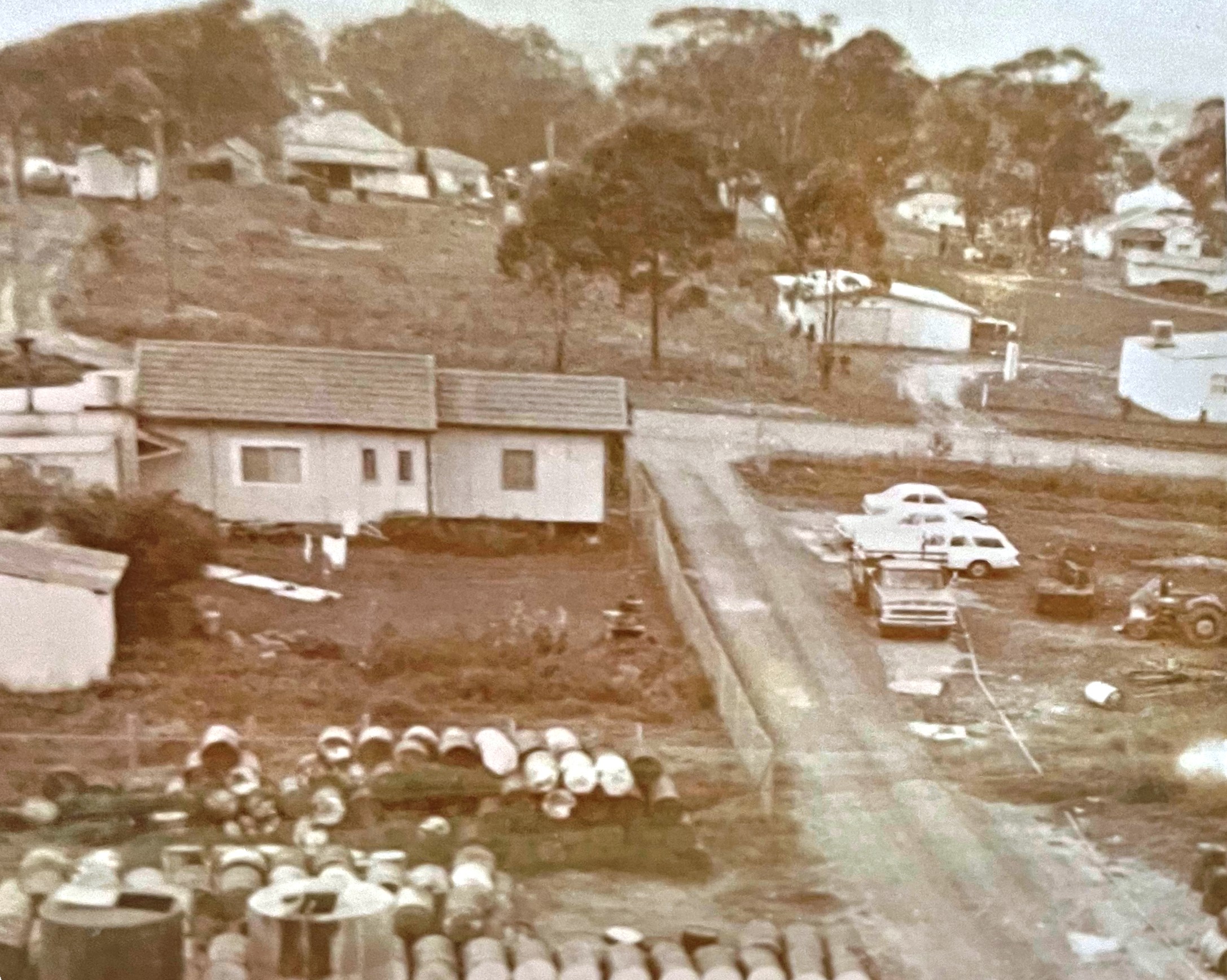
The place was a tallow factory at Riverstone operated by Mr Jansen. The block of land was on the corner of Melbourne Street and Riverstone Parade.
Along with the factory, there was a home on the block as well. Mum and Dad purchased the business. Dad came over and lived in a room in the house while he learnt how to operate the business. Mum, my sister Robyn and I joined him in November 1959.
My parents worked seven days a week for five years building up the business, before they were in a position to employ someone else to help them.
The business was called B&H Bluhdorn to start off with, then changed to Bluhdorn Pty Ltd.
Robyn and I both attended the local School. At school, when I was asked what my father’s occupation was, I was the only one who could say, “tallow merchant”.
Dad started out collecting fat from individual households. People filled prune tins with fat which we processed at the factory. I remember my sister Robyn washing the prune tins so that they could go back to people.
We also collected fat from businesses such as the big cafes like Oceanic, along with fast food outlets, Henny Penny, McDonalds and KFC. The fat from the businesses was stored in 12 gallon Phytol drums.
As the business grew, we had two drivers going all over Sydney collecting the fat. Dad never forgot his individual customers though and continued to collect fat from them.
Mum and Dad were able to buy the remaining land between Melbourne Street and Loftus Street. This allowed the factory to be expanded and the entrance to be moved to the side street rather than Riverstone Parade.
Mum was the best at mixing the tallow grades to what the customers wanted. The oil was heated by a boiler and had to be kept at a particular temperature, if it got too cold it would solidify. To ensure that the boiler didn’t go out, the men monitored it during the day and Mum looked after it at night. She had a banana lounge to lie on and the dog beside her for company.
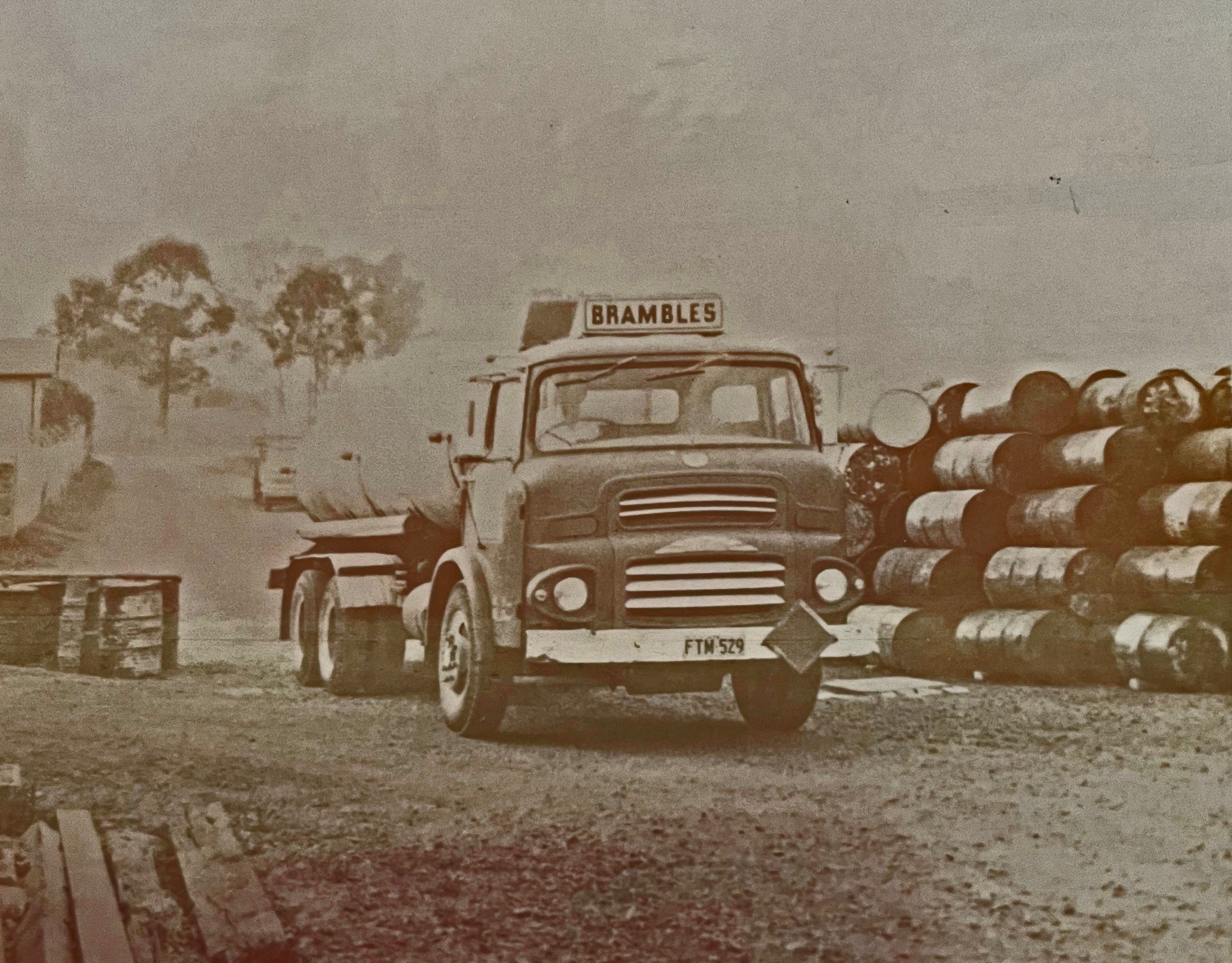
Some of our biggest customers were Palmolive and Unilever. They used the oil to make products like soap and lipstick. I remember the big heated tankers from Brambles lining up in Riverstone Parade to come in and collect the oil. The tankers had to be heated to keep the oil hot and prevent it from solidifying.
One of the challenges was managing the smell from the plant. When the Meatworks was flooded, they used to hang the wet sheepskins on the fence along the railway line and people used to blame our business for that smell. Blacktown Council was always onto us.
Dad had a nervous breakdown, linked to his time as a prisoner of war. There were no counselling or support services back then. My parents decided to sell the business.
They sold in December 1971 to Gardiner Smith. I stayed on at the business, and someone came out from their company to show me how they wanted the books done. I continued to work there until my husband and I brought his parents auto wrecking business which we renamed Western Wreckers.
Mum and Dad moved to Caloundra in Queensland. Sadly Dad had a stroke and Mum nursed him for twenty years until he passed away. Mum passed away two and a half years ago.
November 1971. View from tank on the property. Photo: Bluhdorn Family.November 1971. Brambles tanker. Photo: Bluhdorn Family.Hazel Bluhdorn in the new building under construction. Photo: Bluhdorn Family.
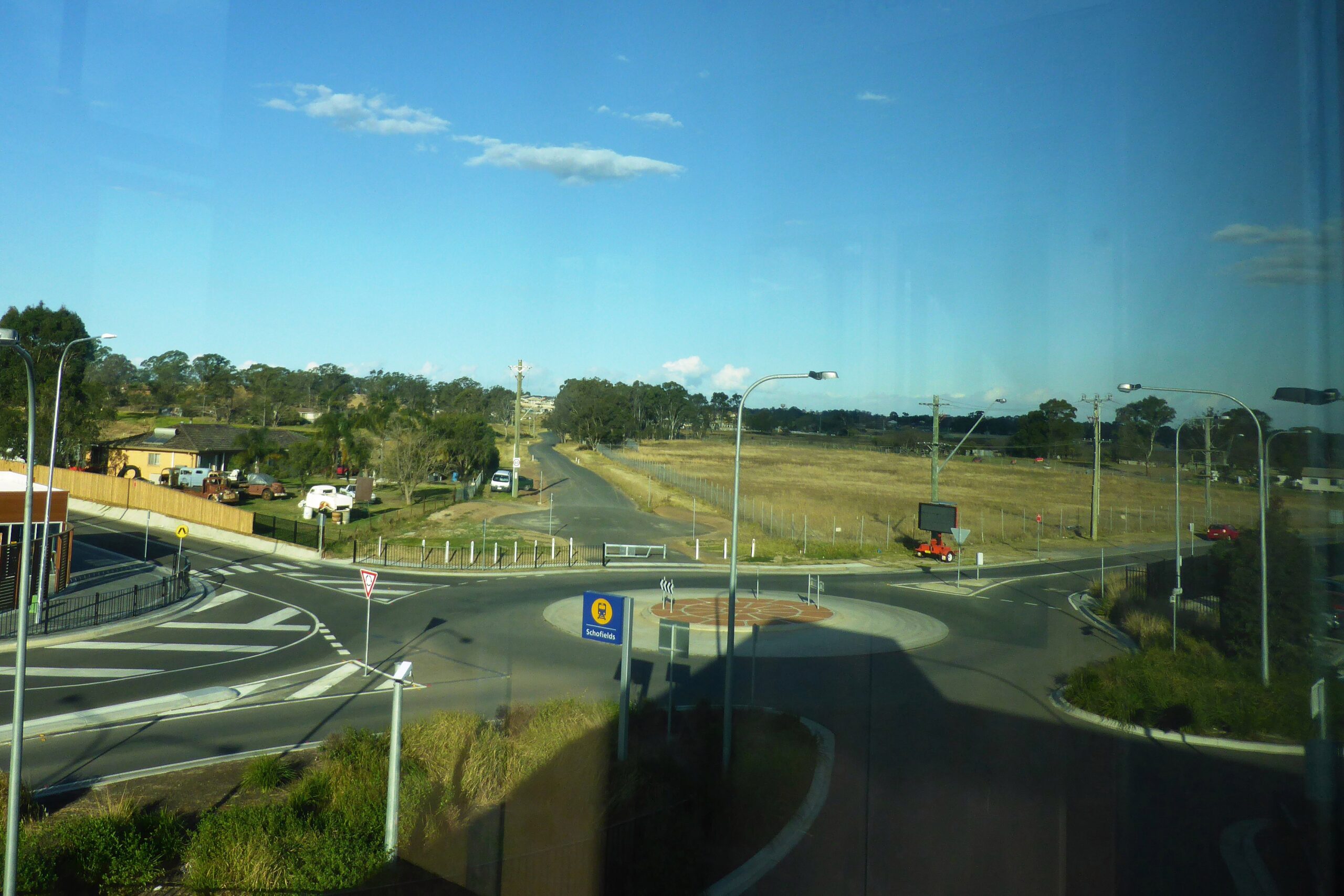
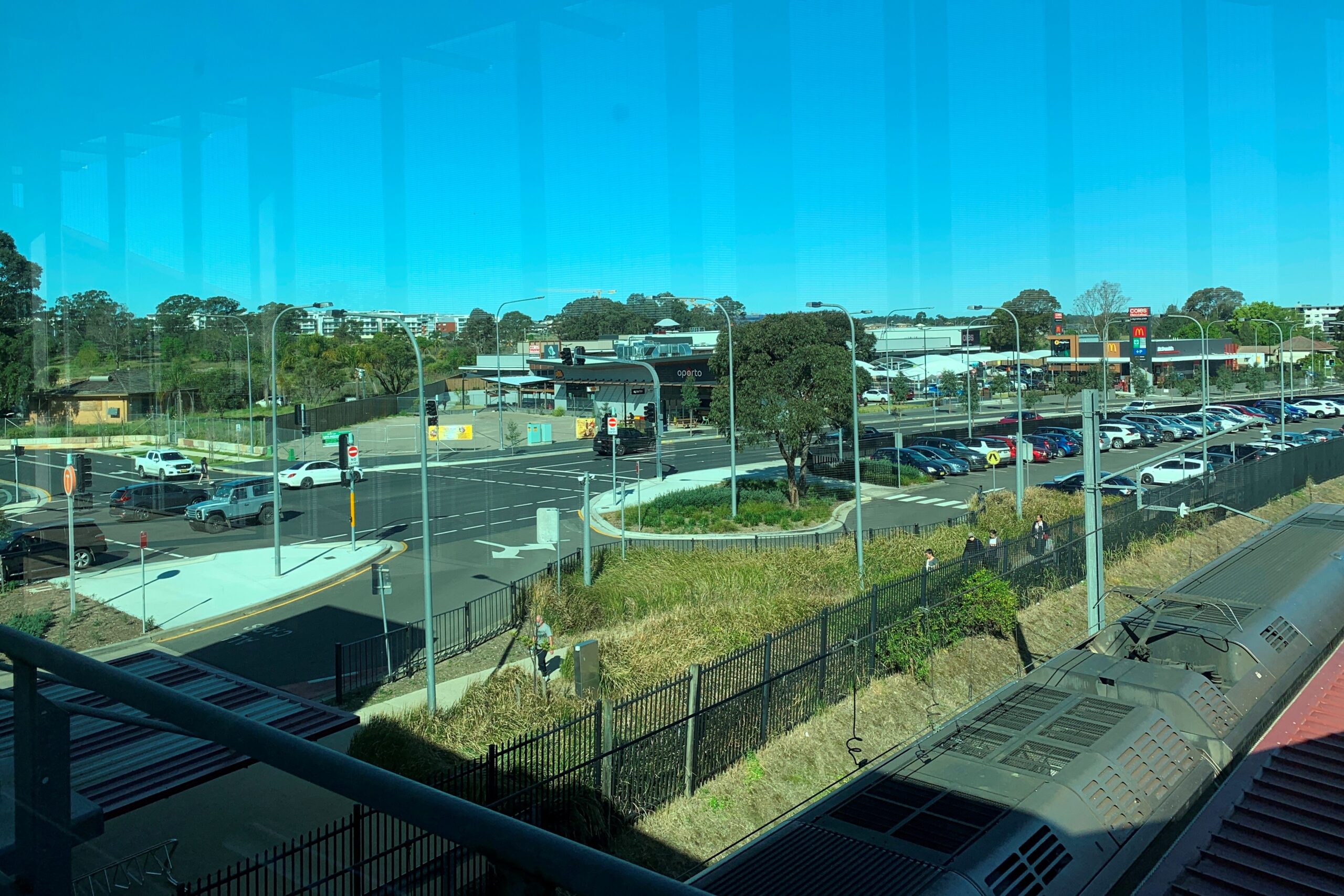
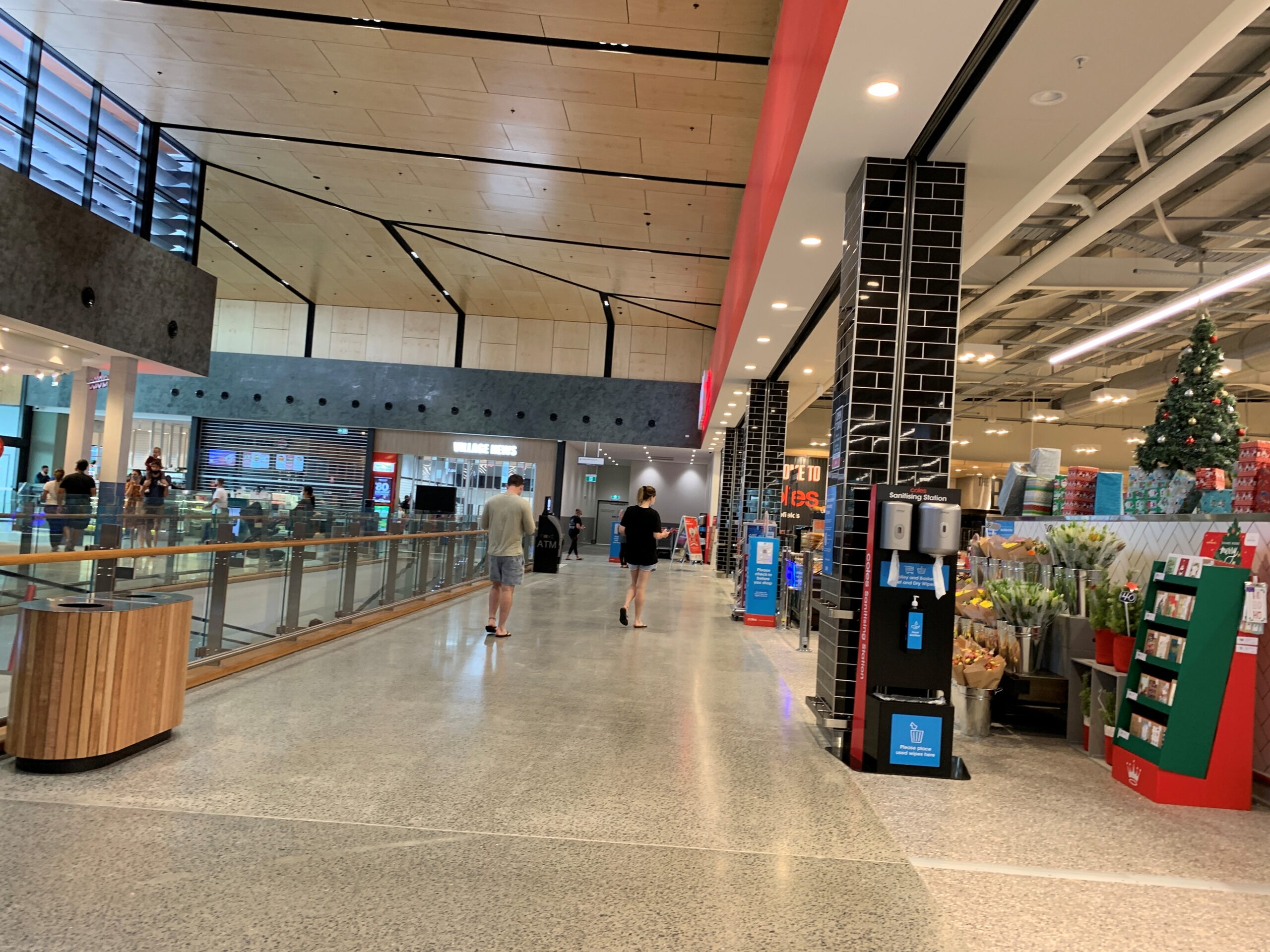
2 August 2014. Looking from the Schofields Railway Station to the future site of the Schofields Village. The roundabout was replaced by traffic lights in 2022. Photo: Rosemary Phillis.11 September 2022. The same view as the top photo, showing the new shops at Schofields, along with residential units in the distance. Photo: Rosemary Phillis.
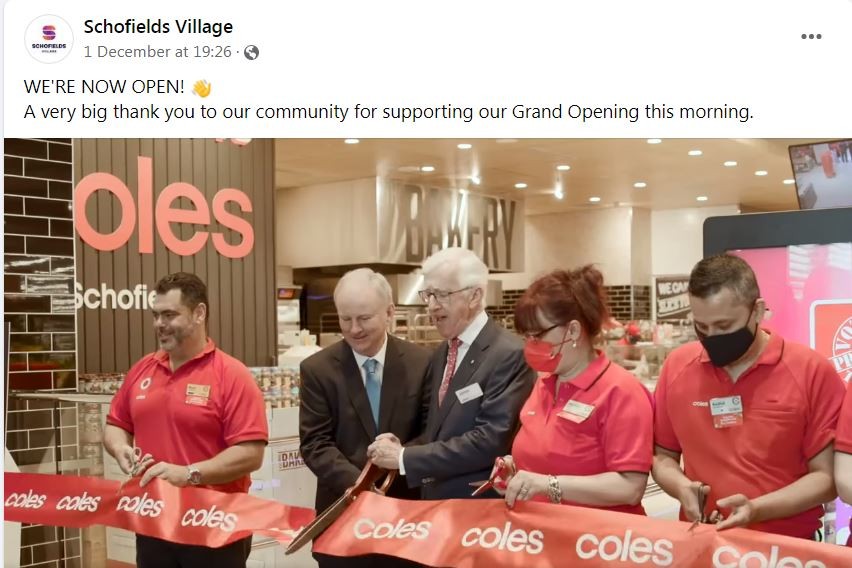
During lockdown 2021, work on the new shopping centre known as the Schofields Village, was paused for around three months. The complex was officially opened on 1 December 2021, though not all shops were completed at that stage.
To facilitate traffic flow in the area, three sets of traffic lights were installed in that section of Railway Terrace. One set at Jerralong Drive; another at Manchester Drive replacing the roundabout at the entrance to Woolworths/Railway Station; plus a set at Jacqui Avenue, the main access to the new Schofields Village shopping centre.
Image of the official opening from the Schofields Village Facebook page.21 December 2021 Opening Day. In front of Coles you can see the sanitisation and sign in station which were required under COVID 19 restrictions at the time. Photo: Rosemary Phillis.
Back Row: Lil Davis, Evelyn Rumery, Ted Vaughan, Jessie Davis, Rev. Setchell. Front Row: Elma Kirwan, Dorothy Davis, Marjorie Rumery, unknown. The adult in the window to the right: Syd Pye. Photo: RDHS collection.
A snapshot from 100 years ago. The Sunday School teachers at St Pauls Church of England. The occasion was a Sunday School picnic. In those days the picnics were held at the Church grounds. The image was taken at the side of the Sunday School Hall.
Note the lady in the front row with an old fashioned wooden tennis racquet. Tennis was a popular past time and St Pauls had a tennis court and hosted many matches over the years.
Players on St Pauls Church of England. Photo: Rumery Family collection.
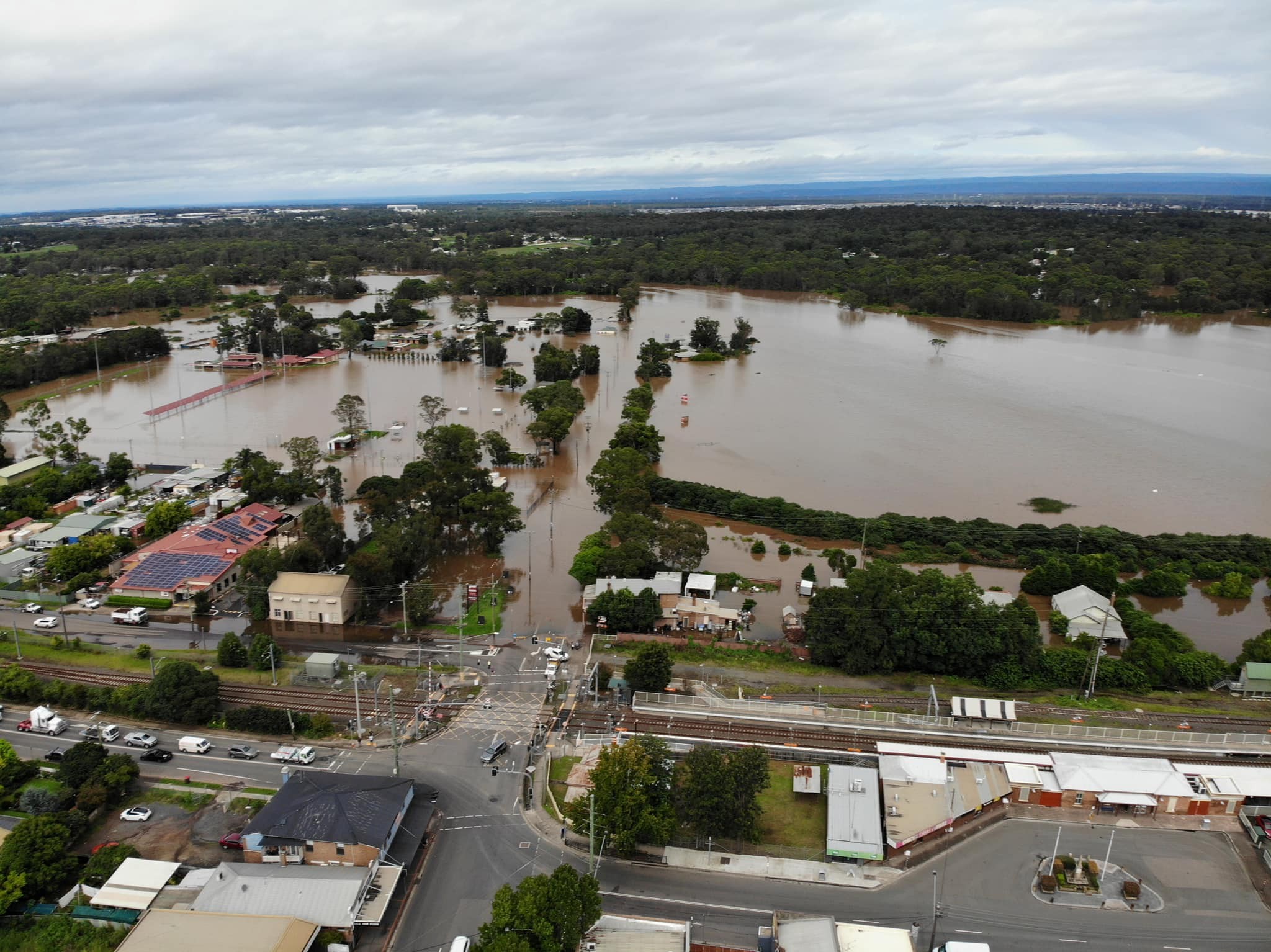
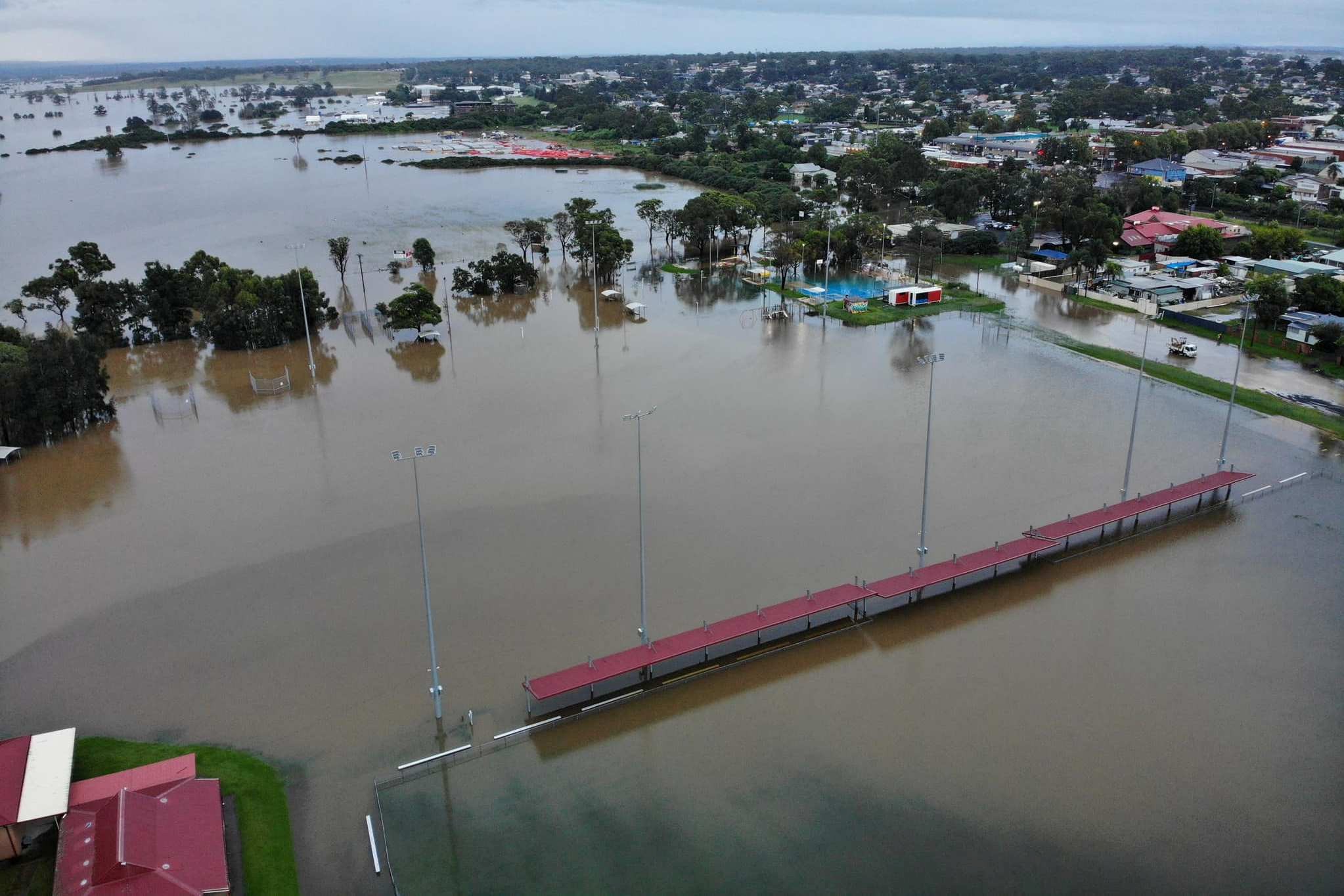
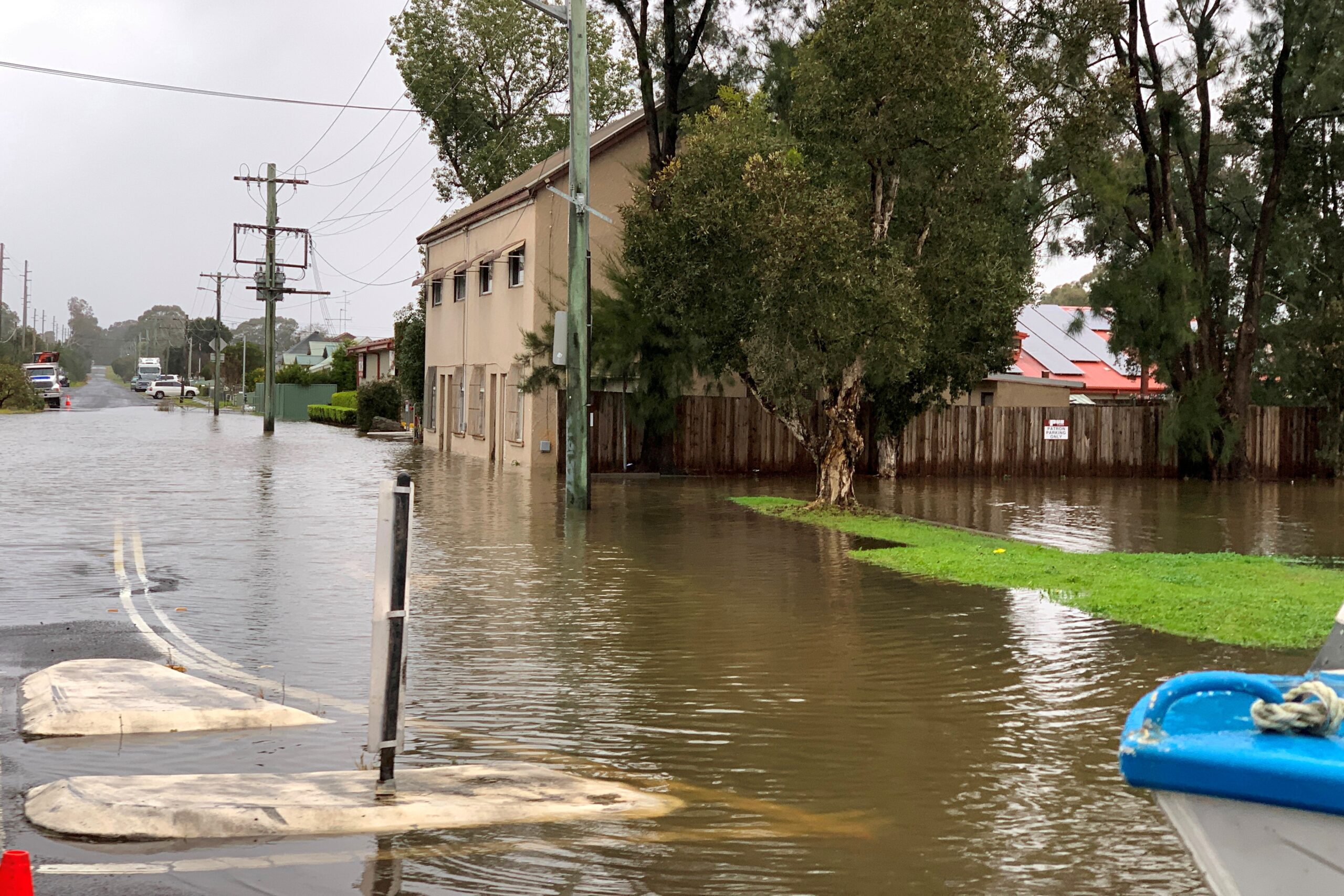
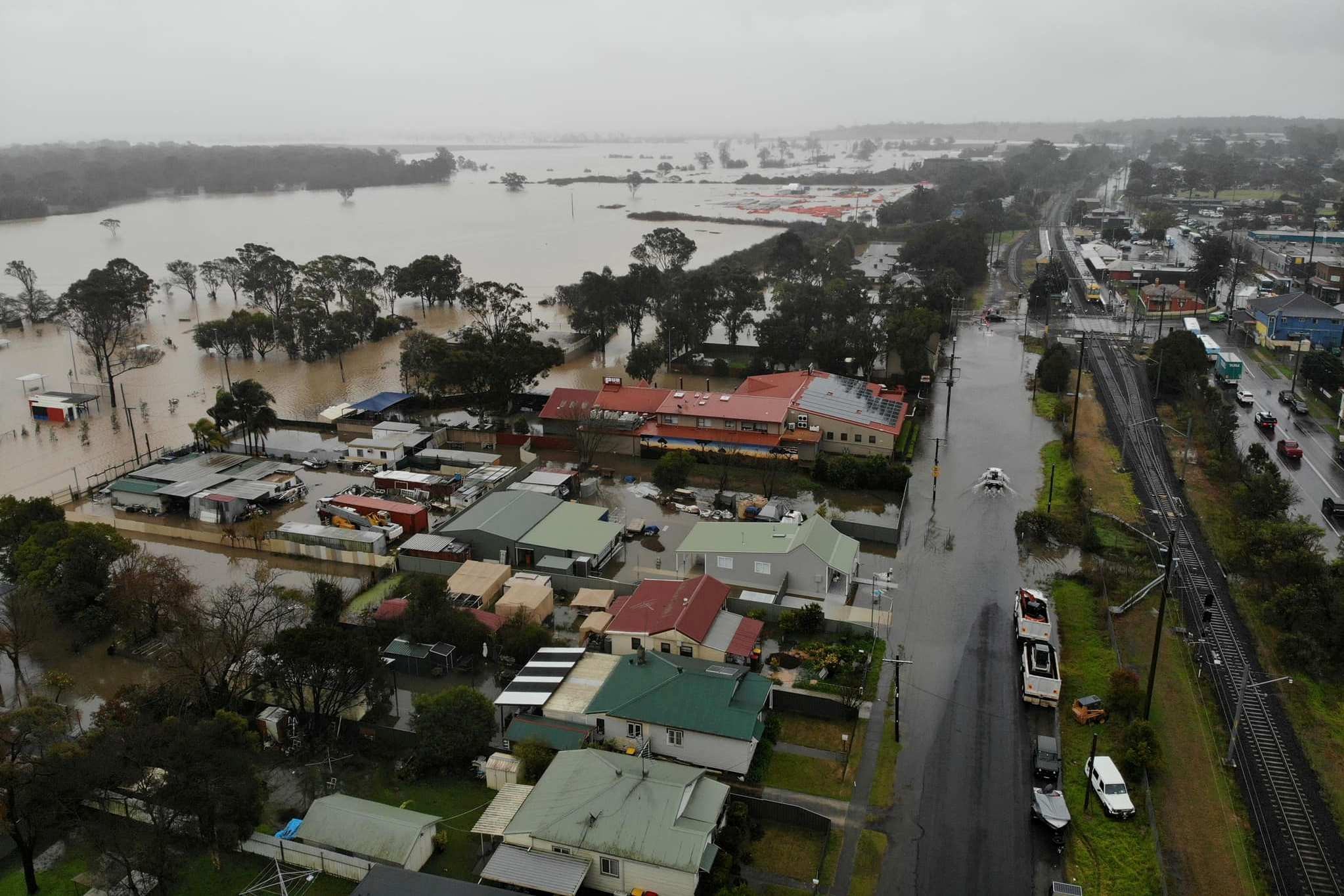
9 March 2022. View looking across the Level Crossing towards Marsden Park. Photo: Mark Strachan.8 March 2022. View across Riverstone Park, looking towards Vineyard. Riverstone township is to the right. Photo: Mark Strachan.
For 29 years local residents saw no inundation of houses from flood waters. This came to an end last year. Twelve months later, we were again subject to the significant flooding when water levels rose to levels just below that of the 1978 floods.
The weather patterns resulted in minor flooding in the first week of March this year, which then receded. Next, an intense south eastern low made its way down from Queensland and hit Sydney. Significant rain continued to fall. The resulting floodwaters impacted Riverstone in two ways. Firstly, Garfield Road was cut by surface water coming down through the catchment area. Secondly, as has always occurred, that water then backed back over the flood plain when it met the Hawkesbury River which was also in flood.
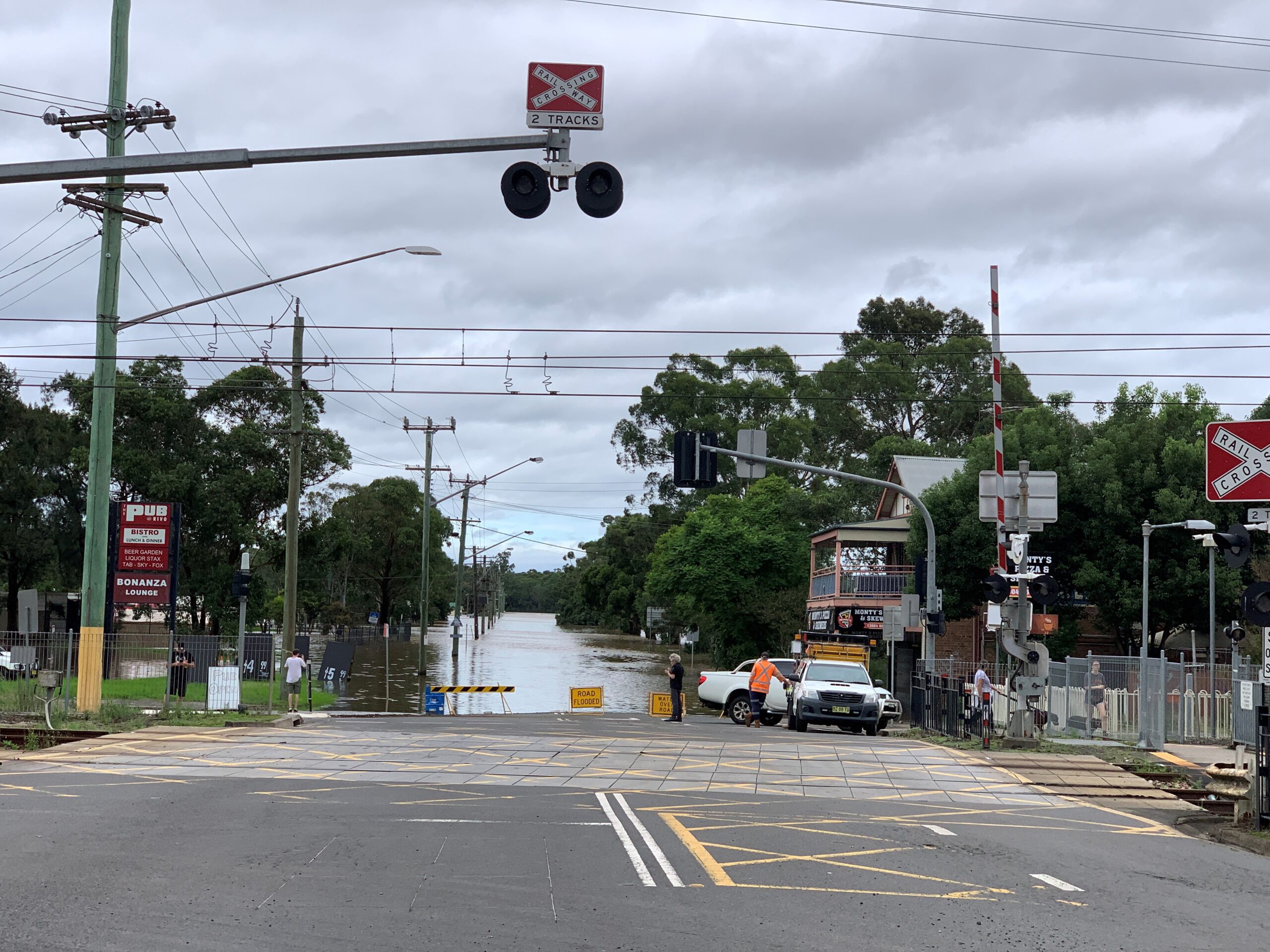
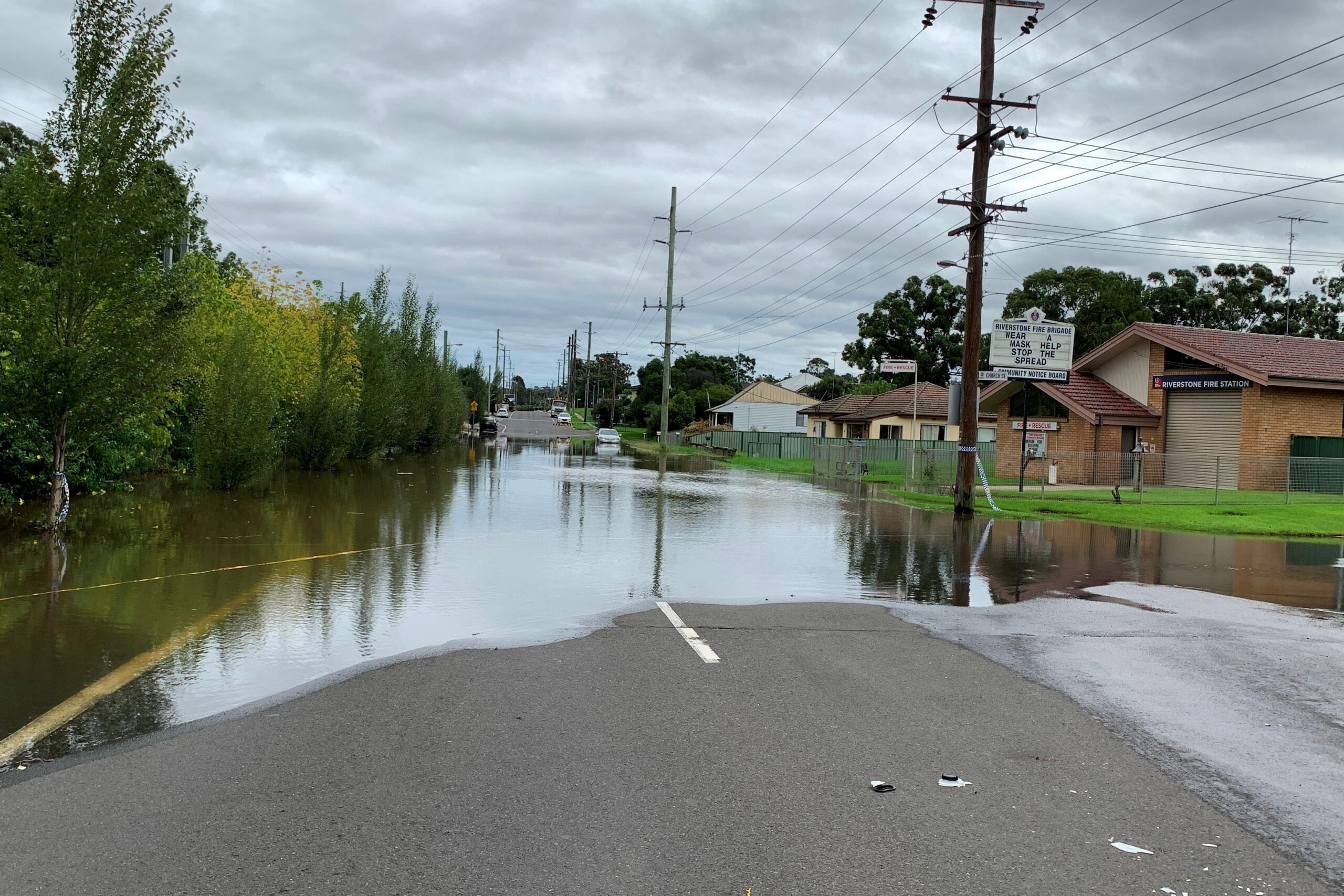
The backwater continued to rise and came up Garfield Road to West Parade, inundating homes and covering properties. The floodwater also came under the railway viaducts near Church Street, cutting Riverstone Parade near the fire station.
The rain stopped on Thursday 10 March and the water receded surprisingly quickly. Garfield Road was able to reopen to traffic the next day.
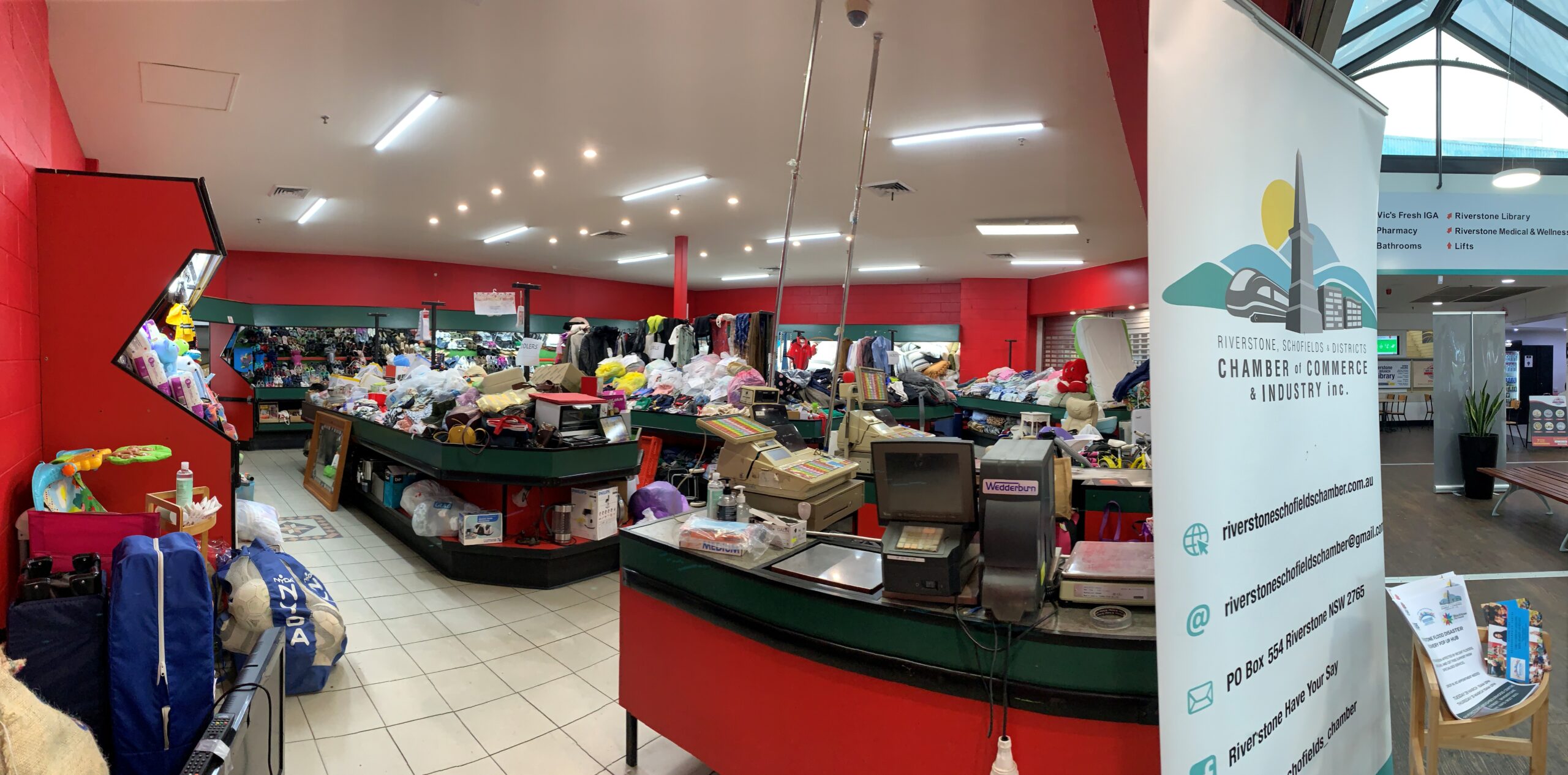
The Riverstone Neighbourhood Centre became a centre where people impacted by the floods could register and find avenues of support. The community was quick to respond to help. A donation ‘hub’ was established in the former fruit and veg shop in Riverstone Town Centre. Donations of clothing, Manchester, household items and furniture came from around the Riverstone and Blacktown area. The Neighbourhood Centre and Chamber of Commerce co-ordinated the support through the Centre and the Hub. It was community at its best.
Volunteers members of the SES and Fire Brigades helped to clean and hose out houses. Others volunteer oranisations collected and distributed furniture to the people affected once they were in a position to move into housing.
26 March 2022. Flood Hub in the former fruit and vegetable shop in the Riverstone Town shopping centre. Photo: Rosemary Phillis.9 March 2022. The railway crossing on Garfield Road East. Photo: Rosemary Phillis.
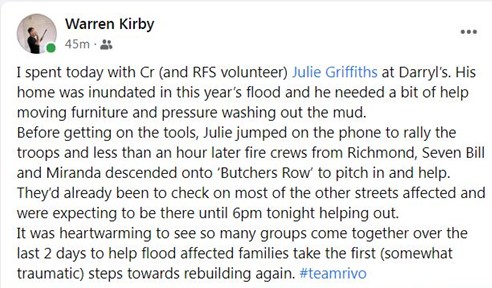
This Facebook post shows some of the help provided and the distances travelled by people who came to assist with the clean up. Photo: 13 March 2022 Facebook post Warren Kirby. #1
. #2
9 March 2022. Riverstone Parade and Church Street. Photo: Rosemary Phillis.
In July concerns rose when weather forecasters started predicting an intense period of rainfall. The concerns were valid, the rain came and the water rose quickly and to a level higher than in the March flood. Floodwaters peaked on 5 July, but fortunately they also drained away relatively quickly. The sad part was the damage that the water left behind. Many people had only just returned to their homes after repairing damage from the previous flood.
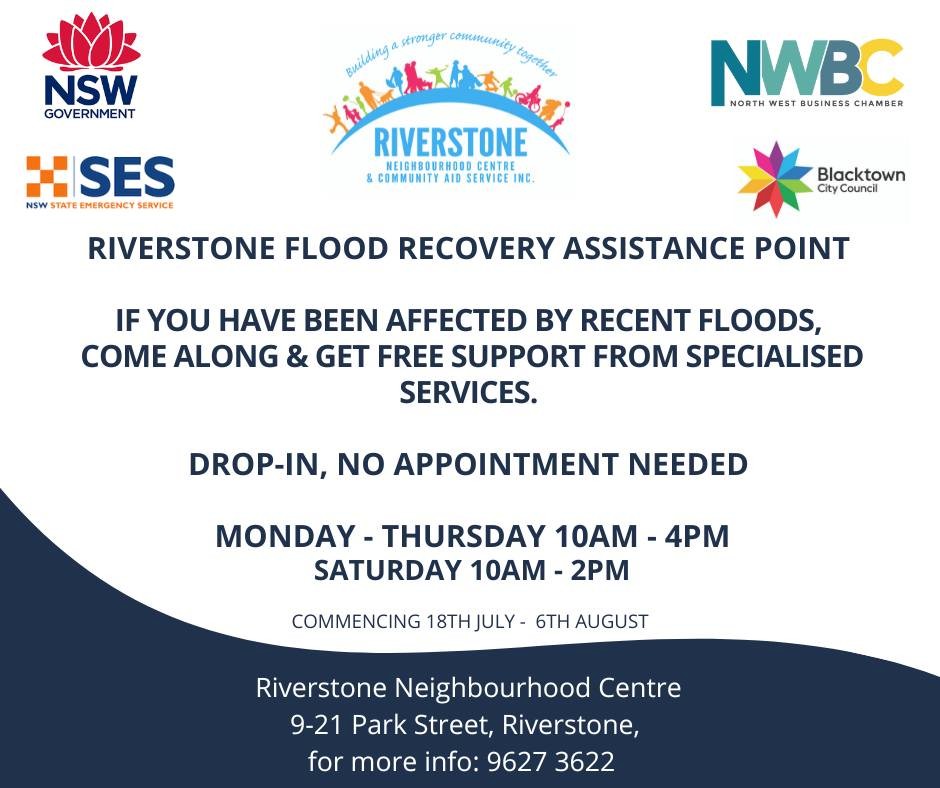
The Riverstone Neighbourhood Centre again became the central point for flood assistance. This time support was bolstered through the establishment of a Flood Recovery Assistance Point at the Centre. It was a one stop drop in point where people could to talk to representatives from a number of support agencies as well as having a chat.
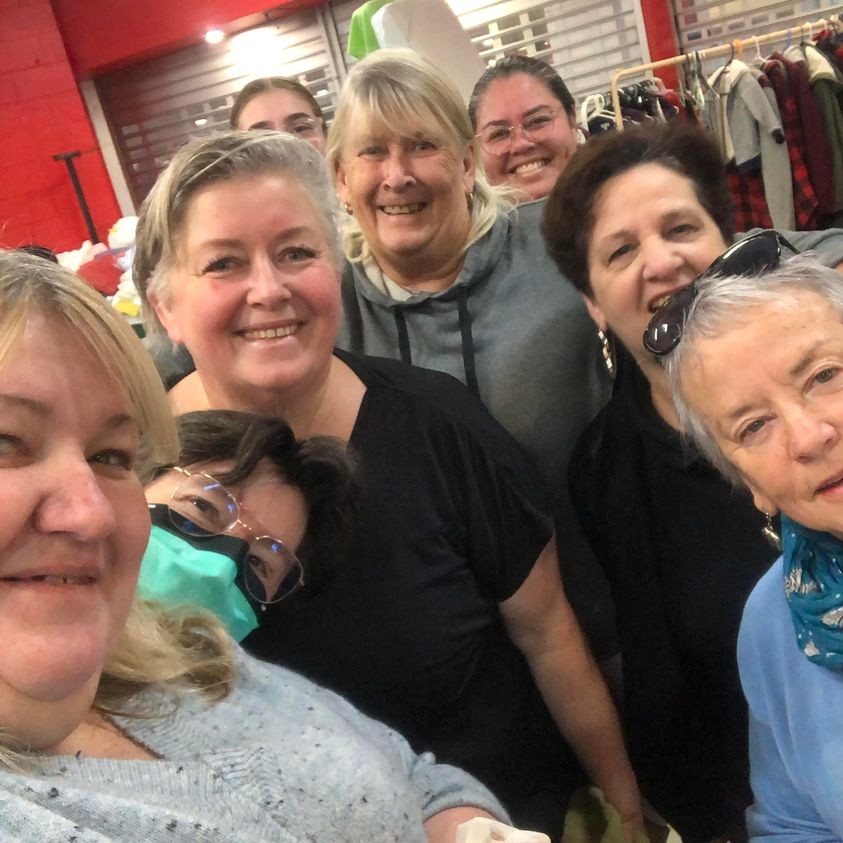
The Community Flood Hub at the Riverstone Town Centre was reopened. As temperatures were now much colder than in March, hours of work went into rearranging the shop to bring out the winter clothing items. With much learnt from the first operation in March, most people were able to access support more effectively after the July flood.
9 July 2022. Some of the many volunteers who assisted at the Flood “Hub”. Photo: Sue Lawrence.
5 July 2022. West Parade Riverstone. Photo: Rosemary Phillis.
5 July 2022. Looking along West Parade and the Railway line towards Vineyard. Photo: Mark Strachan.
As I become a researcher of family history, I realise that I have been guilty of neglecting, and not listening to the stories my Grandfather told me, as he recalled memories of his wonderful life.
In 1964 my grandfather passed away aged 83 years. His passing and career was documented by Sydney newspapers. Fortunately my Mother had the foresight to keep some of these, from which I have been able to gain the story of my Grandfather’s boxing, political and business career, assisted by the book “Fighters of the North” by Bob Power (1976)
I was about 6 yrs old in 1942 when my Mother my two sisters and myself moved to the Royal Hotel Riverstone, to assist her parents, William & Mary Morgan, the licensees of the hotel. It was then I discovered my Grandfather had two names.
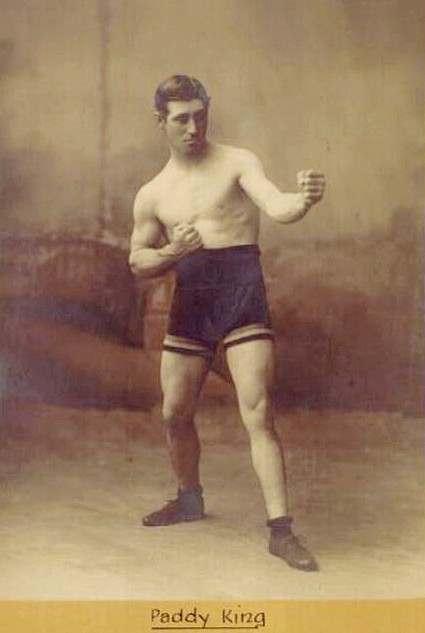
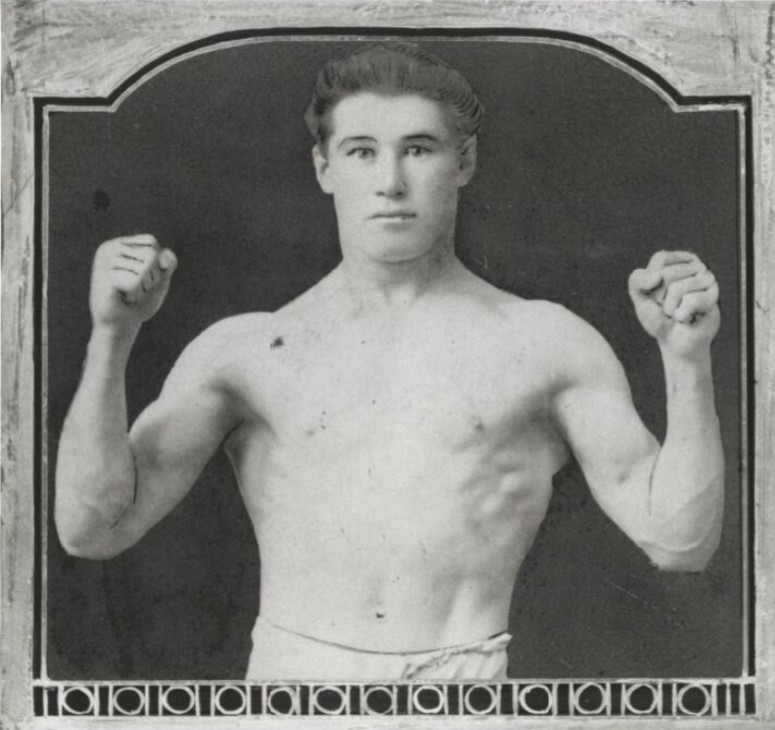
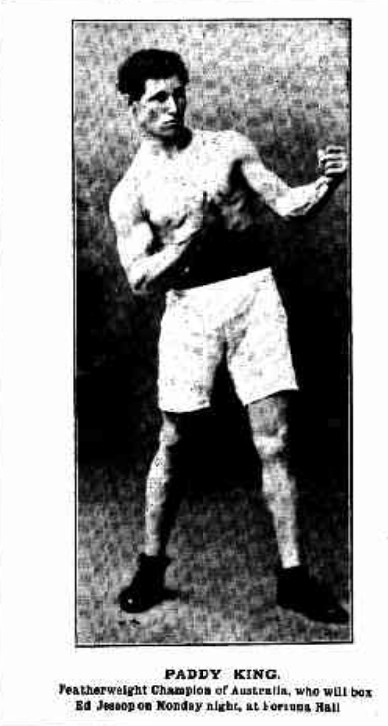
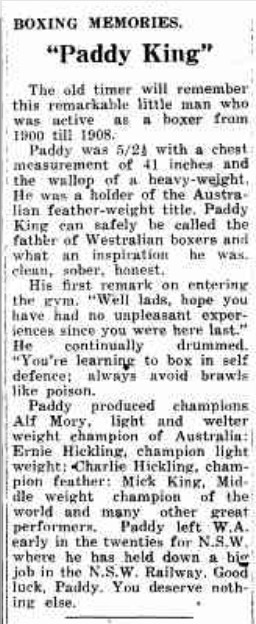
So now encouraged by the Riverstone Historical Society, I commenced researching and documenting the history of William Joseph Tyler Morgan citizen and Paddy King boxer.
Born in 1880, Will Morgan was the son of a former gold prospector from the Temora gold fields, who came with his wife Elizabeth to Wallsend in the Newcastle District NSW, in the late 1870’s. Later the family moved north to an orchard property at Muree near Raymond Terrace, where a young Will supplemented the family income, delivering the mail on his faithful grey mare “Fear Not”. For this he was paid 7/6 per week (75c.) He was a happy – go – lucky young Australian, unaware of his future as a great boxer who became triple national champion in the bantam, featherweight, and lightweight boxing divisions. An outstanding boxing performance which still goes down in boxing history.
He won his first boxing tournament at the age of 12 years in a local U/12 juvenile Tournament, defeating eight opponents to record his first fighting success. Around Newcastle boxing was slowly gaining respectable recognition, local tournaments were regarded as the nursery of budding professional fighters. Into this tough field went the diminutive 5’2” (157 cm) youth, with a reach of 65” (165cm), from the banks of the Hunter River. His sterling fighting attributes carried him onto further success in Open Newcastle tournaments. He was so successful that in a couple of years, promoters refused to take on the young boxer, as the amateur tournaments threatened to collapse.
In 1886 his family moved down to Sydney where young Will continued his interest in amateur boxing and physical culture, joining the Newtown Pastime Club. In 1899, after being unbeatable in the amateur ranks in Sydney, even after conceding a sharp rise in class and weight, he decided to travel to Tasmania.
Tasmania was enjoying a rich mineral boom and Queenstown a town of 14 pubs, plus 5,000 residents plus 2,000 navvies working on construction of the railway and a further 8,000 population at nearby Zeehan. The famous Queenstown Boxing Tournament attracted the best fighters in the Southern hemisphere and carried top prize money. It was an ambitious step for the teenager but he proved equal to the occasion, winning the rich bantam division, which added to his already imposing amateur record. He then travelled around the island circuit
Portrait of Paddy King. From the Arnold Thomas boxing collection. Photo: National Library of Australia. Ref: PIC/8395/644 LOC ALBUM 1049/14.
Portrait of Paddy King. From the Arnold Thomas boxing collection. National Library of Australia. Ref: PIC/8395/64 LOC Album 1049/2.
finally chalking up a total of 22 victories. Returning home with a sizeable purse of 600 pounds (approx. $1200) he invested in a local business, retained the staff and continued his physical training and kept in good fighting trim.
Once again running out of suitable opponents it was decided he would turn professional. His first professional fight under the name of ‘Paddy King’ was in Rosedale Hall, Tighe’s Hill against Danny Corbett. He scored a K.O. in the 4th round. At 17 years, he took the Australian bantamweight title from Frank Silver of Melbourne. He won his next title fight, defeating Billy McKell for the Australian Featherweight title in 1901
However tragedy also struck in 1901, for in a bout he did not want against his friend, Charlie Young on 24th August in the old Gaiety Theatre in the 16th round, a punch to his opponent’s jaw saw Charlie drop to the canvas unconscious. He was taken to hospital where it was found his skull was fractured and his case regarded as hopeless.
On 26th August Charlie Young died at Sydney hospital at 3.00am. King his seconds and other officials were charged with causing Young’s death. They were all acquitted at their trial at Central Court several months later and formally exonerated. Paddy swore he would never fight in New South Wales again. Unable to bear the sympathy of his friends, he left New South Wales and went west to the Kalgoorlie goldfields and Perth. There, regardless of size or weight, he was prepared to take on all comers.
The gold fields capital boasted a population of 90,000 citizens with a colourful background of gold rush living conditions where survival and success depended on physical capabilities. Entertainment facilities were limited and the cosmopolitan gold diggers found relaxation in drinking, gambling and fighting. Fighting with bare knuckle or glove fights attracted large crowds. Open challenges were issued in crowded pub saloons and fought in rough rings attracting large crowds.
Although he did not smoke, drink or swear, earning money on the goldfields was never a problem for Paddy King. Kalgoorlie was better lit than Sydney and had electricity and trams before New South Wales. He became one of Kalgoorlie’s top entertainers. Often he would return to his family in Perth after a couple of bouts with 700 to 800 pounds. ($1400-$1600). The illegal bare knuckle fights also earned good money in the smaller camps where he was often paid his winnings with gold nuggets. The now famous boxer Paddy King became one of the top drawcards in the West. Everything Paddy touched on the goldfield turned to money. He invested in a Kalgoorlie hotel and added to his small fortune. More often than not, when he opened the till, there were more gold nuggets than notes.
My grandmother, Mary Thomas, his long time sweetheart from Kurri Kurri New South Wales travelled to Perth where they were married. My grandmother told us she first met my grandfather on Newcastle railway station. She was standing on the station when a huge gust of steam from the engine momentarily blinded her. My grandfather, a young man, was also standing in the station and when he saw what happened he walked over to her and took off her glasses wiped them clean and placed them back on her eyes.
Now a family man with a son Jonathon “Bonnie” and two daughters Margery and Pertha, Paddy King decided to retire from boxing. He was a broken man when Bonnie died from a burst appendix at the age of 10. His final ring appearance came in 1910 in an overweight bout for the Western Australian heavyweight title. Coming up to scratch at 9st.2lbs Paddy gave his 13st.2lbs opponent Bert Keenan a boxing lesson to win by K.O.
His record totalled 338 bouts over a period of 13 years. The fighting days of Paddy King in the ring were over and in 1915 the former champ enlisted in the first AIF as a physical training instructor. In 1916 at Black Boy Military Camp, the explosion of a large field gun rendered him unfit for further service, and he was invalided out of the Army. This ended all plans of a further sporting career. However like many elite counterparts he could not settle down to the hum-drum style of his peaceful profession as a publican at the Federal Inn, Collie and the Club Hotel, Watsonia. It was decided that my grandparents and their two daughters would return to Newcastle in New South Wales.
The Mirror, 15 May 1908.
The Blackwood Times, 26 November 1948.
In the early 30’s John Thomas Lang was Premier of NSW. He required six suitable individuals with experience in the industrial field for appointment as Conciliation Commissioners for the NSW Government. William Morgan immediately received nomination by the Labor Government. He brought to his new position experience as a working man and a successful business man. Following his appointment, he came under strong verbal attack from the National Party opposition, with scathing remarks on the appointment of an ex-pug to such an important position. Many prominent citizens came to his defence. Jim Donald, a leading sports writer, wrote in his defence “since retiring from boxing Paddy King’s career forms an imposing record of civic achievements”. Other leading citizens spoke in his support and once appointed he went on to discharge his duties in exemplary style.
Some years later the “Nats” gained control of the Government and promptly terminated Commissioner Morgan’s services. The Bavin Government decided to dismiss the Commissioners three years before their term of office were due to end. It offered them a thousand pounds ($2000) each a years salary in lieu of notice. He refused to accept the money on the grounds that their actions were illegal.
He then proved that his fighting career was far from over as he took the NSW Government to litigation and won his point. At the completion of his appointed term, he stepped down from office, with the mutual respect of both employer and employee organisations to resume civilian life. He took over as Licensee of the Plough & Harrow hotel in Camden, and finally when the war was over and his son-in-law, my father, George Watson came home, we moved to the Royal Hotel, Riverstone NSW.
He maintained his physical fitness all his life and believed walking was his greatest mainstay and rain, hail or shine he strode 2-3 miles per day. My father would stand by ready to go to his aid when any young guns would call “the old pug” to come outside and they would show him how to fight. My small grandfather would move his steel rim glasses to the top of his forehead and dispose of the challenger in 2-3 quick punches. My Dad said all the young guns of the town had a new respect for the old pug and often came to him for boxing tips.
My grandfather passed away in 1964. In a fitting epitaph, in recognition of the dual lifetime role as fighter Paddy King and leading citizen William Joseph Tyler Morgan, on his passing it was said “The history of Australian boxing is replete with remarkable characters but few if any have had such a varied career as Paddy King, a fighter and gentleman to his knuckles. A Christian soldier who read the Bible daily, a total abstainer, clean living and clean tongue. A splendid type of citizen, sturdy, honest and self- respecting to whom many young fighters owe their moral and physical success.”
References:
Tough Australian Fighter Took On State Government After Retirement (Mirror 1958)/ Opponent died after blow. (The Sun-Herald 1964)/ Fighters Of The North – Bob Power (1976).