by Rosemary Phillis
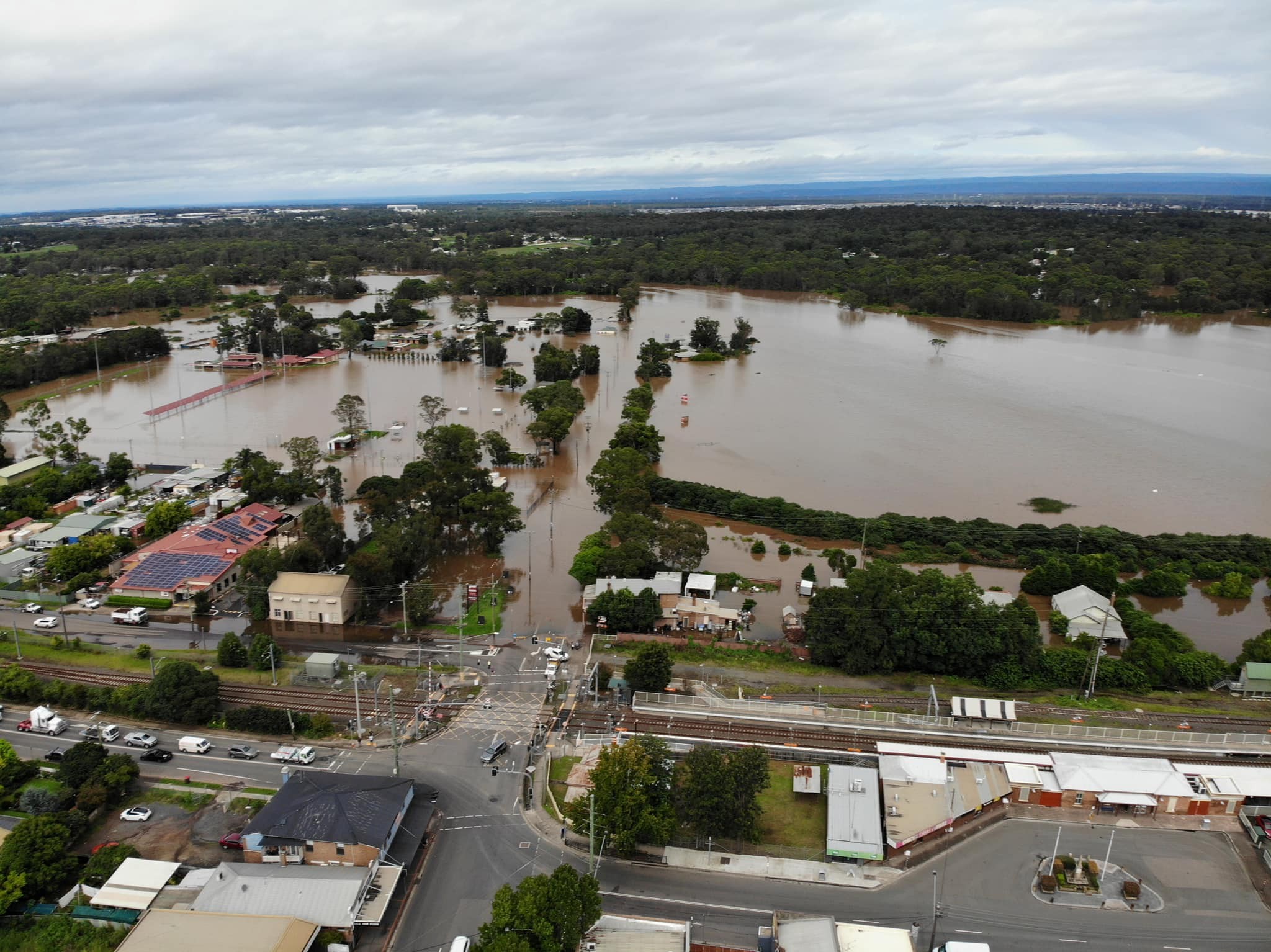
Photo: Mark Strachan.
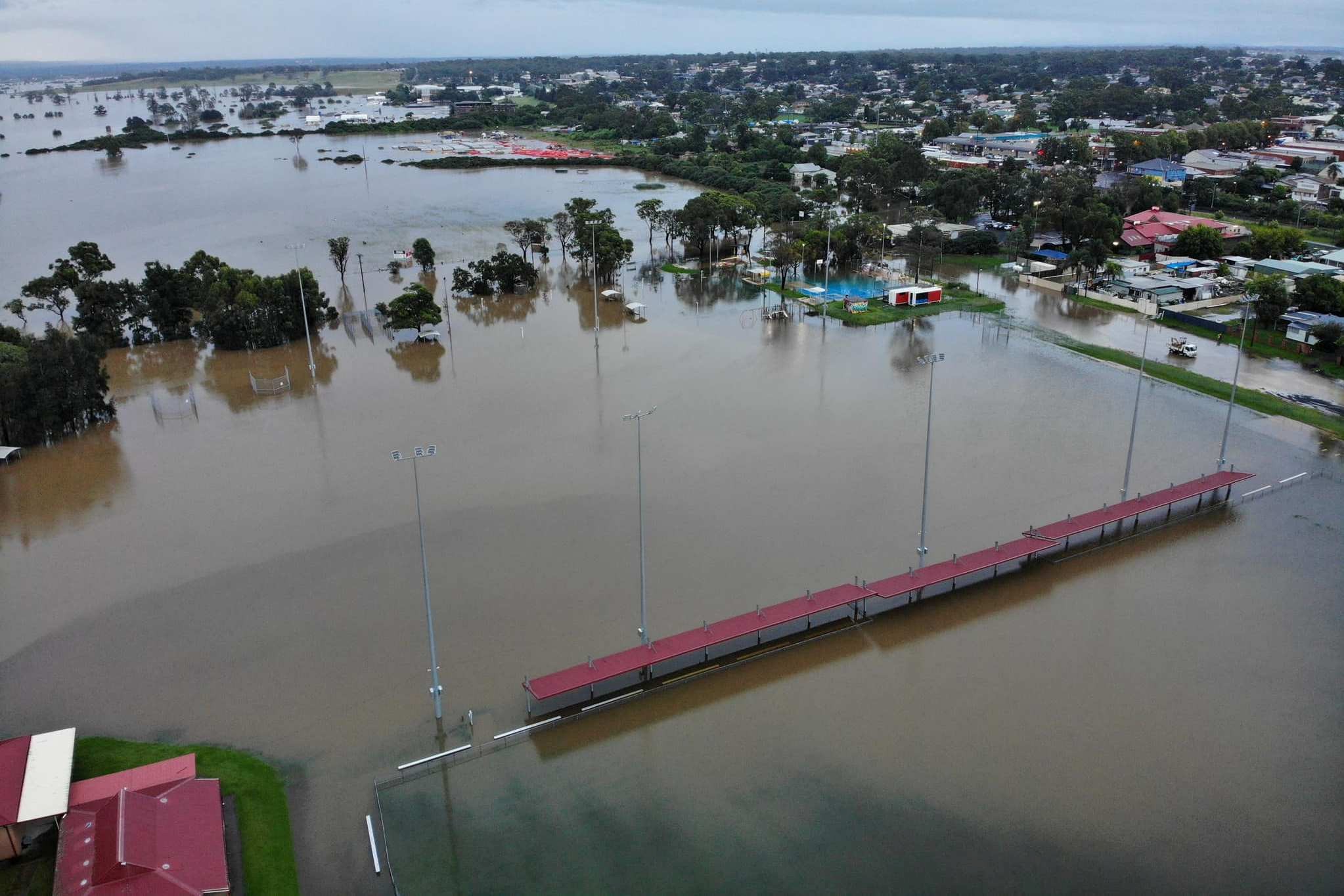
Riverstone township is to the right. Photo: Mark Strachan.
For 29 years local residents saw no inundation of houses from flood waters. This came to an end last year. Twelve months later, we were again subject to the significant flooding when water levels rose to levels just below that of the 1978 floods.
The weather patterns resulted in minor flooding in the first week of March this year, which then receded. Next, an intense south eastern low made its way down from Queensland and hit Sydney. Significant rain continued to fall. The resulting floodwaters impacted Riverstone in two ways. Firstly, Garfield Road was cut by surface water coming down through the catchment area. Secondly, as has always occurred, that water then backed back over the flood plain when it met the Hawkesbury River which was also in flood.
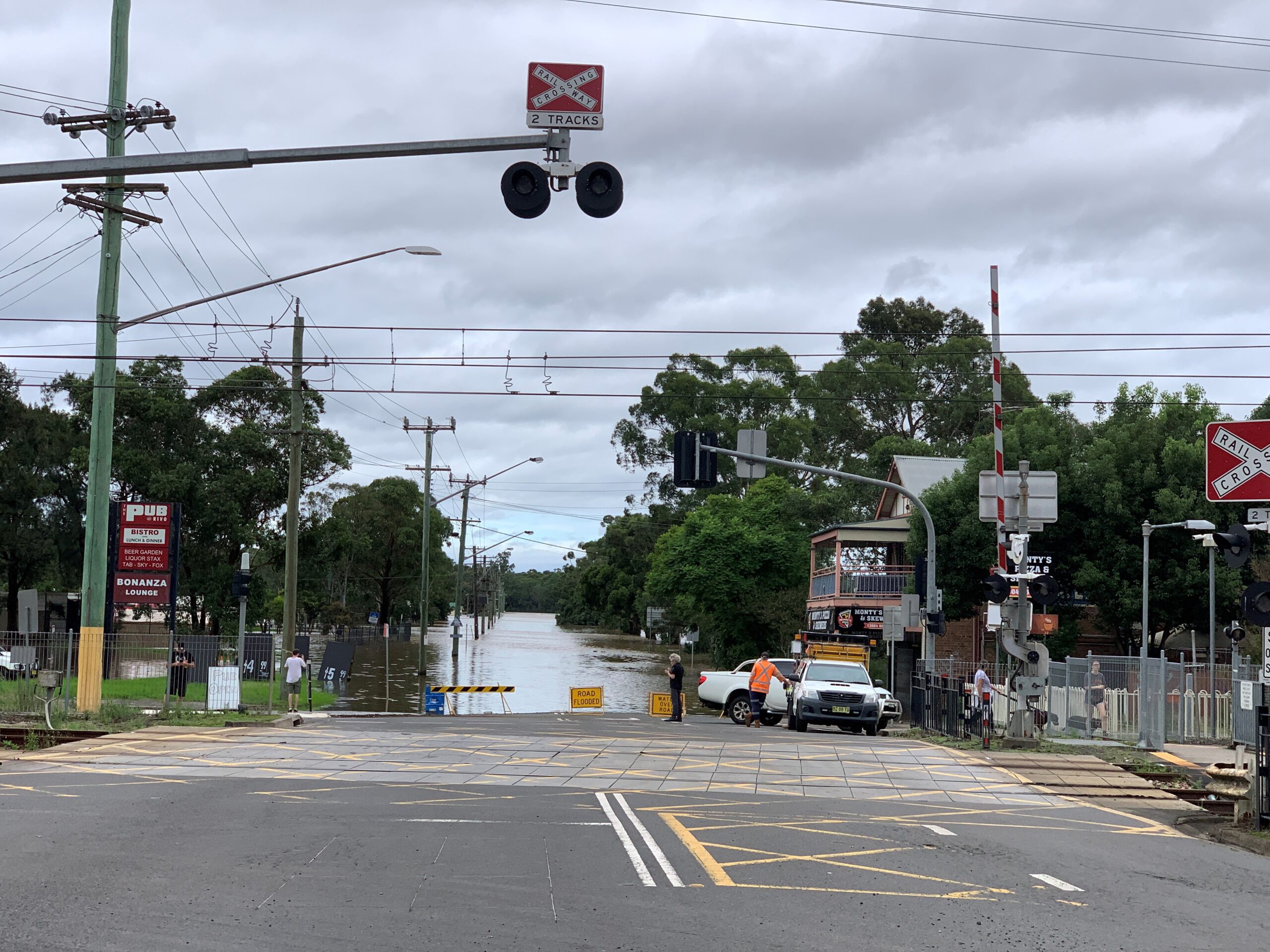
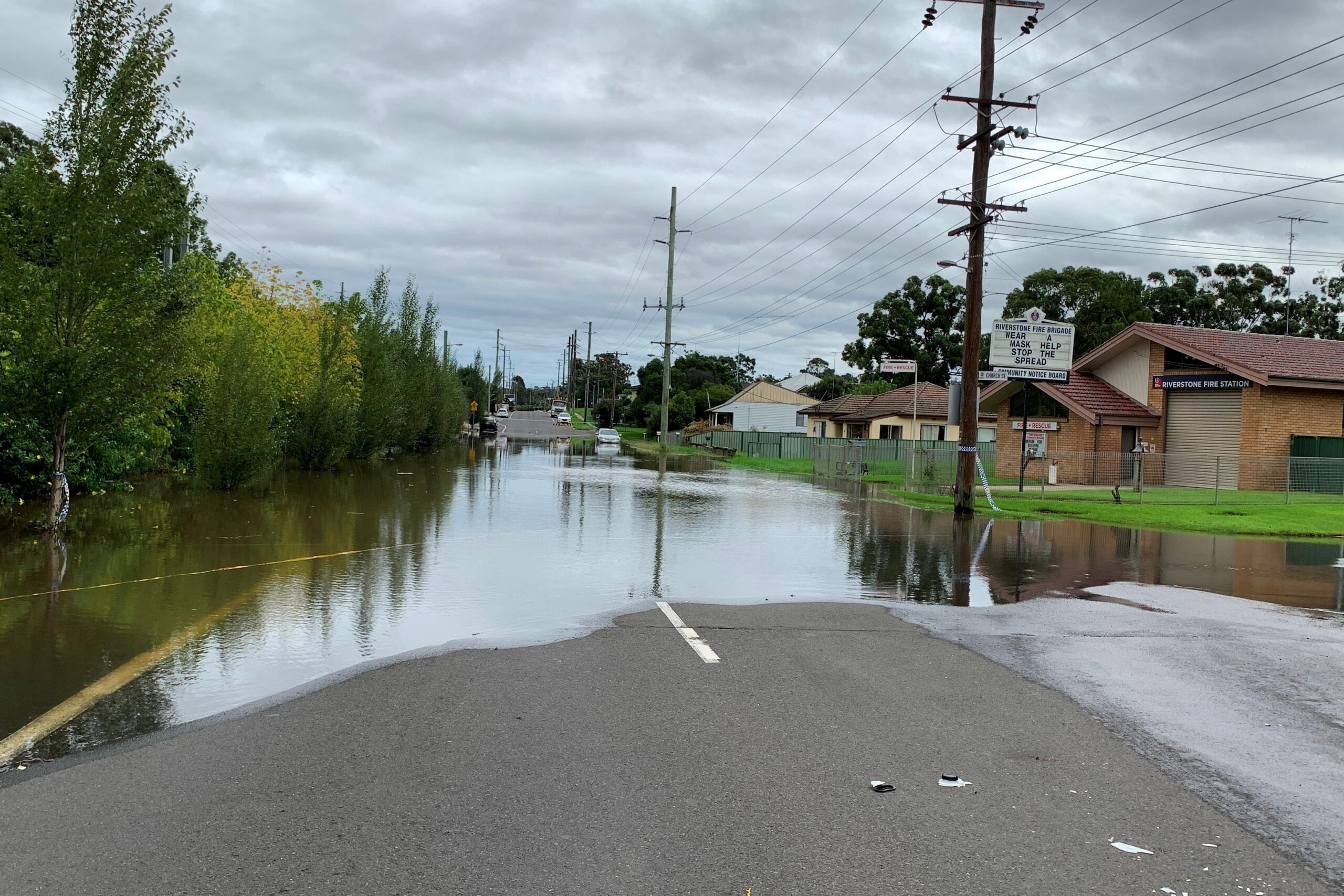
The backwater continued to rise and came up Garfield Road to West Parade, inundating homes and covering properties. The floodwater also came under the railway viaducts near Church Street, cutting Riverstone Parade near the fire station.
The rain stopped on Thursday 10 March and the water receded surprisingly quickly. Garfield Road was able to reopen to traffic the next day.
The Riverstone Neighbourhood Centre became a centre where people impacted by the floods could register and find avenues of support. The community was quick to respond to help. A donation ‘hub’ was established in the former fruit and veg shop in Riverstone Town Centre. Donations of clothing, Manchester, household items and furniture came from around the Riverstone and Blacktown area. The Neighbourhood Centre and Chamber of Commerce co-ordinated the support through the Centre and the Hub. It was community at its best.
Volunteers members of the SES and Fire Brigades helped to clean and hose out houses. Others volunteer oranisations collected and distributed furniture to the people affected once they were in a position to move into housing.

|
|
|
|
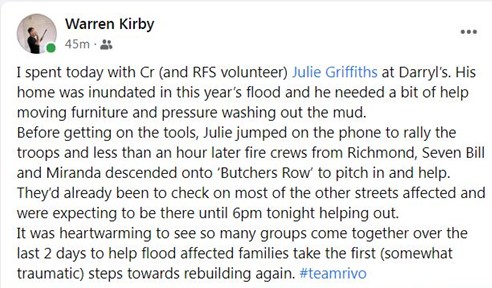
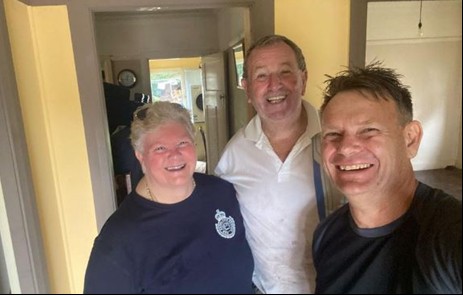
In July concerns rose when weather forecasters started predicting an intense period of rainfall. The concerns were valid, the rain came and the water rose quickly and to a level higher than in the March flood. Floodwaters peaked on 5 July, but fortunately they also drained away relatively quickly. The sad part was the damage that the water left behind. Many people had only just returned to their homes after repairing damage from the previous flood.
The Riverstone Neighbourhood Centre again became the central point for flood assistance. This time support was bolstered through the establishment of a Flood Recovery Assistance Point at the Centre. It was a one stop drop in point where people could to talk to representatives from a number of support agencies as well as having a chat.
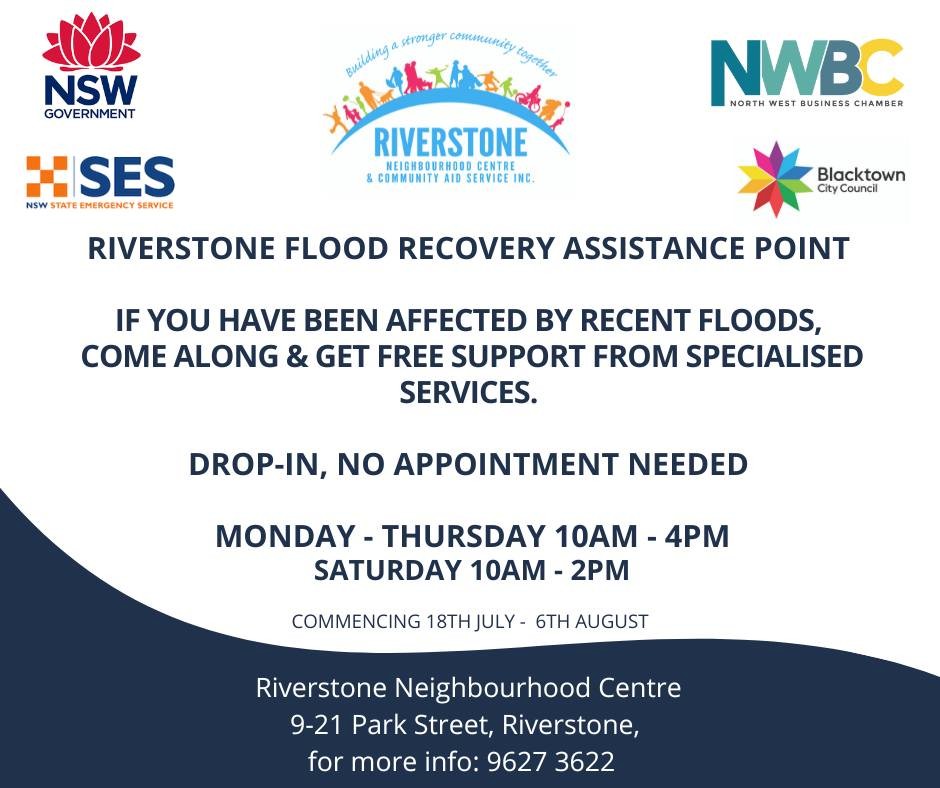
The Community Flood Hub at the Riverstone Town Centre was reopened. As temperatures were now much colder than in March, hours of work went into rearranging the shop to bring out the winter clothing items. With much learnt from the first operation in March, most people were able to access support more effectively after the July flood.

Photo: Sue Lawrence.
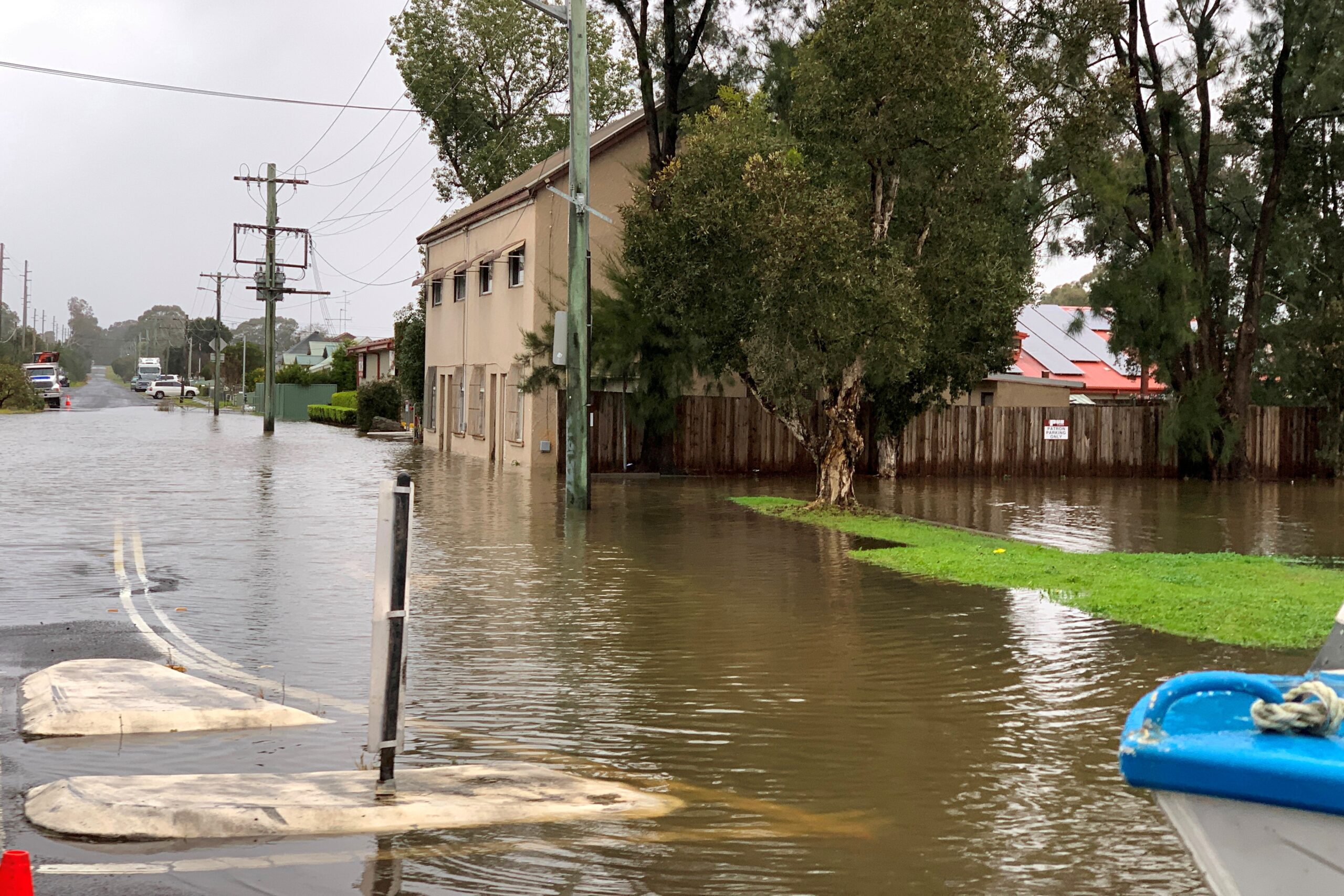
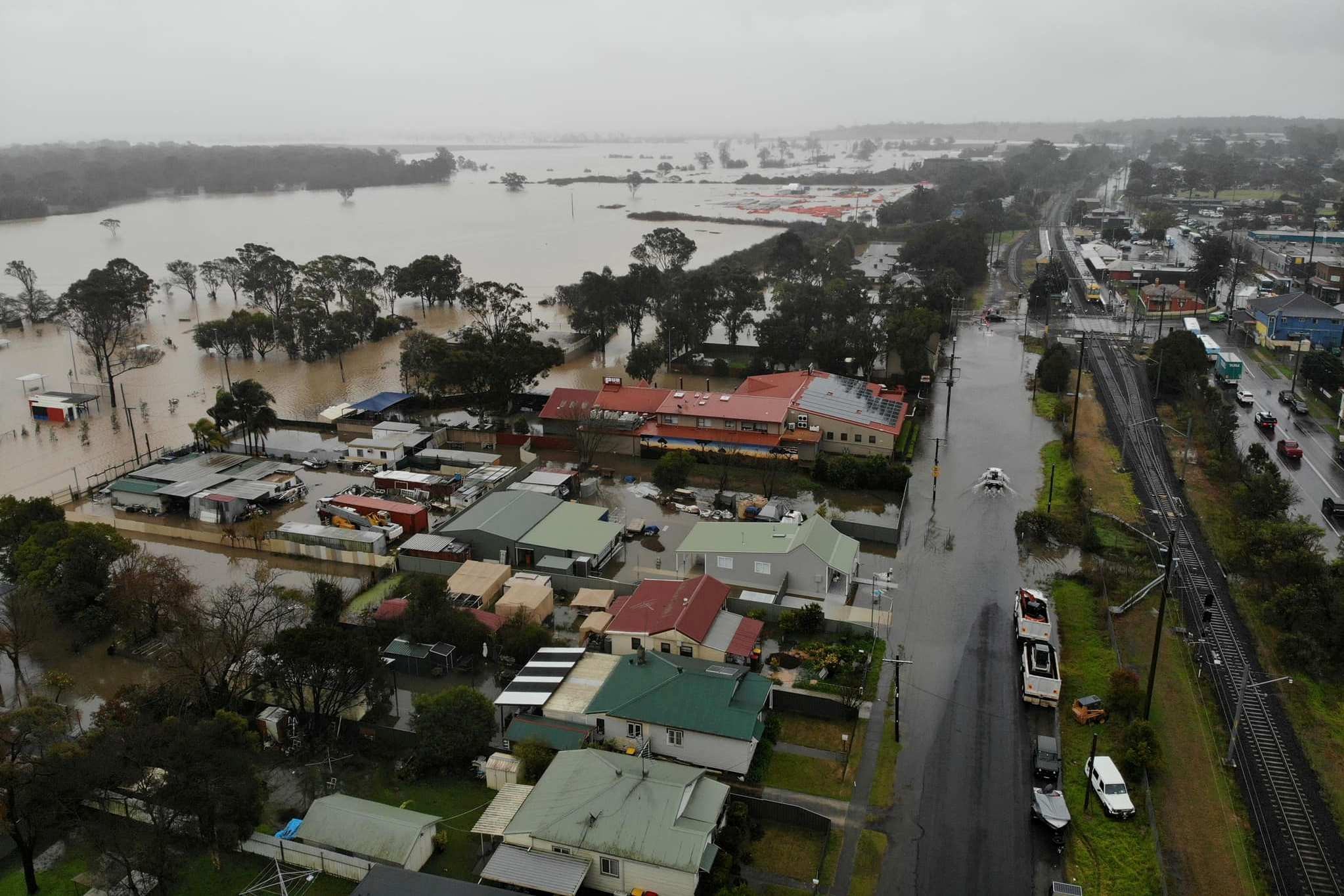
Photo: Mark Strachan.