by Rosemary Phillis
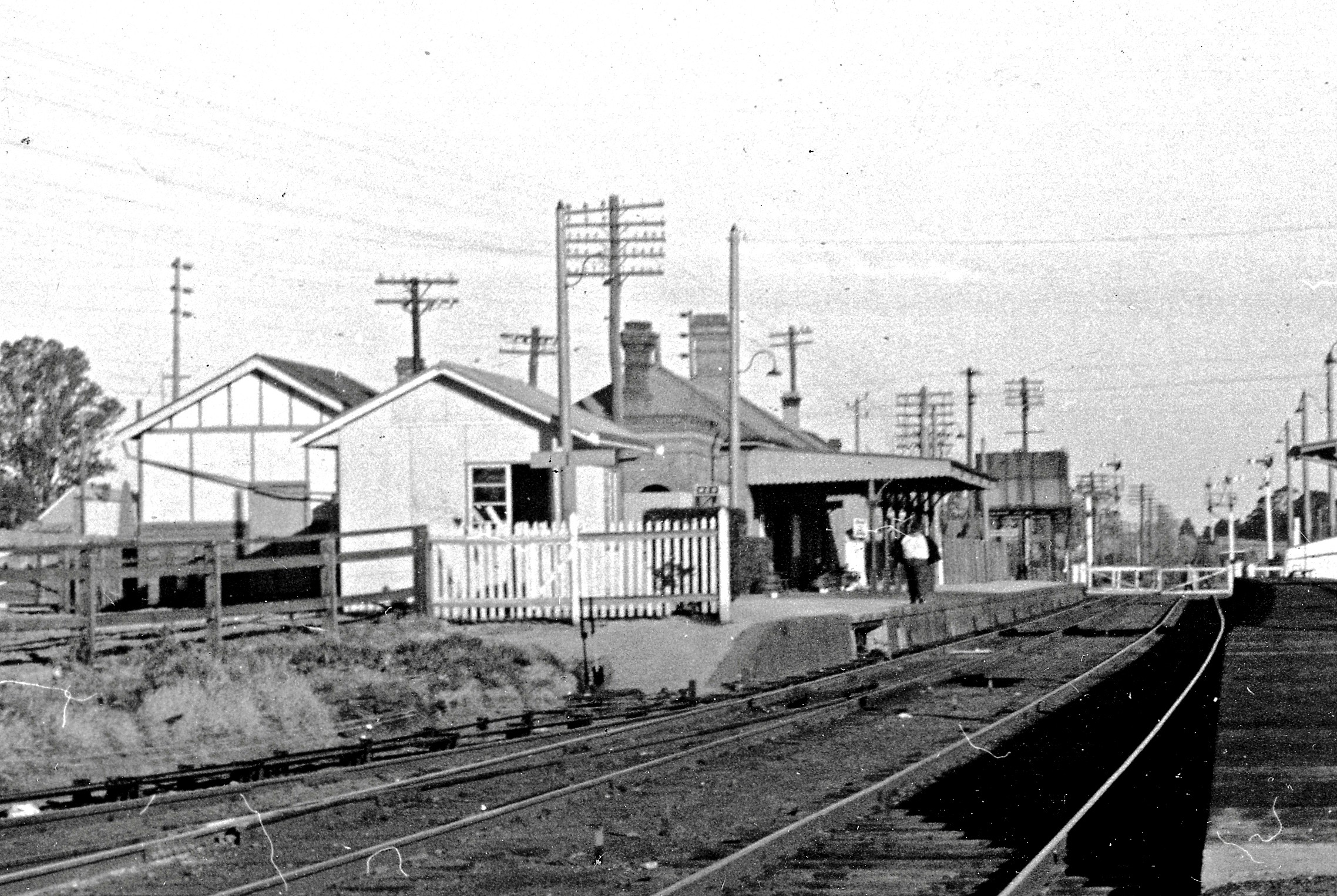
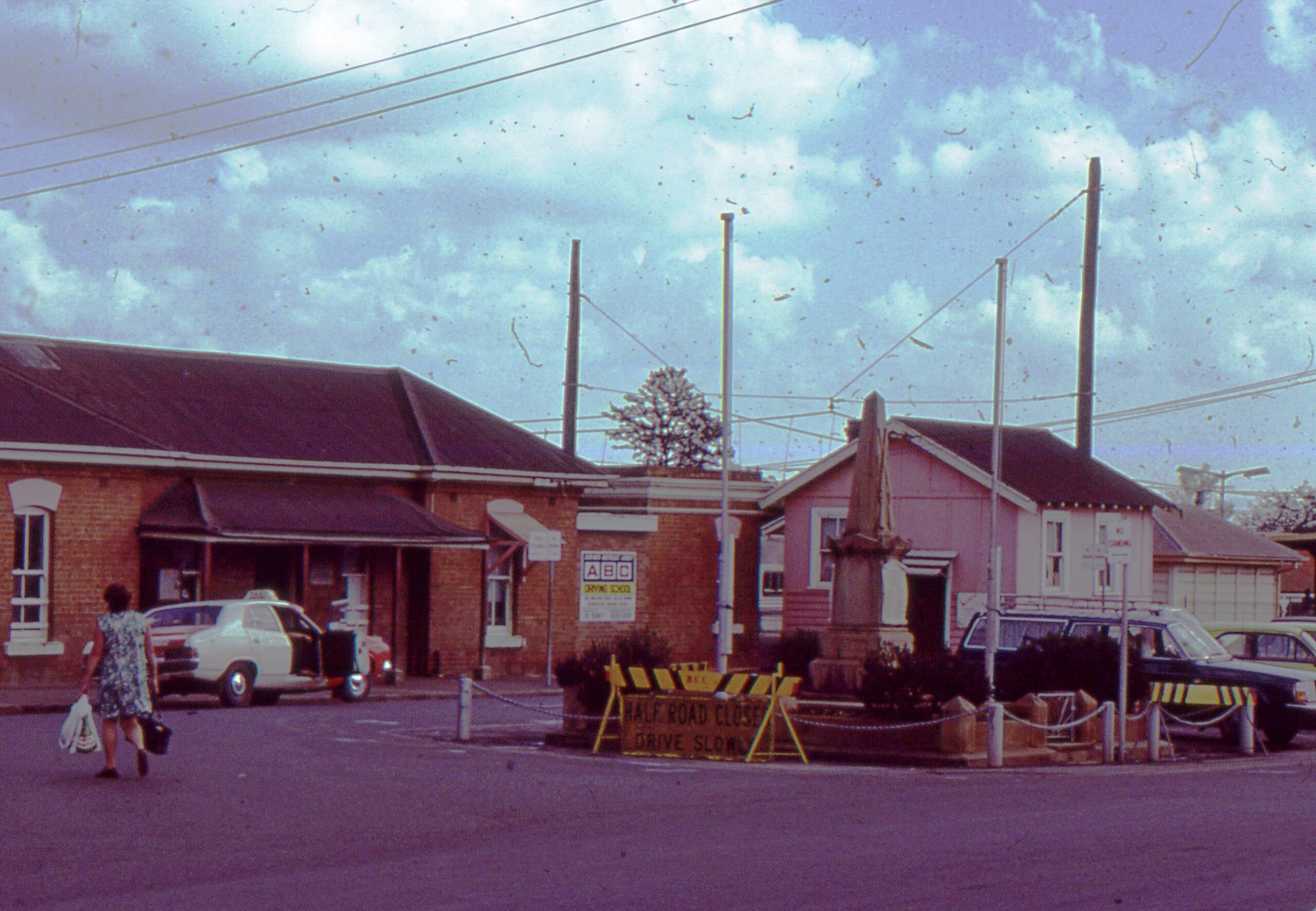
People born before the 1990s might recall a small building located next to the Riverstone Railway Station in what is now the car park. Some would remember it being the Pensioners Library and others the venue for the original CWA Baby Health Centre.
It turns out that this building had a more extensive history which goes back to the 1920s and connects with a local branch of the St Johns Ambulance.
During the First World War, the St Johns Ambulance Society provided certificates for successful candidates in Miss McCabe’s Home Nursing Class. The students were instructed by Dr Johnston from Riverstone and Dr Davies from Windsor. The classes were likely to have been held at a venue like the Oddfellows Hall. Nine ladies passed the examination, Miss Jessie Davis, Miss Jennie Pye, Miss Tene Wittig, Miss May Cruikshank, Miss Davie Lane, Mrs. Griffin. [1]
It was another six years before a branch of the St Johns Ambulance Association was formed in the town. Mr A. G. Cornwell, of “The Cottage,” Riverstone organised a meeting at the Oddfellows Hall, to form a branch and to explain the objects and need for first aid. [2]
A local branch was established in October 1922, [3] and operated by Mr A. G. Cornwell. The First Aid class lectures were provided by the local physician, Dr Johnstone. [4]
In 1923, a euchre party and dance fundraiser was to be held at the Oddfellows Hall to raise funds to buy a stretcher for the St. Johns Ambulance Association. [5] Up until this point, if a stretcher was required it had to be borrowed from the railway station.
The football club handed over their kit to the Association on the condition it would be looked after. Mr Cornwell had arranged for a man and first aid kit to attend 12 football matches, treating cases on the field as well as off. [6]
The St John’s First Aid kit grew and they decided that they needed an “ambulance cupboard” to store the splints and spare material. The cupboard was made by Mr C. Whitehead and installed in a recess next to Mr Skinners shop in the town. [7]
Mr Cornwell summed up the first year as: 10 men trained and taken certificates, ambulance box fixed in town stocked with ample material and splints, besides two small first aid outfits purchased, instructional charts and stretcher, treated 30 cases of accidents, given two first-aid displays, one at Riverstone and one at Quaker’s Hill. [8]
The First Aid branch continued in Riverstone and they identified the need for a building which could operate as a first aid station. In March 1924, an application was lodged with the Railway Commissioners for an allotment of land next to the railway station on which to build a First Aid station. [9]
Four months later approval had been given and plans for the building had been submitted for approval. The next step was of course to raise funds from locals to cover the cost.
The 1924 Annual General Meeting reported that first aid assistance had been provided at no less than 50 local accidents. The retiring president (Mr. C. Whitehead), hon. secretary (Mr. Arthur Keegan) and treasurer (Mr. J. W. Weaver) were unanimously re-elected. Messrs Albert Keegan and Unwin were elected as committeemen. The construction of the first aid building had not commenced, but they were positive about it happening. The objective for the next year was “to provide a first-class certified member in every department at the local meat works”. [10]
With plans finally approved for the building, the matter of funds was a priority. A gala week of events known as “Ambulance Week” was devised and held in December 1924. [11] [12]
Heavy rain and continuing wet weather in the first half of 1925 impacted on construction which was carried out on weekends by volunteer labour. [13] There was no electricity in the town, so all the tools used were hand tools. Hilton Vidler was a regular at the working bees, unfortunately he sustained a hand injury while using a hand saw. [14]
The 1925 AGM report summary revealed: The yearly report manifested: — Cases treated: Fractures 3, Cuts, burns, etc. 59, Poisons 1, Cases away from district 1, Sunstroke 1. Total 65. …Ten candidates, sat for the December (1924) Examinations, and their gratifying success reflected to high credit of the hon. instructor, Mr. E. Shrub.
The students mentioned had been awarded the following honors: — 1st Certificates. — Messrs H. Head, A. Kerim, S. Allen, G. Wiggins and S. Alcorn. Vouchers. — Messrs A. L. Keegan and S. Unwin. Medallions. — Messrs J. Weaver, A. R. Keegan and C. Whitehead. Penant. — Mr. E. Shrub (hon. instructor). Mr. H. Head Was unanimously re-elected to the office of President, and Mr. Arthur Keegan (hon. secretary), and J. W. Weaver (hon. treasurer), midst enthusiasm were also returned unopposed. [15]
There is no report on exactly when the building known as the “First Aid Station” was opened, but in a Gazette article in 2 July 1926, they referred that it “recently became a matter of fact”.
In 1926, the office bearers were recorded as President, Constable C. W. Clugston, treasurer, Mr J. Weaver and secretary, Mr H. J. Head. [16] The statistics for the year were: Gun wounds 1, compound fractures 2, simple fractures 4, cuts, wounds, burns and other injuries 365, total cases treated 372. [17]
At the AGM in 1926, the cost of the building was said to be upwards of £150 and erected solely by volunteer labor. It was also revealed that in the absence of an ambulance, the following people put their cars at the disposal of the Association to transport emergency cases: Messrs Rosenthall, Hart, Trenery (Riverstone) and Mr J. Wiggins (Schofields). [18]
By 1930, the local branch had declined. In early 1930, the Gazette reported that Sister Parry of the St. John’s Ambulance, Sydney gave a lecture at the “local ambulance room”, with efforts being made to revive the local branch. [19]
A successful social was held in February to form a local division. Although there was initial enthusiasm, by the time the AGM came around in June, there was not a great attendance. The officers of the branch at this point were: Messrs G. Wiggins, President; A. Britton, Hon. Treasurer; and J. Weaver, Hon. Secretary. [20]
In 1934 the members of the St John’s ambulance, Riverstone agreed to allow the local C.W.A. to utilise their premises near the railway station for a Baby Health Centre. The Gazette reported that Sister Gertrude Wilson, who is in charge at Windsor, may be consulted by mothers at the Riverstone Centre every Wednesday. [21] The room was first utilised by the baby health centre in August 1934. [22] (Two years later, the well established local branch of the CWA was supporting the local St Johns Association through sponsorship. [23])
The Baby Health Centre in the room was a success. The 1934 Riverstone CWA Annual for the 1934 year, published in the Gazette of 12 April 1935, reported the following statistics: total number of attendances was 186; mothers of new born babies visited by the sister totalled 8, and subsequent visits 16. In connection with the work carried out at the Centre, new cases enrolled totalled; 20, babies weighed 177, and test meals given 24.
The annual rent for the baby health centre was £1/1/-. [24] The ongoing costs associated with the centre were covered by the Riverstone CWA. A donation box was said to have been provided at every Baby Health Centre in NSW, but donations were voluntary. [25]
It is unclear whether the room was used for first aid during this time. In 1937 a new up to date first aid room was built at the Riverstone Meatworks which was to be permanently staffed by a qualified St John Ambulance Officer. [26]
In 1938, Mrs Steer, the initial President of the Riverstone CWA reported that in the last four years that around 5,000 visits had been made to the Riverstone Baby Health Centre. The room would have been a busy place. [27]
To supplement the funds of the CWA, in 1939, the first ever Street Stall was held outside of the Baby Health Centre. [28] The stall was a success raising £4/5/-. [29]
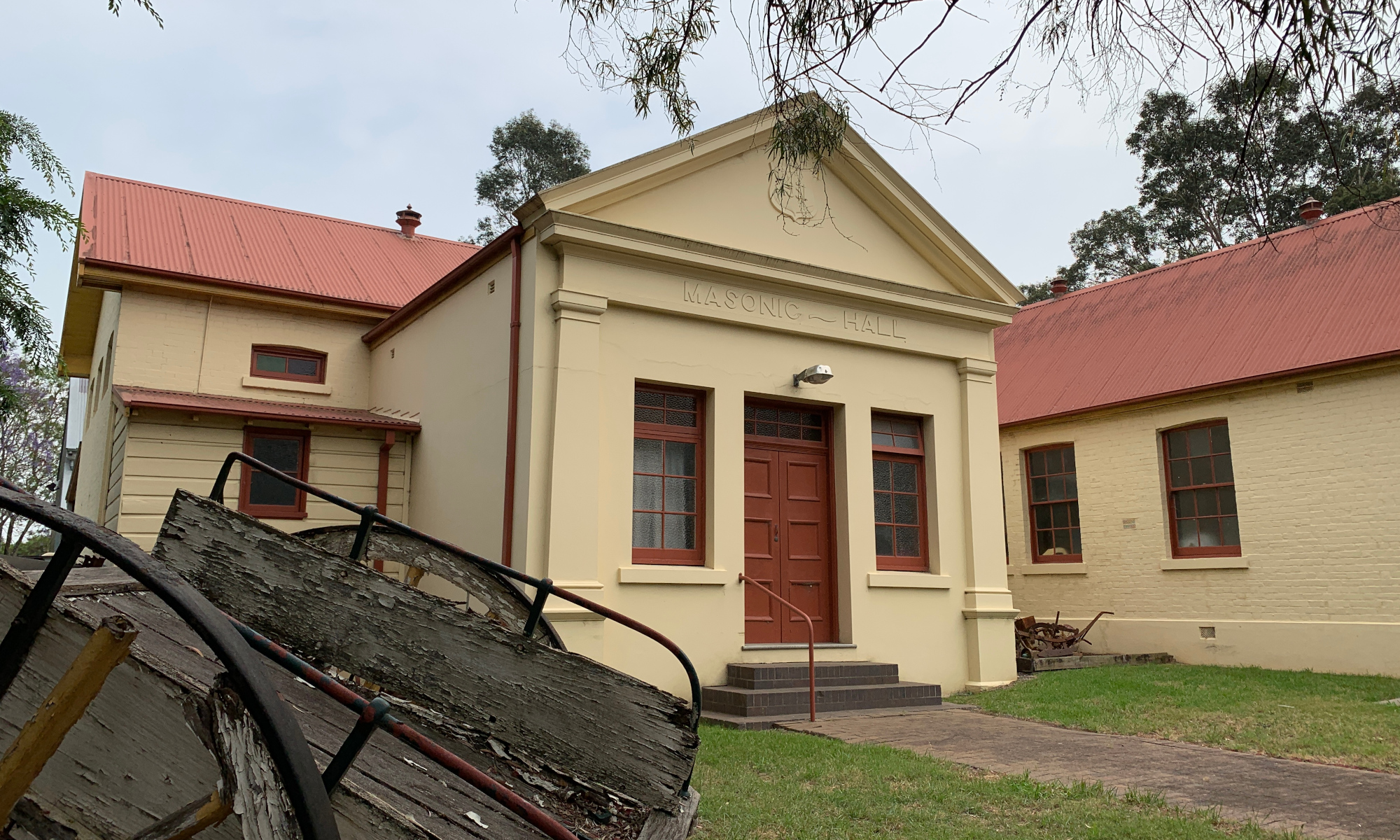
Although the Baby Health Centre was conducted in the room near the Station, the local CWA was so large that it held its regular meetings in the Masonic Hall.
The outbreak of the Second World War saw the focus of the CWA change to include the War effort. In 1940, they purchased wool and conducted a weekly knitting day at the Baby Health Centre for garments for the CWA War Chest. [30] Another market day was established to take place outside of the Baby Health Centre in July 1940. [31]
The following year, Mrs West was to attend the Baby Health Centre every Monday to supervise the making of camouflage nets for the Army. [32] A month later Mrs West was there every day except Wednesday to instruct anyone wishing to learn how to make the camoflauge nets. One net had been completed and several more were underway. [33]
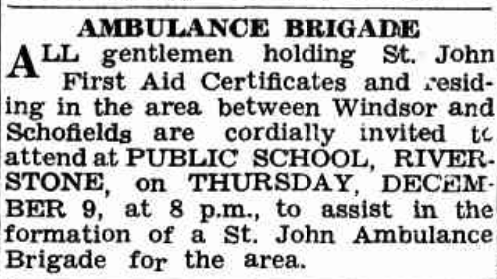
As the War progressed and concerns about the security of Australia from invasion grew, steps were taken to establish a local branch of the St John Ambulance Brigade. The meetings were held in the Riverstone Public School (now Casuarina School) on the corner of Garfield Road East and Piccadilly Street. [34]
The Gazette provided the details of the local Ambulance Brigade as at November 1944: Divisional Surgeon: Dr. M. A. Ginsberg-Lapin, Riverstone. Divisional Superintendent: Mr. A. Keegan, 1 Castlereagh-street, Riverstone. Ambulance Officer: Mr. P. Marlin, 16 Oxford-street, Riverstone. Divisional Secretary: Mr. J. Mason, Crown-road, Riverstone. Divisional Treasurer: Mr. P. T. Purvines, Wellington-street Riverstone. Divisional Storekeeper: Mr. W. H. Merriman, 21 Castlereagh-street, Riverstone. Other members: Messrs. K. V. Brown, Windsor-road, Vineyard; A. S. Cartwright, Piccadilly-street, Riverstone; J. Dale, 528 George-street, Windsor: B. Keegan, 21 Elizabeth street, Riverstone; J. L. Lawlor, 164 George-street, Windsor; A. T. Murphy, 200 George-street, Windsor; E. W. O’Brien 236 George-street, Windsor; F. Quinlan, Windsor-road, Riverstone.[36]
After the War, Dr Ginsberg-Lapin left the town and her practice was taken over by, Dr. James Fraser Boag, who also took over her role as Divisional Surgeon of the local St Johns. [37]
Ernie Byrnes joined the St Johns Ambulance in 1945 and wrote an article in the Historical Society 2007 Journal. Ernie wrote that the St Johns Ambulance operated in Riverstone until 1952, having operated for nine years. During that time they Attended 3,202 casualties on Public Duty; attended 5,207 instructional meetings, drills and inspections; attended Divisional meetings either weekly or fortnightly to practice and to arrange attendances at public duties. (Ernie did not mention where they held their meetings.)
In an article on the Historical Society 1997 Journal, Judith Lewis wrote: In 1943 the block of land on the comer of Market and Pitt Streets was purchased for eighty pounds and the present Baby Health Centre and C.W.A. Meeting Rooms was duly erected, with the Foundation Stone being laid on 28th June 1952.
At this time the services of the Baby Health Centre were so large that the sister attended on two days a week. [38] (This increase in demand was no doubt linked to the servicemen and women returning to civilian life after the War.)
The new CWA Baby Health Centre opened on 31 January 1953. [39] The building housed a meeting room as well as rooms to be used as the Baby Heath Centre. The opening of the new rooms brought to an end 19 years of the CWA using the small room near the Station.
On 15 May 1952, a branch of the Old Age and Invalid Pensioner’s Association of Australia, N.S.W. Division had formed at Riverstone. [40] In a snippet in the Gazette of 9 July 1952, its was stated that meetings would be held in the R.S.L. Hall on alternate Thursdays at 2 p.m.
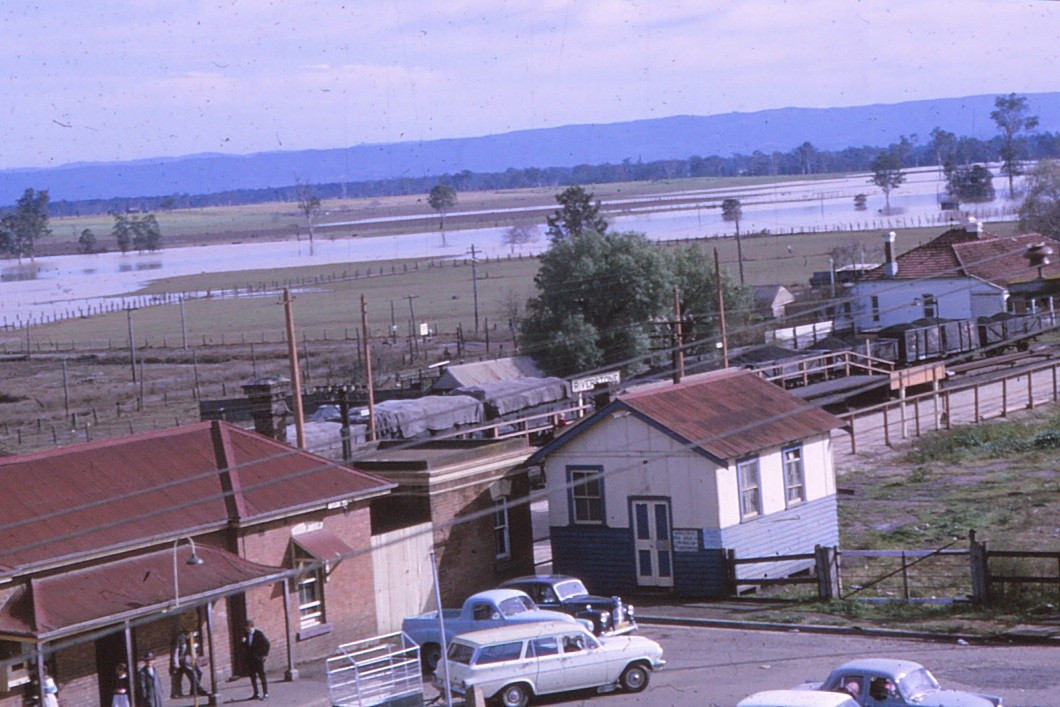
By 1964 the group had decided that they needed a hall of their own. At this time they were holding their meetings in “the Pensioners Room at Riverstone Railway Station”. The Gazette reported: Blacktown Council has placed a block of ground in Park Street, Riverstone, at the branch’s disposal, and it is thought that an army hut would be ideal for the type of hall needed…. New members will be welcome to the next meeting on January 23 at 1.30 p.m. in the Pensioners Room at Riverstone Railway Station. Office-bearers elected at the recent annual meeting are as follows: President: Mr C. A. Harpur; Vice-presidents, Messrs B. Keighran and H. Joyce. Secretary: Mrs B. O’Loughlan. Treasurer: Mrs Brown. [41]
Although they had to hold their 1964 Christmas Party in the Footballers Hall, and continued to meet in the Pensioners Hall near the Railway, by December 1965, they were able to hold their Christmas party in their new hall. It was the first function held in the hall. [42]
At some point the building near the station was converted to a small library. The sign on the building in the photo of page 51 shows that the Librarian was Miss Gray and the Secretary Mrs Harpur.
During the 1960s the room was used by the local branch of the Alcoholics Anonymous. In the 1970s the local motorcycle clubs met there. Reg Brace recalls that if anyone started picking up the books they would be sent out. The Club made a donation for the use of the room.
|
|
|
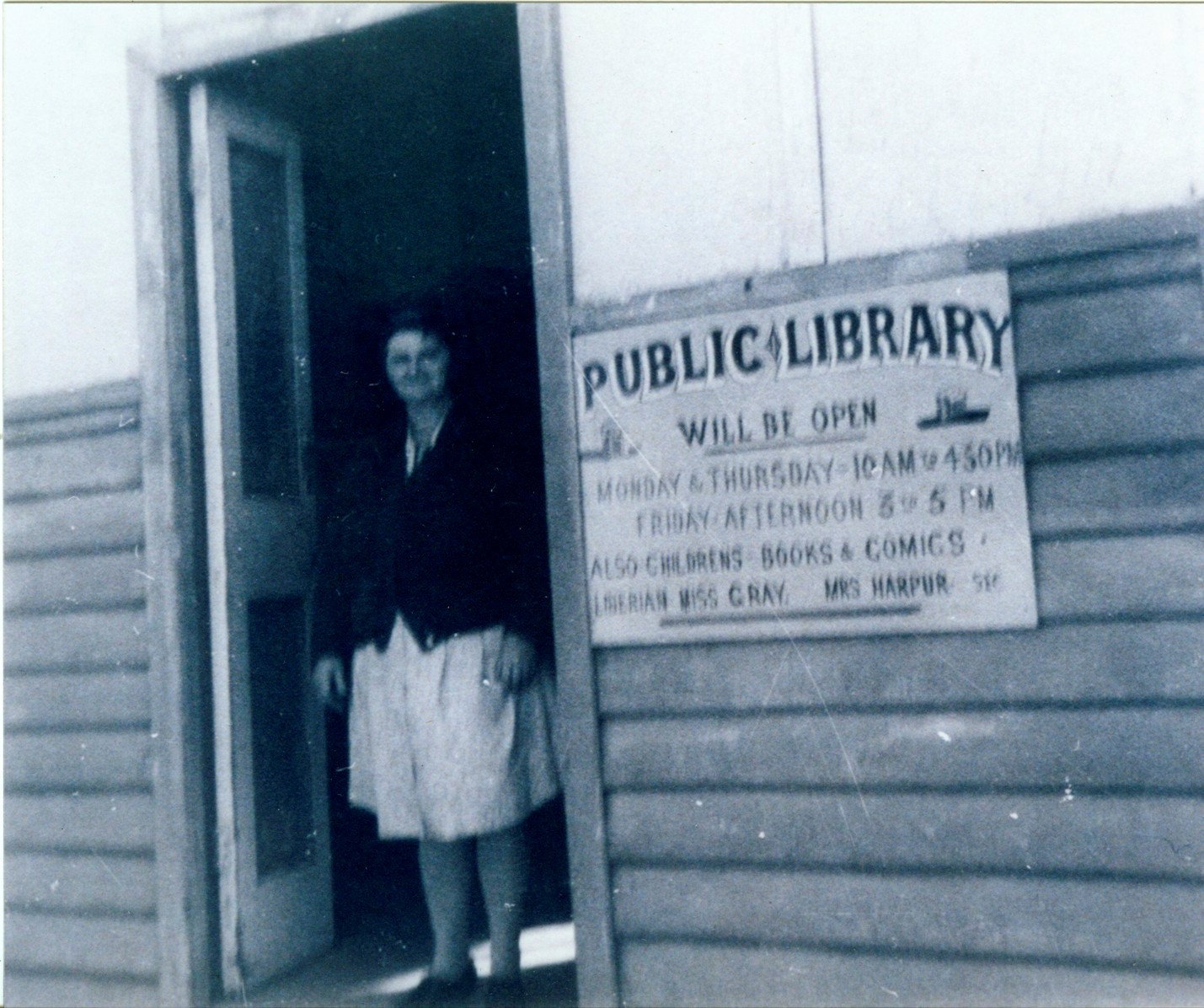
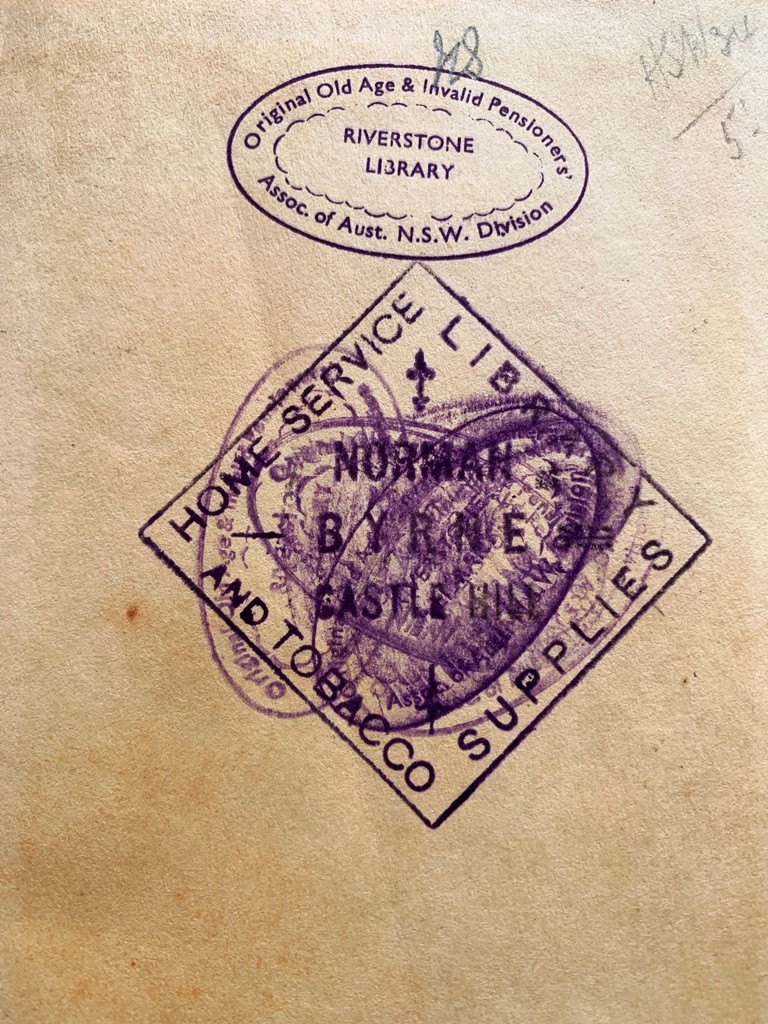
Julie Anderson remembers going into the little library quite often with a friend and they used to talk to the librarian. She says there were books, some bits and pieces and some chairs. The books included “Penny Dreadfuls”, Westerns and Mills And Boons. [43] When the library was being closed, I purchased a book at the sale, which had previously been part of the a mobile library service at Castle Hill and had either been donated or sold to the Pensioners Library.
The building received a new roof in March 1982. As it was on railway land, it was regarded as being railway property. Each time the station was painted, the room was painted too.
In my handwritten notes, I had recorded that the building was demolished in February 1998 to make way for a refurbishment and expansion of the railway car park. Although I had never used the building, it was still sad to see it go. At the time, I had no idea of the history associated with that one small building.
[1] Windsor and Richmond Gazette, 14 April 1916.
[2] Windsor and Richmond Gazette, 26 May 1922.
[3] Windsor and Richmond Gazette, 26 October 1923.
[4] Windsor and Richmond Gazette, 24 November 1922.
[5] Windsor and Richmond Gazette, 27 July 1923.
[6] Windsor and Richmond Gazette, 26 October 1923.
[7] Windsor and Richmond Gazette, 26 October 1923.
[8] ibid
[9] Windsor and Richmond Gazette, 21 March 1924.
[10] Windsor and Richmond Gazette, 12 September 1924.
[11] Windsor and Richmond Gazette, 7 November 1924.
[12] Windsor and Richmond Gazette, 5 December 1924.
[13] Windsor and Richmond Gazette, 5 June 1925.
[14] Windsor and Richmond Gazette, 24 July 1925.
[15] Windsor and Richmond Gazette, 26 June 1925.
[16] Windsor and Richmond Gazette, 6 August 1925.
[17] Windsor and Richmond Gazette, 6 August 1926.
[18] Windsor and Richmond Gazette, 13 August 1926.
[19] Windsor and Richmond Gazette, 17 January 1930.
[20] Windsor and Richmond Gazette, 13 June 1930.
[21] Windsor and Richmond Gazette, 22 June 1934.
[22] Windsor and Richmond Gazette, 10 June 1930.
[23] Windsor and Richmond Gazette, 17 January 1936.
[24] Windsor and Richmond Gazette, 3 November 1935.
[25] Windsor and Richmond Gazette, 12 March 1937.
[26] Windsor and Richmond Gazette, 4 June 1937.
[27] Windsor and Richmond Gazette, 2 September 1938.
[28] Windsor and Richmond Gazette, 28 July 1939.
[29] Windsor and Richmond Gazette, 11 August 1939.
[30] Windsor and Richmond Gazette, 31 May 1940.
[31] Windsor and Richmond Gazette, 5 July 1940.
[32] Windsor and Richmond Gazette, 18 July 1941.
[33] Windsor and Richmond Gazette, 1 August 1941.
[34] Windsor and Richmond Gazette, 1 December 1943.
[35] ibid.
[36] Windsor and Richmond Gazette, 8 November 1944.
[37] Windsor and Richmond Gazette, 20 March 1946.
[38] Windsor and Richmond Gazette, 30 January 1952.
[39] Windsor and Richmond Gazette, 4 February 1953.
[40] Copy of original Charter.
[41] Windsor and Richmond Gazette, 15 January 1964.
[42] Windsor and Richmond Gazette, 22 December 1965.
[43] Information from Chris Faber via Wendi Nichols.