by Sharon Mann
As a Teale decedent I always thought it would be easy to write a little ditty about my grandfather and his family. As with many families that lived in the Hawkesbury of that time, his roots can be traced back to the first fleet. The Teales have a rich history, and certainly played a positive part in the beginnings of our country.
Their story has been told again and again. However, living among those whose families have been in the district since the dawn of our nation are citizens who cannot claim any notary of this sort, those whose stories often go unnoticed and moreover those people who found themselves in Riverstone for work, usually introduced by a family member, or through association perhaps via someone who was seeking an employee. Such a person was my grandmother.
Only living in Riverstone for a short decade before her marriage, the Rivo lifestyle looked good on her. The township embraced Nan and treated her as one of their own. In turn she embraced Riverstone and now lives out the rest of her eternal life at the top of Garfield Road. Nan’s start in life could not have been more opposite to the start my grandfather had with his solid convict roots and very large family. In part I think this is what attracted Nan to him the most – his family.
Nan was born in Paddington and fostered to the Motter family at the tender age of two. Her mother dying when she was only nine months old. Her father eventually conceding defeat in having to look after two young children under the age of three, handed Nan to the Motter family for them to raise her, with his only condition that she never be adopted. Nan spent her childhood living in Glenhaven where she watched her own foster father, Elmer Eugine Motter, enlist for World War one and endure the anguish of her mother raising her alone.
Having already understood loss from her original family Nan faced this once more when she learnt at the age of 7 that the only father she ever knew was killed in action in France. Only a few months before soldiers laid down their arms, and the war of all wars ended. There is a certain sad irony to the timing of his death which seems to rob Nan of the thing that she loved the most, family.
As with most children of this time the school years ended around the age of 12 and it was expected that they went out to work. In Nan’s case she worked for a family in Northmead cleaning and taking care of their children. It is here that she learnt to drive, which by all accounts still would have been quite something for a woman in the first instance, and especially a woman of little means.
As a late teen Nan found her way to Riverstone. a tiny out of the way town at the base of the Blue Mountains. I often wondered of all the places she could have worked why Riverstone? Her foster mother had a brother that lived in Riverstone at the time with his family. His name was Robert Purvine. The sort of country town whereby everyone knew everyone and would have still been raw from the ravages of WW1.
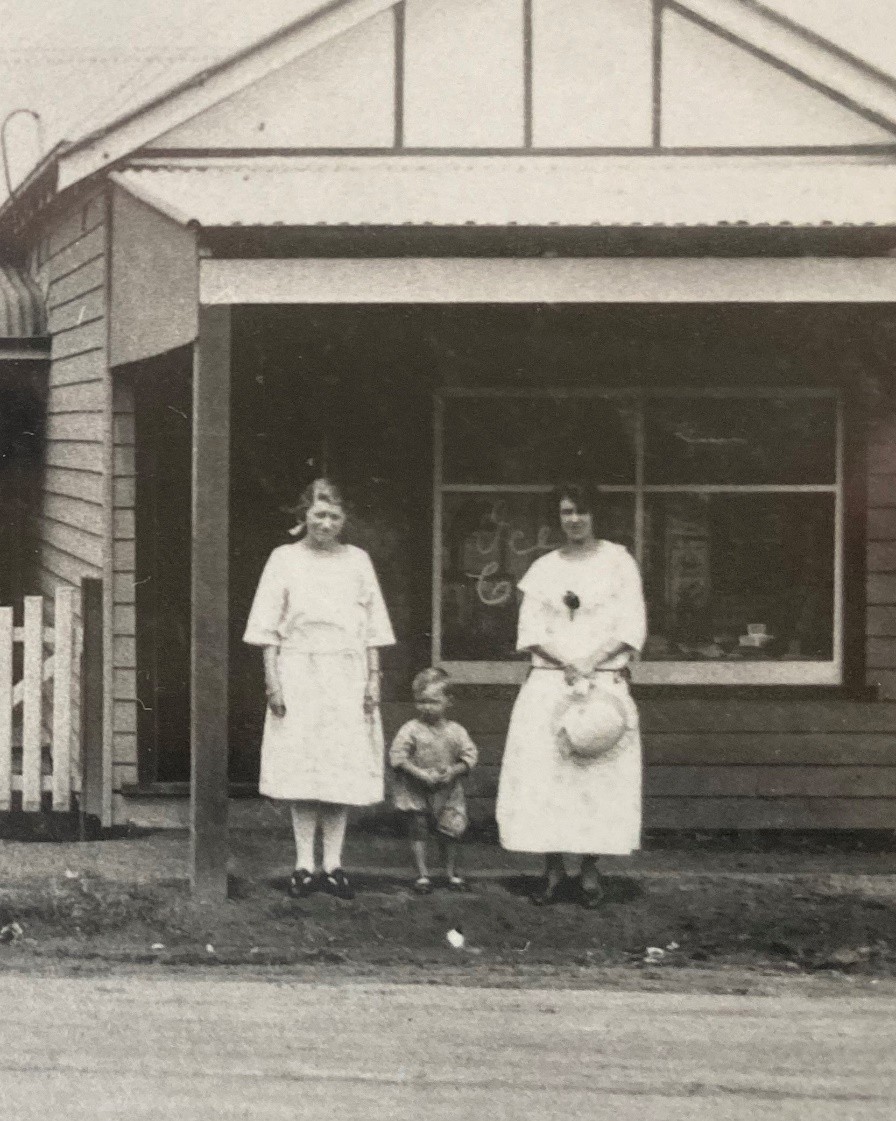
Photo: Patricia Teale – Archives.
It is through this association that I believe Nan found a job working with the Conway family. Evidently the Conway kids taught Nan to play cards under the dinning room table. As Nan grew up an only child she would have delighted in the activity of a busy household. I don’t know if Nan worked at the front in their shop, but I do know that she lodged with them and took care of the younger Conway children.
She always spoke of Mr Conway affectionately and I saw this firsthand when she, as a 70 something year old lady, paused in front of his headstone at Riverstone Cemetery for a few seconds. She simply said at the time he was my boss for many years. That day, Nan continued her march going from gravestone to gravestone pointing out the entire township to me from another time.
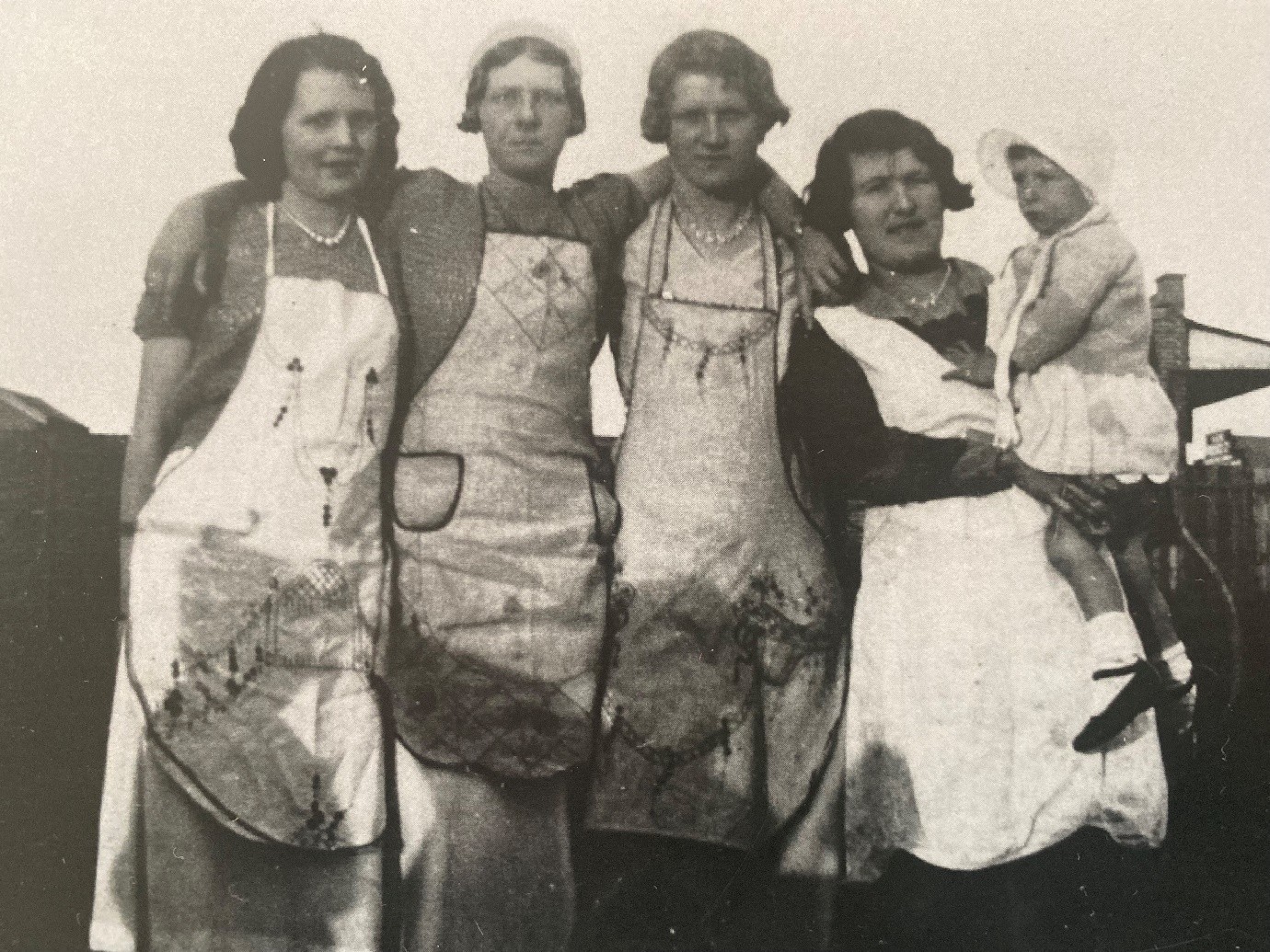
There are some photos from the Conway archives that show ladies in a line up at the rear of the Conway household. Stories of Mr Conway as a hairdresser in Riverstone and his 1920’s bob hair styles typify these ladies with their aprons in this photo. Although the following photo is not dated nor are the people outside the Conway family identified everyone in my family immediately gravitated to the woman between Mavis and Mrs Conway. Mavis, with her arm affectionately around her, a lass that could be Nellie Motter.
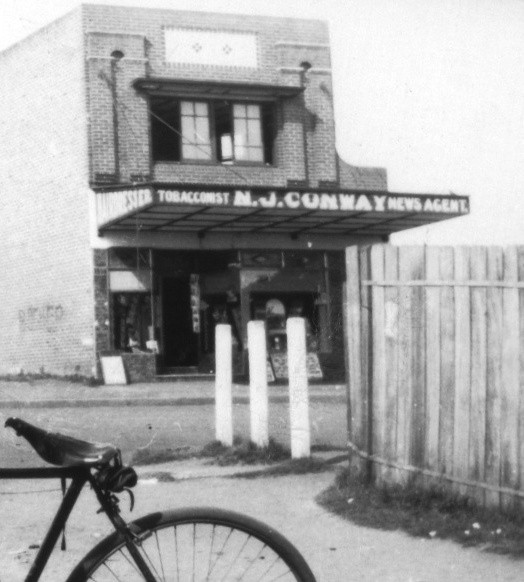
Nan was 25 when she married Fred Teale. For exactly how long they dated, I really don’t know. I asked Nan once how she met Pop, having no idea as a young child how small Riverstone was during those days, and her response makes perfect sense to me today. She said, all the girls hung around with all the boys. They would have been within the same friendship group. With Conway’s shop sitting on Railway Parade, Nan’s room faced the street. Here Fred would annoy Nan by throwing pebbles at her window. Perhaps in those days, he got his hair cut more often in the hopes to see her.
Working at the Riverstone meatworks, he was tall with dark hair, athletic, and dare I say a good-looking young man who played first grade football for Riverstone. A larrikin by nature there was talk that his football magic was good enough to be selected for Australia. Fred was selected to play the Presidents cup at the Sydney Cricket Ground. The performance in this game cemented his football future. Nan’s subtle suggestion that she might not be waiting for him when he got back should he get selected to play overseas was enough for him to reconsider his future.
It was not long after their marriage that they moved to Clyde when Fred secured a job at Goodyear.
I have often wondered if Nan ever got a chance to meet Pop’s mother Rebecca. Rebecca died in 1929, and a death in such a town as Riverstone would certainly have touched everyone. She herself was a descendent of second fleeter convicts both paternally and maternally. A kind and very shy woman, she had to endure watching three of her sons go to war. Sickness tormented her during her life, and the Teale boys adored Rebecca.
In another almost ‘this must be fate moment’, I know that the Purvine family and Rebecca’s family share the same common ancestor from the second fleet. If Nan were to write her own history on her connections to Riverstone, she could not have imagined that she would one day marry Rebecca’s second youngest son.
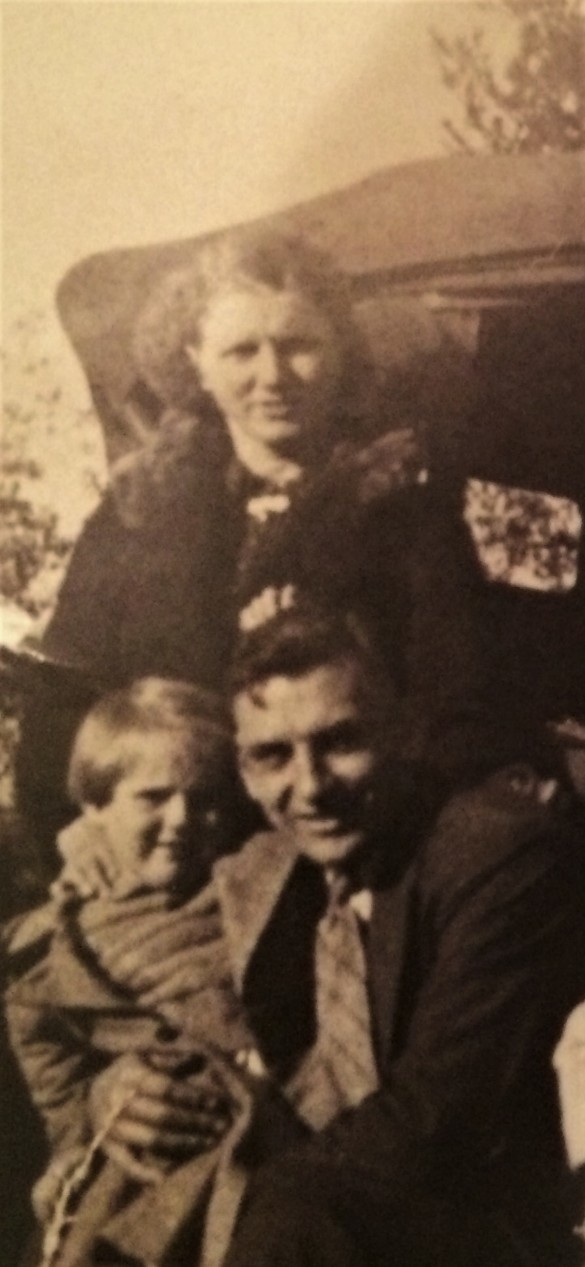
Photo: Patricia Teale – Archives.
Many of the Teale folk are buried in Riverstone, including Nan’s first-born son Johnny. The pilgrimage by train, and the long march down Garfield Road was made every Mother’s Day until the day she died. Riverstone was not her birth town, nor was it to her own family, but she chose to make it so for a while and cemented this as she lay with many of the Teales and some of her extended Riverstone family. Now when I visit Riverstone cemetery, and after I take a stroll pass the Teales, I also take a stroll pass the other Riverstone residents, some of whom might have become accidental Riverstonians.
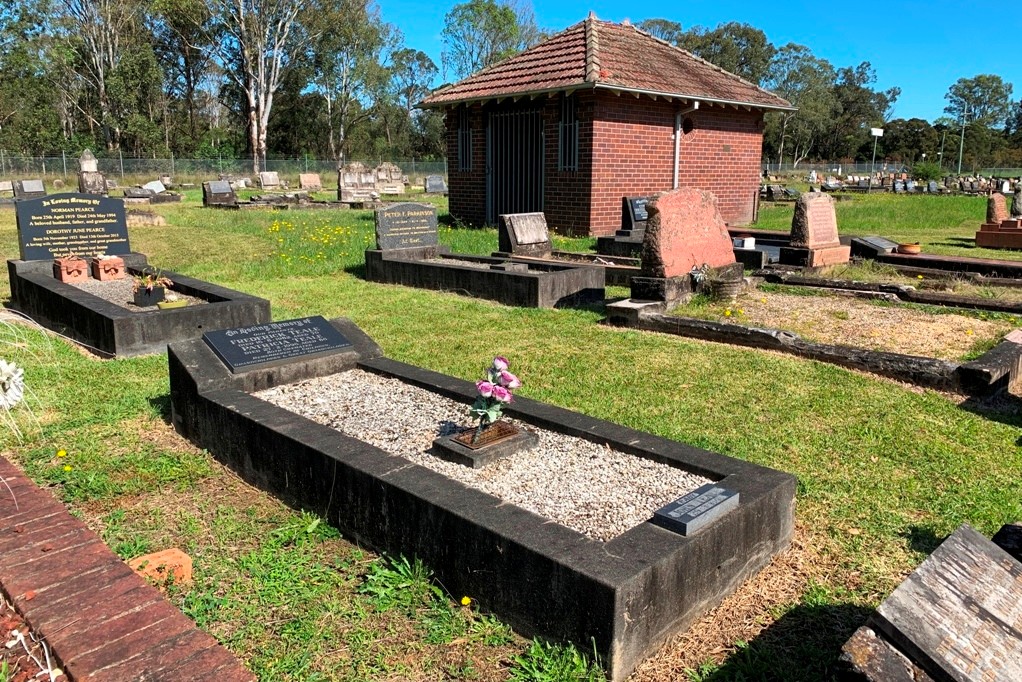
Photo: Rosemary Phillis 28 October 2022.